

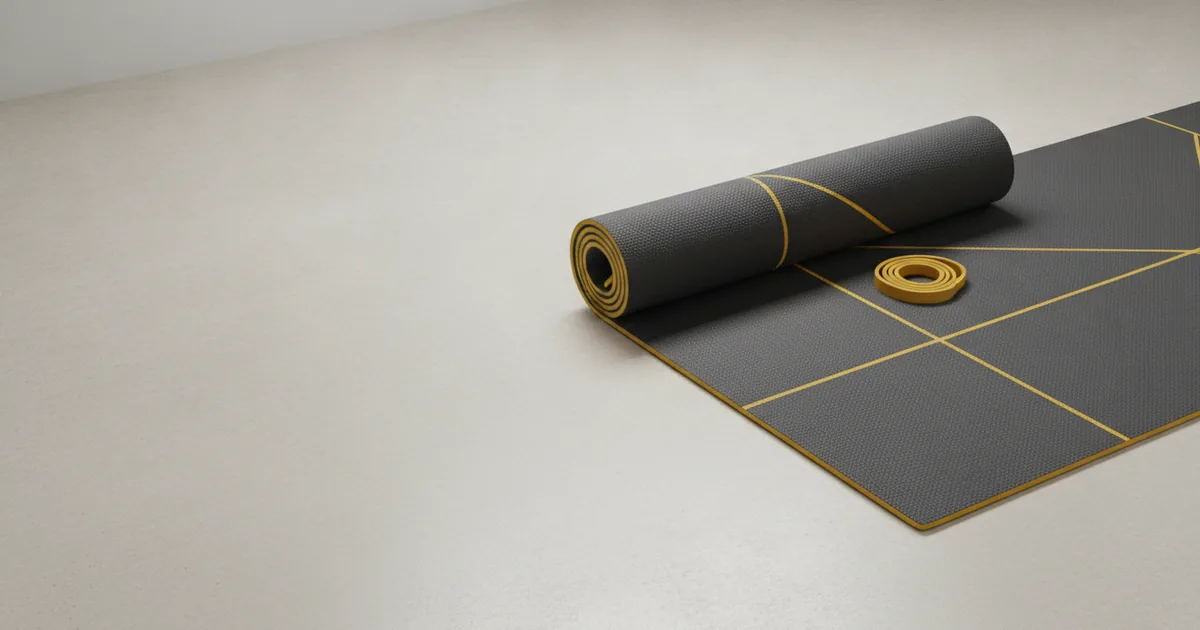
Last updated: August 16, 2026
A 6mm mat and a 10mm mat can feel like two different products entirely, even when they’re made from the same material. Thickness changes how a pose feels under your palm, how stable you are in a standing balance, and how much your knees thank you after a floor-based flow. If you’ve been scrolling through options wondering why the number on the label matters so much, this guide breaks down exactly what 6mm and 10mm mean for your practice, your joints, and your training space in Dubai, Riyadh, or a hotel room on the road.
Thickness is not a cosmetic spec. It directly affects three things every session: joint cushioning, ground feel, and stability. A thicker mat absorbs more shock under your knees and elbows. A thinner mat keeps you closer to the floor, which sharpens your sense of balance and connection to the ground beneath you. Neither is objectively better. The right choice depends on what you’re doing on the mat and where you’re doing it.
Most mats sold for general fitness fall between 3mm and 15mm. The two most common thicknesses buyers compare are 6mm and 10mm, because they sit at opposite ends of a practical spectrum: 6mm favors stability and control, 10mm favors comfort and cushioning. Understanding this trade-off saves you from buying a mat that fights against your training style.
A 6mm mat is the middle-ground option most studios default to, and for good reason. It’s thick enough to soften a hard tile or concrete floor, but thin enough that you stay grounded during standing poses, transitions, and balance work. When your foot presses into a 6mm mat, you still feel the floor beneath the padding. That feedback matters more than most beginners realize.
Pros: Better stability in standing and balance poses, easier to roll and carry, less bulk in a gym bag, faster to dry after cleaning, generally more affordable.
Cons: Less cushioning for knees and elbows on hard floors, can feel firm during long floor-based holds, not ideal if you have sensitive joints or existing knee issues.
A 10mm mat prioritizes comfort. The extra padding absorbs impact from kneeling, seated stretches, and floor exercises, which makes it a common pick for restorative yoga, Yin yoga, and general stretching routines done directly on tile or hardwood. The trade-off is a slightly less stable base for standing balance work, since the foam compresses under pressure and can make single-leg poses feel less anchored.
Pros: Superior shock absorption, more comfortable for kneeling and seated work, better insulation from cold hard floors, forgiving for beginners still building core stability.
Cons: Bulkier to roll and store, heavier to carry, can reduce ground feedback during standing balance, less ideal for travel due to size.
| Factor | 6mm Mat | 10mm Mat |
|---|---|---|
| Stability | Higher, closer ground feel | Lower, more foam compression |
| Cushioning | Moderate | High |
| Best for | Vinyasa, Ashtanga, Pilates, balance work | Yin, restorative, stretching, joint recovery |
| Portability | Rolls smaller, lighter | Bulkier, heavier |
| Floor suitability | Works on any floor, ideal for gym mats | Best on hard tile, marble, or wood |
| Price range (AED) | Typically lower cost | Slightly higher due to material volume |
This is the core tension in yoga mat thickness explained simply: the thicker the mat, the softer it feels, and the softer it feels, the more it compresses unevenly under a single point of pressure like a heel or a hand in Warrior III. That uneven compression is what makes balance poses feel wobbly on very thick mats. If your practice includes tree pose, half-moon, crow, or arm balances, a 6mm mat gives your foot or hand a firmer, more predictable surface to press against.
On the other hand, if your sessions are mostly floor-based stretching, hip openers, or restorative holds where you’re kneeling or lying down for minutes at a time, that same compression becomes a benefit. Your knees and hips sink slightly into a 10mm mat and the pressure spreads out, reducing the sharp discomfort you’d feel on a thinner surface over a hard floor.
These styles move fast, with constant transitions between standing, plank, and floor positions. A 6mm mat keeps you connected to the ground through every shift in weight, which reduces the risk of slipping or losing balance mid-flow.
Long holds on the floor call for cushioning. A 10mm mat protects your tailbone, knees, and elbows during extended seated or kneeling postures, especially if your sessions run 45 minutes or longer.
Pilates mixes floor work with controlled, precise movement. A 6mm mat is usually preferred here because it offers enough padding for the spine during rolling exercises while keeping a firm base for leg and core control.
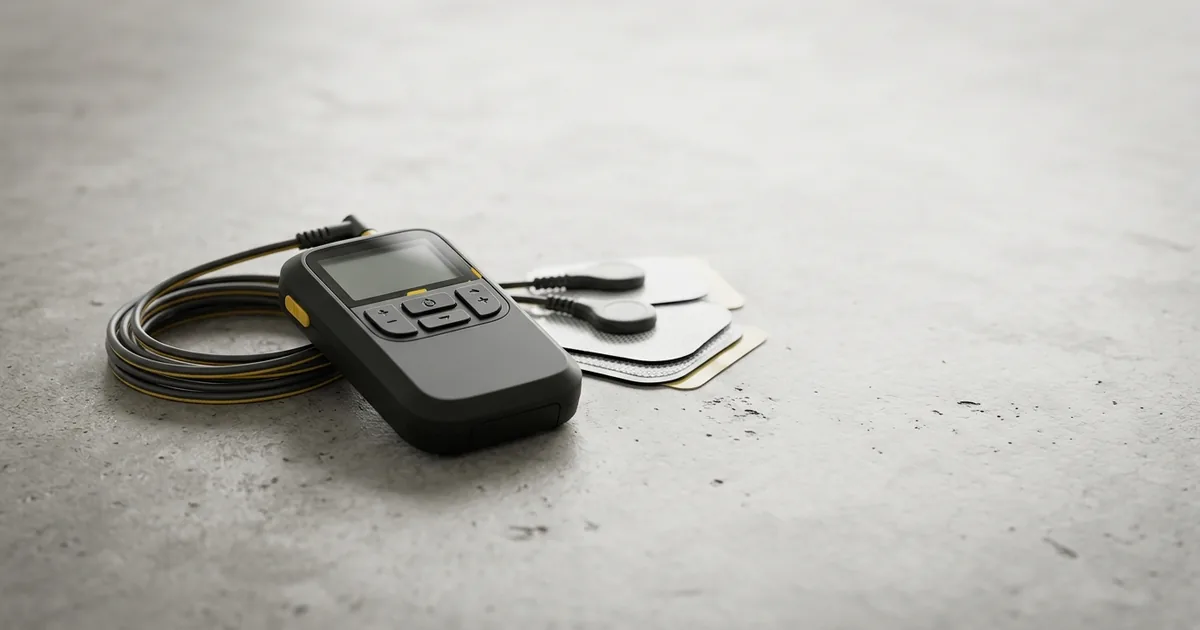
If you’re pairing yoga with broader home training, a mat is only one piece of the setup. Many users also work a vibration plate into warm-ups and cooldowns, where a firmer 6mm mat underneath the plate area gives better footing than a soft 10mm surface would.
Where you train matters as much as how you train. UAE and KSA homes commonly feature tile, marble, or polished concrete, all of which are harder and colder than carpet or timber flooring found elsewhere.
Hard, cold flooring transmits impact directly into joints. A 10mm mat is the safer choice here, particularly for kneeling sequences or seated meditation where you’re in contact with the floor for long stretches.
These surfaces already provide some natural give, so a 6mm mat is usually enough. Adding a 10mm mat on top of carpet can actually reduce stability too much, making standing poses feel unsteady.
Commercial studios almost always stock 5-6mm mats because they’re built for group classes with fast transitions and shared storage. If you’re supplementing gym sessions with mat work at home, matching a similar thickness keeps your practice consistent.
Thickness is one variable, but it doesn’t work alone. Two mats at the same thickness can feel completely different depending on these factors.
Density describes how tightly the foam is packed. A dense 6mm mat can feel firmer and more supportive than a low-density 10mm mat, even though it’s thinner on paper. Higher density also tends to hold its shape longer and resist permanent knee dents over time.
TPE, PVC, natural rubber, and NBR foam all compress differently. TPE mats tend to offer a responsive bounce-back, PVC mats are firmer and more durable, and natural rubber sits closer to the floor with excellent grip but can be heavier per millimeter.
Grip texture affects how secure your hands and feet feel regardless of thickness. A textured surface on a 6mm mat can outperform a smooth 10mm mat in a sweaty session, because texture channels moisture away from contact points.
Standard mats run around 173cm to 183cm long and 61cm wide. Taller users, generally above 175cm, should look for extended-length mats regardless of thickness to avoid hands or feet hanging off the edge during full extensions.
If your routine moves between gym, home, and travel, portability becomes a real factor, not an afterthought. A 6mm mat rolls into a smaller diameter and weighs noticeably less, making it easier to strap to a gym bag or pack into a suitcase. A 10mm mat, while more comfortable, takes up more room and adds weight you’ll notice on a flight or during a daily commute.
For travelers who don’t want to compromise entirely, foldable thin travel mats around 2-4mm exist as a separate category, but they sacrifice cushioning almost completely. Most people who travel regularly settle on a 6mm mat as the practical middle ground between comfort and packability. Pair it with the right accessories, check the latest arrivals for compact gear built for exactly this kind of on-the-go training.
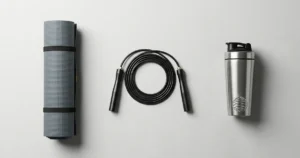
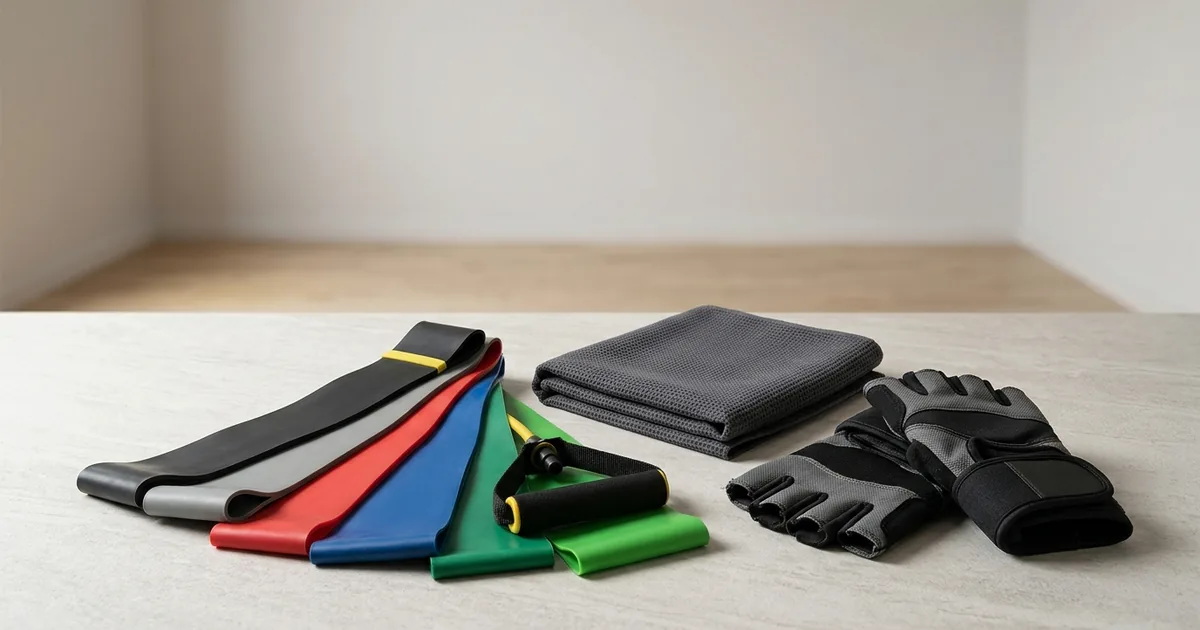
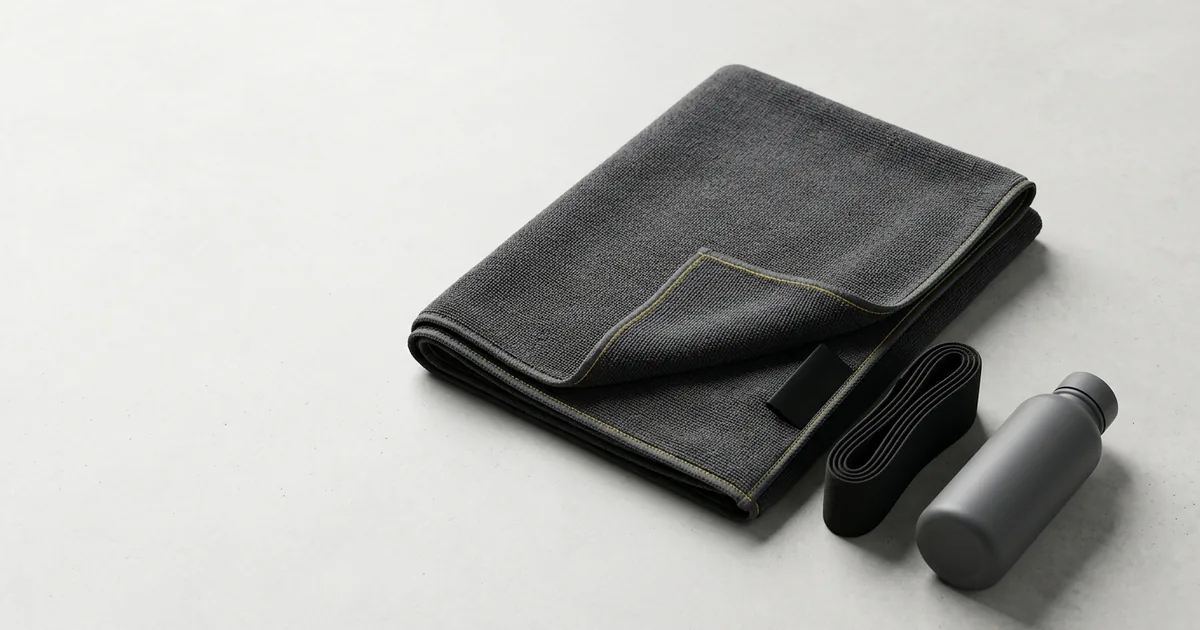
A mat alone isn’t a full setup. A lightweight microfiber workout towel handles sweat and doubles as extra cushioning if you’re practicing on an unfamiliar hard floor in a hotel room. A portable blender bottle keeps hydration simple between sessions without adding bulk. If your routine includes resistance work alongside yoga, a set of gym gloves and straps rounds out a kit that covers stretching, strength, and recovery in one bag.
A cheaper 10mm mat made from low-density foam can wear out faster and lose its shape within months, while a well-built 6mm mat holds up for years. Expect a quality 6mm mat to sit in a lower AED price bracket than an equivalent-quality 10mm mat, simply due to material volume, but don’t let price be the only deciding factor.
Buyers often pick 10mm mats assuming thicker always means better, then find themselves wobbling through balance poses. If more than half your sessions involve standing work, a 6mm mat will serve you better long term.
Someone training on carpet doesn’t need the extra cushioning of a 10mm mat, while someone kneeling directly on marble tile will feel every millimeter of missing padding on a 6mm mat. Match thickness to your actual floor, not just your practice style.
Thickness affects comfort, but hygiene and maintenance affect how long any mat lasts. Sweat, oils, and dust build up on the surface after every session, and thicker mats in particular can trap moisture in the foam if not dried properly.
After each session, wipe the surface with a damp cloth or a dedicated microfiber towel to remove sweat before it soaks in. This single habit extends the life of both 6mm and 10mm mats significantly.
Once a week, use a mild soap and water solution, avoid harsh chemicals that can break down foam bonding. Rinse lightly and let the mat air dry fully before rolling it up. A damp mat rolled and stored develops odor and mildew fast, especially in the humidity common across coastal cities in the UAE.
Store mats rolled loosely rather than folded, folding creates permanent crease lines over time, particularly in thicker foam. Keep mats away from direct sunlight for long periods, as UV exposure gradually breaks down rubber and PVC materials.
Our take on portable workout gear is simple: match the tool to the environment. A mat built for gym, home, and travel needs to hold up across all three without demanding a different product for each setting. That’s why thickness, density, and portability get evaluated together rather than treated as separate specs. If you train across multiple locations during the week, a 6mm mat paired with the right recovery accessories usually delivers the most consistent experience. If your home floor is hard tile and your sessions lean toward slower, floor-based work, a 10mm mat earns its extra bulk. Browse the current new arrivals to see what fits your setup.
Yoga mat thickness explained in one sentence: 6mm favors stability and portability, 10mm favors cushioning and comfort. Neither wins outright, the right pick depends on your practice style, your floor, and how often you carry your mat between gym, home, and travel. Match the thickness to how you actually train, take care of the mat once you own it, and it will support every session for years rather than months.
Wipe the surface after every session with a damp cloth or microfiber towel to remove sweat. Once a week, clean it with mild soap and water, avoid harsh chemicals that break down the foam, then let it air dry fully before rolling it up. Never store it damp, as trapped moisture leads to odor and mildew over time.
There’s no single best mat for everyone. The best mat is one that matches your practice style, your floor type, and how often you travel with it. A 6mm mat suits fast-paced, standing-focused practice and frequent travel, while a 10mm mat suits floor-based, restorative sessions on hard flooring. Material, density, and grip texture matter as much as thickness in finding the right fit.
Start with your practice style: balance-heavy flows need a firmer, thinner mat around 6mm, while floor-based stretching benefits from a cushioned 10mm mat. Then factor in your training surface, hard tile needs more padding than carpet, and your portability needs, since thinner mats travel easier. Finally check density and grip texture, since two mats of the same thickness can feel very different depending on material quality.
Most mats have a textured, grippier side meant to face up for better traction under hands and feet, and a smoother side that sits against the floor for stability. Check the surface pattern, the side with visible texture or a slightly rougher feel is almost always the intended top.
Mix a small amount of mild, unscented soap with water in a spray bottle. Spray the surface, wipe it down with a soft cloth or towel, then rinse with a clean damp cloth to remove any soap residue. Hang it to air dry completely, ideally away from direct sunlight, before rolling or folding it for storage.
Standard mats run between 173cm and 183cm in length, which fits most users comfortably. If you’re taller than roughly 175cm, look for an extended-length mat so your hands and feet stay fully supported during full-body extensions like downward dog or plank.

Last updated: October 21, 2026 Sore legs the day before a big lift. Tight shoulders after three straight gym sessions.
Last updated: October 21, 2026 Most home gyms fail for the same reason: the gear doesn’t match the space, the
Last updated: October 18, 2026 Most people buy a gym towel the way they buy a phone charger, fast, cheap,