
Last updated: October 21, 2026
Sore legs the day before a big lift. Tight shoulders after three straight gym sessions. A flight to Riyadh with zero time for a massage. This is where an EMS muscle stimulator for recovery at home earns its place in your kit. It is not another cardio gadget or a replacement for training, it is a recovery tool that uses electrical impulses to trigger muscle contractions, flush out tension, and speed up the return to full output. No appointment, no therapist schedule, no travel time. Just a unit, some pads, and fifteen minutes on your own terms.
This guide breaks down exactly how EMS recovery works, who it is built for, how to structure a routine at home, and what to check before you buy one. No vague wellness talk, just the practical detail you need to decide if this belongs in your setup.
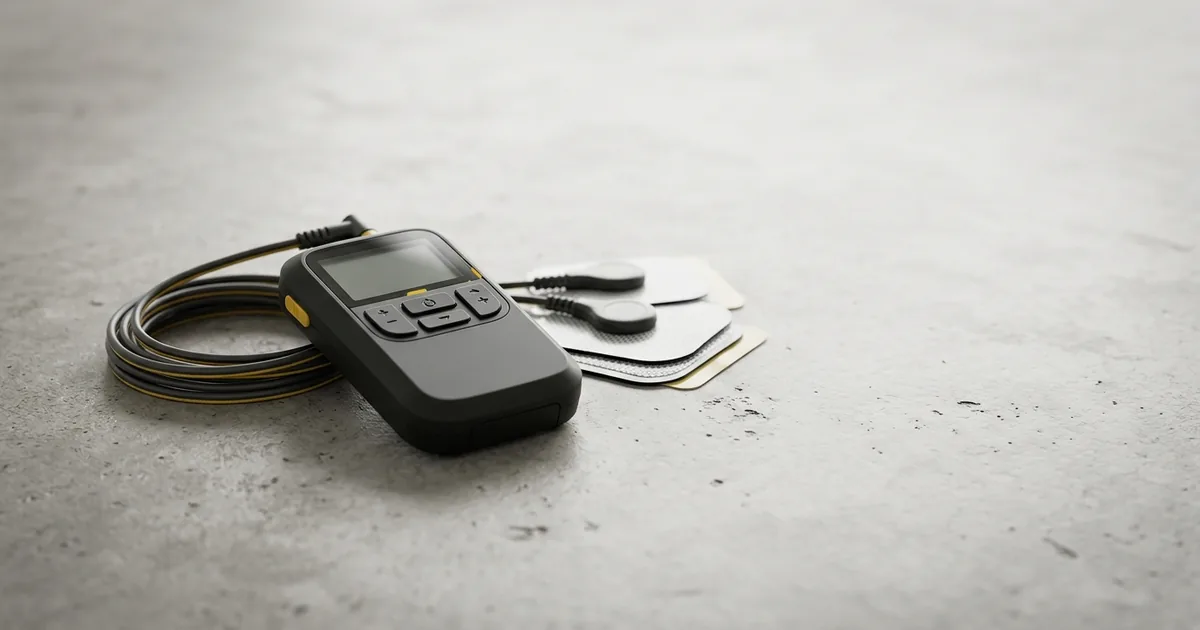
EMS stands for electrical muscle stimulation. A compact unit sends low-level electrical pulses through pads placed directly on the muscle. Those pulses cause the muscle fibers to contract and release, mimicking the pattern of a natural workout contraction but without the mechanical load.
For recovery specifically, EMS is set to a lower intensity and a different pulse pattern than the settings used for strength or toning. The goal is not to fatigue the muscle further, it is to increase local blood flow, reduce the buildup of metabolic waste from training, and interrupt the tightness cycle that leads to stiffness the day after a heavy session.
Think of it as a passive pump. Your muscle does not have to do the work, the unit does it for you while you sit, read, or scroll on the couch.
After intense training, muscles accumulate metabolic byproducts and micro-tension that circulation alone takes time to clear. Movement helps, which is why active recovery days exist. EMS speeds that process by forcing repeated, controlled contractions without you having to move the joint or load the muscle under bodyweight or resistance. For someone already sore, that distinction matters, you get the circulation benefit without the discomfort of actually moving the sore area.
Most people in the UAE and KSA who train seriously are already dialed in on programming, protein, and progressive overload. Recovery is usually the piece that gets skipped because it does not feel productive. But the muscle does not get stronger during the set, it gets stronger during the repair window after the set. Skip that window consistently and you plateau, get injured, or both.
An EMS muscle stimulator for recovery at home closes a gap that most training schedules leave wide open. You cannot book a sports massage every day. You can run a 15-20 minute EMS session every evening without it costing you anything beyond the one-time price of the unit.
If two or more of these sound familiar, a dedicated recovery tool is overdue, not optional.
EMS is one tool among several, and it works best when it is not the only one. Here is how it stacks up against the common alternatives.
| Method | Effort Required | Time Needed | Best For |
|---|---|---|---|
| EMS muscle stimulator | Passive, minimal effort | 15-20 minutes | Deep soreness, targeted muscle groups, post-travel tightness |
| Foam rolling | Active, requires technique | 10-15 minutes | Fascia release, trigger points |
| Vibration therapy | Active, standing or seated | 10-15 minutes | Full-body circulation, warm-up and cool-down |
| Stretching | Active, requires mobility | 10-20 minutes | Range of motion, joint mobility |
| Rest day only | None | 24+ hours | General fatigue, not targeted |
EMS is the lowest-effort option on this list that still produces a measurable physical response. That is exactly why it fits into a home recovery stack better than most alternatives, you can run it while doing literally anything else.
If you train five or more days a week, your body is constantly in a repair deficit. EMS gives you a way to accelerate repair on rest days without adding more physical stress.
Flights, long meetings, and hotel beds do not help recovery. A portable EMS unit fits in carry-on luggage and works just as well in a hotel room as it does at home. This is the exact logic behind portable workout gear built for gym, home, and travel, your recovery tool should move with you the same way your training gear does.
People returning from a minor strain or working around an old injury often cannot tolerate full active recovery work. EMS allows blood flow and gentle contraction without mechanical stress on the joint. Always check with a physiotherapist before using EMS directly over an injury site, but for surrounding muscle groups it is a strong supplementary tool.
If you have already built a home setup with a rack, bands, and a vibration platform, an EMS unit is the natural next addition, it covers the recovery side of the equation that strength gear does not touch.
A recovery protocol only works if it is repeatable. Here is a structure that fits into an evening without disrupting your schedule.
Run your EMS session either immediately after training (within 30-60 minutes) or in the evening before bed on rest days. Post-workout use helps clear metabolic buildup early. Evening use on rest days targets the stiffness that builds up over the day.
Clean the skin where the pads will sit, skip lotion or oil that day. Dry skin gives better pad contact and a more even pulse distribution. If you trained legs, place pads on quads, hamstrings, and calves. If you trained upper body, target lats, shoulders, and lower back.
Most units separate programs into strength, toning, and recovery or massage modes. Recovery mode uses a slower, lower-intensity pulse designed for circulation rather than contraction strength. Start at the lowest intensity and increase gradually until you feel a firm but comfortable pulse, never pain.
15-20 minutes per muscle group is standard. You can stack multiple pad sets if your unit supports it, running quads and hamstrings simultaneously, for example. Stay seated or lying down, this is passive recovery, not active training.
EMS sessions increase local circulation, which means it is a good moment to get fluids and protein into your system. Blending a quick shake right after your session with an electric protein shaker bottle keeps the process simple, no separate mixing step, no clumps, just blend and drink while the EMS unit is still doing its job on your legs.
| Day | Training | Recovery Action |
|---|---|---|
| Monday | Lower body strength | EMS on quads and hamstrings, post-workout |
| Tuesday | Upper body push | EMS on shoulders and chest, evening |
| Wednesday | Rest | Full-body EMS session, 20-25 minutes |
| Thursday | Lower body volume | EMS on calves and glutes |
| Friday | Upper body pull | EMS on back and biceps |
| Saturday | Conditioning | Vibration platform cooldown plus light EMS |
| Sunday | Rest | EMS recovery session, full body |
EMS does not need to work alone. A few combinations consistently produce better results than EMS by itself.
Use a vibration platform for five minutes before your EMS session. The vibration primes circulation across the whole body, then the EMS unit targets specific muscle groups with more focused contraction. This combination is especially useful after leg day, when soreness spreads across multiple muscle groups at once.
On lighter training days, a short session with a beaded jump rope gets blood moving before you train, which reduces how deep the post-workout soreness sets in. Less soreness going in means your EMS recovery session afterward does less heavy lifting and works faster.
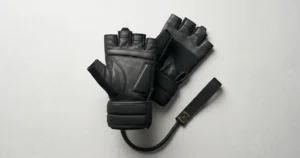
If you are using EMS pads for active muscle activation during training rather than passive recovery, pair the session with proper hand support. A good set of gym gloves and straps protects your grip on heavier pulling and pressing movements, so your hands are not the limiting factor while your muscles are getting extra stimulation from the EMS unit.
EMS technology moves fast, newer units offer more programs, better pad adhesion, and longer battery life every year. Check the new arrivals section regularly if you want the latest recovery and training gear before it becomes the standard everyone else is using.
Not every EMS unit on the market is built for recovery. Some are designed purely for muscle toning or ab activation, with no dedicated low-intensity recovery mode. Check these points before you buy.
Look for units that explicitly list a recovery, massage, or relaxation program, not just strength and toning settings. The pulse pattern for recovery is different, and running a toning program on sore muscles will leave you more fatigued, not less.
A wide intensity range matters because recovery sessions should sit at the low end, while active use for warm-up or activation needs more range at the top. A minimum of 15-20 intensity steps gives you enough control to fine-tune comfort.
Larger muscle groups like quads and glutes need bigger pads or multiple pad sets wired together. Check that the unit comes with different pad sizes or allows you to buy replacements, since pads wear out with repeated use and lose adhesion over time.
If recovery on the move matters to you, battery life becomes a real factor. A unit that holds charge for multiple sessions without needing a cable is far more practical for travel than one that needs to stay plugged in.
Wireless pad sets give you freedom to move around the house during a session, wired units are typically cheaper and still fully functional for anyone using EMS mainly at a desk or on a couch.
Some newer units connect to an app for program tracking and custom pulse sequencing. This is a nice-to-have, not a requirement, do not pay a premium for app features if the core recovery programs already cover what you need.
The single most common error. Running a high-intensity contraction program on muscles that are already sore adds fatigue instead of removing it. Recovery mode exists for a reason, use it.
Placing pads on the wrong part of the muscle belly reduces effectiveness and can cause uneven or uncomfortable contractions. Most units include a placement chart, follow it rather than guessing.
EMS recovery improves circulation and reduces stiffness, it does not build strength or replace a training stimulus. Treat it as a support tool, not a shortcut around actual work.
More time does not mean more benefit. 15-20 minutes per muscle group is the practical ceiling for a recovery session. Beyond that, you are just sitting there without added effect.
Oily or sweaty skin reduces pad adhesion and conduction quality, leading to uneven pulses or pads that lift off mid-session. A quick wipe-down before every use solves this.
The whole point of a portable recovery tool is that it should not care where you are. A compact EMS unit works the same way in a gym locker room after a session, on your living room floor, or in a hotel room after a long flight into Dubai or Riyadh. There is no setup cost beyond the unit itself, no ongoing subscription, and no need for a dedicated space. That portability is exactly why EMS recovery fits so naturally alongside other compact gear built for the same gym-home-travel lifestyle, rather than bulky stationary options that only make sense in one location.
Use EMS immediately after your last set, while you are still in gym clothes. A quick 10-15 minute session on the muscle group you just trained reduces how tight you feel the next day.
This is where most people get the most consistent use. Evening sessions on the couch, paired with a proper recovery schedule, turn EMS into a daily habit rather than an occasional treatment.
Pack the unit, pads, and a charging cable in your carry-on. A 20-minute session in a hotel room after a long travel day keeps you from showing up to a meeting or a workout the next day stiff and sluggish.
EMS is safe for the vast majority of healthy adults when used correctly, but a few rules are non-negotiable.
If you have any underlying health condition, check with a doctor before starting EMS use, even for recovery purposes at a low intensity.
EMS recovery works best as a consistent habit, not a one-time fix. The first session might feel like a mild novelty, the real benefit shows up over two to three weeks of regular use, when your baseline soreness drops and your training frequency becomes easier to sustain. Treat it the same way you treat your actual training, consistency beats intensity.
It is also worth being clear about what EMS will not do. It will not replace sleep, it will not replace proper nutrition, and it will not undo the damage of consistently poor programming. What it does is close the recovery gap between sessions so the other parts of your routine, training, food, sleep, actually have the chance to produce results.
Recovery is the part of training most people under-invest in, not because they do not know it matters, but because it rarely feels as productive as the workout itself. An EMS muscle stimulator for recovery at home changes that equation. It takes fifteen minutes, requires zero effort on your part, and works whether you are at home, between gym sessions, or recovering from a long flight. Pair it with the right routine, the right pad placement, and a bit of patience, and it becomes one of the lowest-effort, highest-return additions you can make to your setup this year.
Daily use is safe for most healthy adults when the unit is set to a recovery or massage program at low intensity. Many people run a session after each workout and again on rest days, keeping each session to 15-20 minutes per muscle group.
EMS works best as part of a stack rather than a standalone solution. Pairing it with a vibration platform for circulation or a proper warm-up with a jump rope before training tends to produce better results than relying on EMS alone.
Yes, in fact that is one of the most effective uses. Running a recovery program on quads, hamstrings, and calves within an hour of finishing your session helps clear metabolic buildup before stiffness sets in the next day.
Recovery mode is designed for circulation and relaxation, not muscle building. Strength or toning programs on the same unit use different pulse patterns, but even those should supplement, not replace, actual resistance training.
Yes, most units are compact, battery-powered, and fit easily in carry-on luggage. This makes them practical for hotel recovery sessions after long flights or travel days when regular recovery routines get disrupted.
Last updated: October 21, 2026 Most home gyms fail for the same reason: the gear doesn’t match the space, the
Last updated: October 18, 2026 Most people buy a gym towel the way they buy a phone charger, fast, cheap,
Last updated: October 18, 2026 A gym water bottle is not an accessory you grab at checkout without thinking. It