
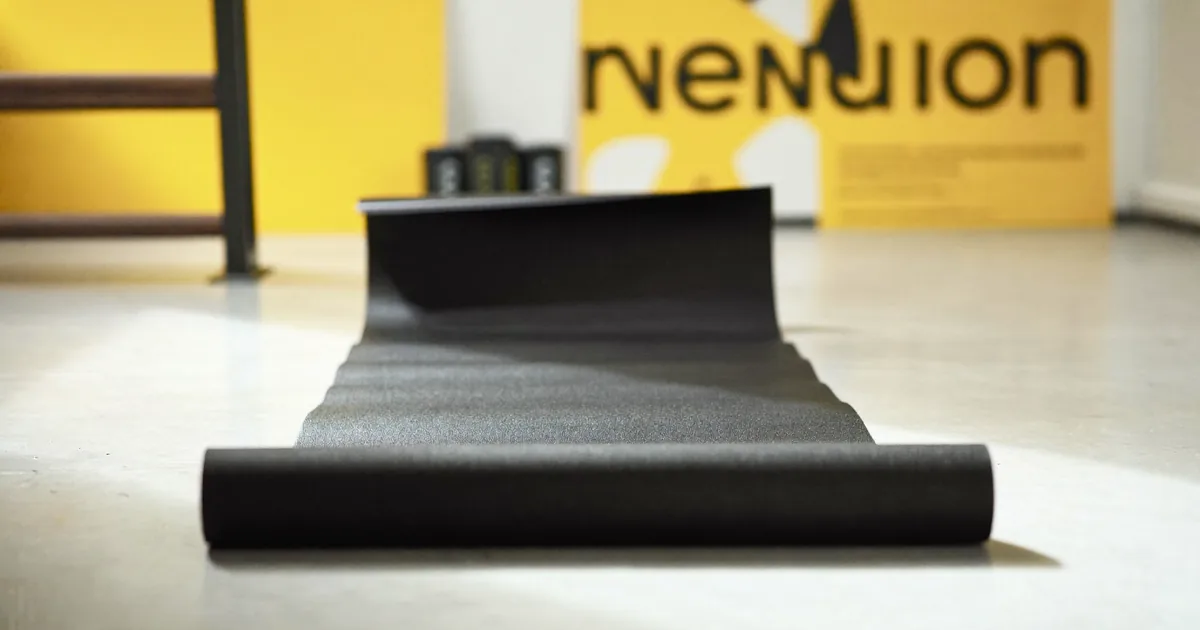
A good yoga mat and towel set is the difference between a session that feels controlled and one where you’re sliding out of downward dog or wiping sweat off your palms mid-plank. This isn’t a small accessory decision. Your mat is the surface your entire practice sits on, and your towel is what keeps that surface, and your grip, usable once you start sweating. Get either one wrong and every session after the first ten minutes gets harder than it needs to be.
This guide breaks down exactly what makes a yoga mat and towel set worth buying, how the two pieces work together, what to look for in materials and thickness, and how to match a set to where you actually train, whether that’s a gym floor, a living room, or a hotel room on a work trip.
Buying a mat and a towel as a matched set isn’t just convenience. There are practical reasons the pairing works better than picking each item on its own.
Mats and towels interact. A towel that’s too thick or too slick on top of a textured mat can actually reduce grip instead of improving it. When a set is designed together, the towel’s surface is built to complement the mat’s texture, so sweat gets absorbed instead of pooling and creating a slip hazard.
A towel that’s smaller than your mat leaves exposed edges that turn slick the moment sweat runs past the fabric. A set solves this by matching dimensions so the towel covers the working surface of the mat edge to edge, or close to it, during high-sweat sessions like hot yoga or HIIT-style mat work.
If you’re building a home or travel kit and don’t want to research two separate product categories, a set removes the guesswork. You get a mat with known thickness and grip characteristics, paired with a towel sized and textured to work with it, in one order.
Before the towel even comes into play, the mat itself needs to hold up to real training, not just look good in a product photo. Here’s what to evaluate.
Most mats fall into a few material categories:
For UAE and KSA conditions, where indoor training often happens in air-conditioned rooms with dry air, and outdoor or travel sessions can mean heat and humidity swings, a TPE or rubber base with a textured, sweat-resistant top is usually the safest all-round choice.
Mat thickness is a trade-off between cushioning and stability.
If your set is meant to double as a mat for floor-based strength work, core routines, or stretching after a session on a vibration plate, a 5mm to 6mm mat usually covers the widest range of use cases without forcing a compromise.
Grip is where most cheap mats fail. A mat that feels grippy when dry can turn dangerously slick the moment your hands or feet start sweating. Look for:
Standard mats run around 173cm to 183cm long and 61cm wide, which fits most body types. If you’re taller than average, look for extended-length options so your feet and hands don’t hang off the edge during downward dog or plank. For travel, weight matters as much as length. A mat under 1kg that rolls down to the size of a water bottle is far more likely to actually get packed than a heavier studio-style mat.
The towel half of the set often gets less attention, but it directly affects how usable your mat stays through a full session.
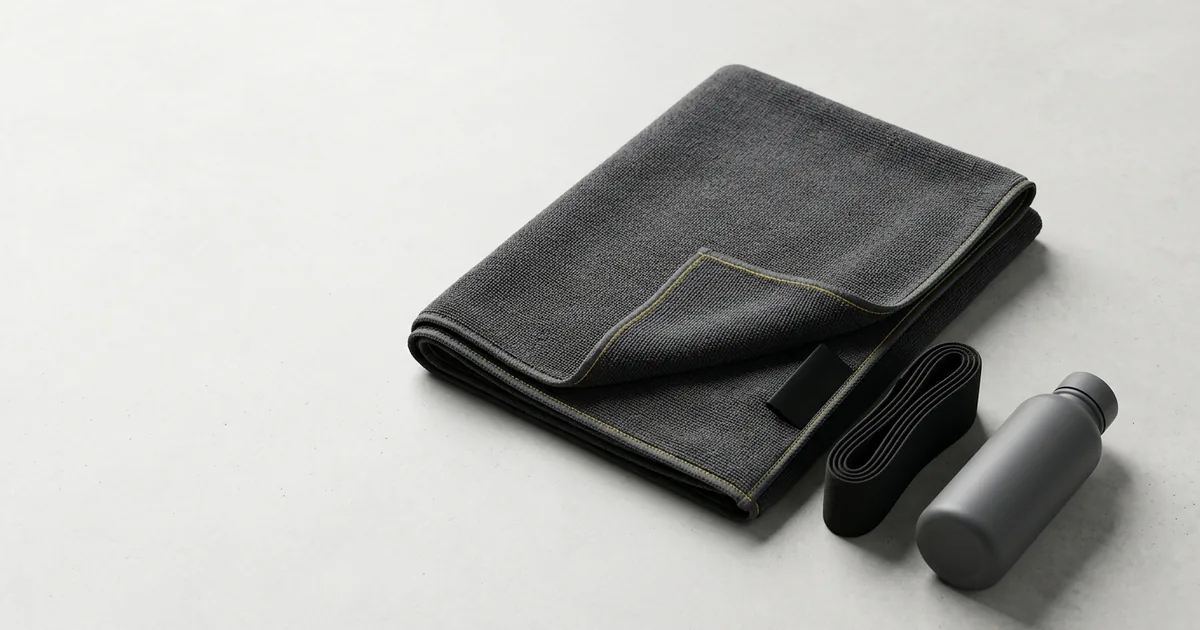
A towel needs to pull sweat away from the surface fast, not just smear it around. Microfiber towels are the standard here because the fiber structure holds far more moisture per gram than standard cotton, and they release that moisture when wrung out or hung, meaning the towel is usable again within a session rather than becoming a wet rag after five minutes.
If you’re training daily, or packing a set for travel, a towel that takes overnight to dry isn’t practical. Quick-dry microfiber fabric is built with a weave that increases surface area for evaporation, so a towel that’s damp after a session is usually workable again within a few hours, not a full day. This matters even more during summer in the UAE and KSA, where humidity indoors is controlled but outdoor or car-transported gear can stay damp longer without proper airflow.
A towel laid over a mat during hot yoga or a sweaty mat-based circuit needs enough texture to grip the mat underneath and grip your hands and feet on top. Smooth, silky towel fabric might feel nice dry, but it becomes a hazard once sweat hits it. Look for a slightly textured microfiber weave, sometimes with small raised patterns, that maintains traction in both directions.
A mat towel should be close to the same dimensions as your mat, ideally within a few centimeters on each side. Too small and you get exposed mat edges that become slip points. Too large and the excess fabric bunches up under your hands or feet, which is its own tripping and slipping risk. If you already have a mat and are adding a towel separately, check the towel’s listed dimensions against your mat’s dimensions before buying, or consider a set specifically built to match, like the microfiber workout towels from Rigid Fitness, sized for exactly this kind of pairing.
Not every yoga mat and towel set is built for the same environment. Here’s how to think about it based on where most of your sessions happen.
In a gym setting, your mat and towel need to handle shared-space hygiene as much as performance. A closed-cell mat that doesn’t absorb sweat from previous users, paired with your own towel laid on top, keeps your session hygienic without needing to wipe down gym-provided mats repeatedly. If your gym routine includes floor-based mobility work before or after strength training, or stretching after a circuit on fitness essentials like resistance bands or a jump rope, a mid-thickness mat around 5mm to 6mm gives you comfort without sacrificing stability during standing movements.
At home, storage and floor protection matter more than portability. A slightly thicker mat, 6mm or above, is fine since you’re not carrying it anywhere. The towel in your set can be a bit larger too, since you’re not folding it into a bag. If your home setup includes a dedicated corner for mat work, cardio intervals with a beaded jump rope, or recovery sessions on a vibration plate, having a mat and towel combo that stays laid out and ready removes friction from actually starting your session.
Travel is where a matched set earns its keep the most. Hotel room floors are inconsistent, hard tile in some rooms, thin carpet in others, and you rarely know which you’ll get until you arrive. A lightweight, foldable or tightly-rolling mat under 4mm, paired with a compact quick-dry towel, lets you maintain a full mobility or bodyweight routine without relying on hotel gym floors or towels that weren’t built for sweat. Pack both together in a single compression bag and your entire floor-training kit takes up less space than a pair of shoes.
Owning the right gear only helps if you’re using it in a way that actually improves grip and hygiene. A few practical habits make a real difference.
A common mistake is starting a session on a bare mat and only placing the towel down once things get slippery. By then, sweat has already soaked into the mat’s top layer, which takes longer to dry and can degrade grip over repeated sessions. Lay the towel down at the start of any session where you expect to sweat heavily, hot yoga, HIIT floor work, or long mobility sessions in warm rooms.
For sessions over 45 minutes, a quick-dry towel may reach saturation in the areas you use most, usually where your hands plant during poses like downward dog or plank. If you notice reduced grip, pause, wring the towel out over a nearby surface or step outside the mat to do it, and reposition it before continuing.
Rinse your towel after each heavy-sweat session rather than letting it sit damp in a bag. Bacteria growth in damp microfiber happens fast in warm climates, and a towel that smells off will also affect your grip experience even if it’s technically clean. A quick rinse and hang-dry between sessions keeps both hygiene and performance consistent.
Even with a towel on top, some sweat and oils transfer to the mat surface over time, especially around the hand and foot zones. Wipe the mat down with a damp cloth or a light mat cleaner after sessions, and let it air dry fully before rolling it up. Rolling a damp mat traps moisture inside the roll, which is one of the fastest ways to damage grip texture and cause odor buildup.
A thicker mat isn’t automatically better. Extra cushioning can actually reduce stability during standing balance poses, and it adds weight and bulk that make travel or daily transport harder. Thickness should match your primary use case, not just feel plush in a showroom test.
Some sets pair a decent mat with a low-quality cotton or blended towel that doesn’t absorb well and takes a long time to dry. If a set doesn’t specify the towel material, assume it’s a lower-grade fabric and check reviews or product details before buying. Microfiber should be the baseline expectation for any set marketed toward sweat-heavy training.
New PVC and some TPE mats can carry a chemical smell out of the box. This usually fades after airing the mat out for a day or two in a ventilated space, but it’s worth checking product descriptions or reviews for mentions of odor if you’re sensitive to it or plan to use the mat immediately after unboxing.
Standard mat lengths work for most people, but if you’re above roughly 180cm, a standard-length mat can leave your head or feet hanging off the edge during full-body stretches. Check listed mat length before buying, especially if you know standard sizing has been tight for you in the past.
A yoga mat and towel set is often the foundation of a broader floor and mobility routine rather than a standalone purchase. If you’re setting up a home or travel kit, consider what pairs well alongside it.
A compact cardio option like a beaded jump rope takes up almost no space and pairs naturally with mat-based interval training, letting you alternate between floor work and cardio bursts without needing a separate space or extra gear.
Pairing your mat with a vibration plate session before or after your mat routine adds a recovery and activation layer, useful for warming up tight muscles before stretching or cooling down after a strength session.
Browse fitness essentials to round out a home or travel setup, resistance bands, grip tools, and other compact gear that store alongside your mat and towel without taking up real space.
For anyone building out a kit from scratch, it’s worth checking the new arrivals for the latest mat, towel, and accessory releases before finalizing what goes in your bag.
Machine wash on a cool or warm cycle, avoid fabric softener since it coats microfiber and reduces absorbency, and air dry rather than tumble dry on high heat, which can break down the fiber structure over repeated cycles.
Roll rather than fold, since folding creates permanent crease lines that can crack the surface over time. Store in a cool, dry place away from direct sunlight, which degrades both PVC and rubber mats faster than normal use does.
A mat that’s lost its texture, feels slick even when clean and dry, or has visible surface cracking has reached the end of its usable life. A towel that no longer absorbs well even after washing, often from years of detergent buildup or fiber breakdown, should be replaced rather than pushed past its useful life. Both are low-cost enough that replacing a worn set is cheaper than risking a slip injury mid-session.
A yoga mat and towel set isn’t a minor accessory purchase, it’s the surface and grip system your entire floor routine depends on. The right combination comes down to matching material, thickness, and size to where you actually train, whether that’s a gym floor, a home corner, or a hotel room on the road. Get the pairing right, care for it properly, and it becomes gear you stop thinking about because it simply works every time you roll it out.
5mm to 6mm works for most people because it balances joint cushioning with the stability needed for standing balance poses. If travel is your main use, go thinner, around 3mm to 4mm, for easier packing. If you have sensitive knees and don’t need to carry it around, 8mm or above can work better.
Yes, especially for hot yoga or heavy-sweat sessions. Even the grippiest mat surface loses traction once sweat pools on top of it. A quick-dry microfiber towel absorbs that moisture and keeps grip consistent through the full session instead of just the first ten minutes.
After every sweat-heavy session, ideally the same day. Damp microfiber left in a bag or gym locker develops bacteria and odor fast in warm climates, and a towel that isn’t fully clean will also underperform on absorbency the next time you use it.
Yes. The same mat and towel combination works for stretching, mobility drills, core work, and floor-based strength exercises. It’s really a floor-training surface with sweat management, not something limited to a single style of workout.
Look for a mat under 1kg that rolls down small, ideally under 4mm thick, paired with a compact quick-dry microfiber towel. Together they should fit into a small bag alongside other essentials without adding noticeable bulk or weight to your luggage.

Last updated: October 21, 2026 Sore legs the day before a big lift. Tight shoulders after three straight gym sessions.
Last updated: October 21, 2026 Most home gyms fail for the same reason: the gear doesn’t match the space, the
Last updated: October 18, 2026 Most people buy a gym towel the way they buy a phone charger, fast, cheap,