
Last updated: August 5, 2026
A resistance bands strap is the single most portable piece of training gear you can own. It folds into a pocket, works every major muscle group, and replaces a rack of dumbbells when you train at home, in a hotel room, or between sets at the gym. This guide breaks down the types, resistance levels, workouts, and buying criteria you need to choose the right strap and actually use it, not just own it.
A resistance bands strap is a length of elastic material, latex, fabric, or rubber, built to create tension against your muscles as you stretch it. Unlike a dumbbell or barbell, it does not rely on gravity for resistance. It relies on stretch. This means it loads your muscles the same way whether you are pulling it sideways, upward, downward, or diagonally. That single feature is what makes a resistance bands strap more versatile than almost any other piece of portable gear.
The strap format specifically refers to bands designed with flat, long profiles, often with reinforced loops or attachment points at each end. This shape lets you anchor the band to a door, a squat rack, a pole, or your own foot, then pull against it from any angle. Some straps come with handles. Others are handle-free flat loops that you grip directly or thread around a limb.
Rigid Fitness builds its entire catalogue around one idea: workout gear should move with you, not the other way around. A resistance bands strap is the clearest example of that philosophy in action.
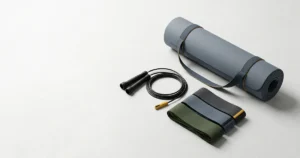
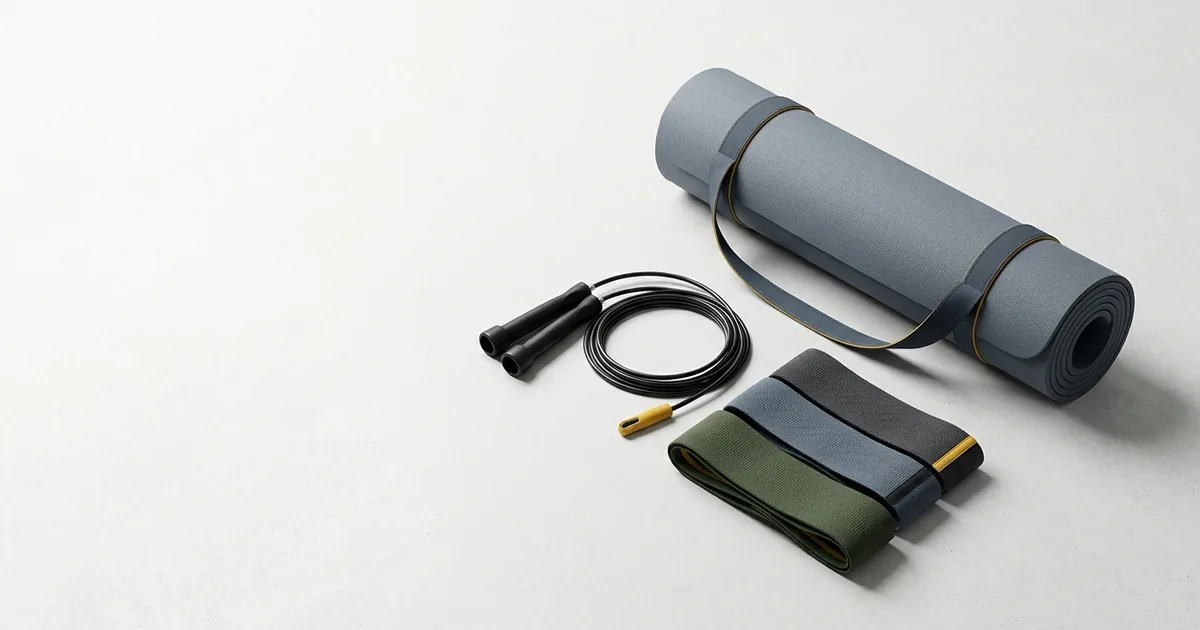
If your training setup already includes a vibration plate or a jump rope, a resistance bands strap slots in as the missing strength component, giving you a complete home circuit without a single heavy plate in the room.
Not all bands are built the same, and picking the wrong type for your goal is the most common mistake first-time buyers make. Here is how the main categories break down.
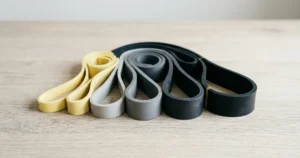
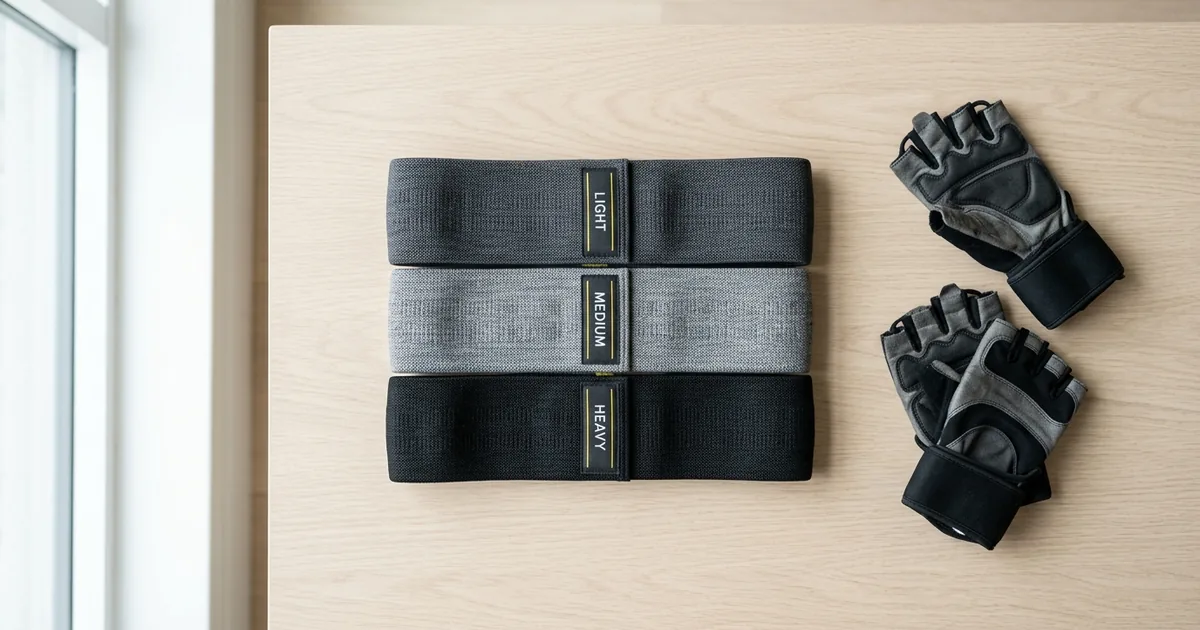
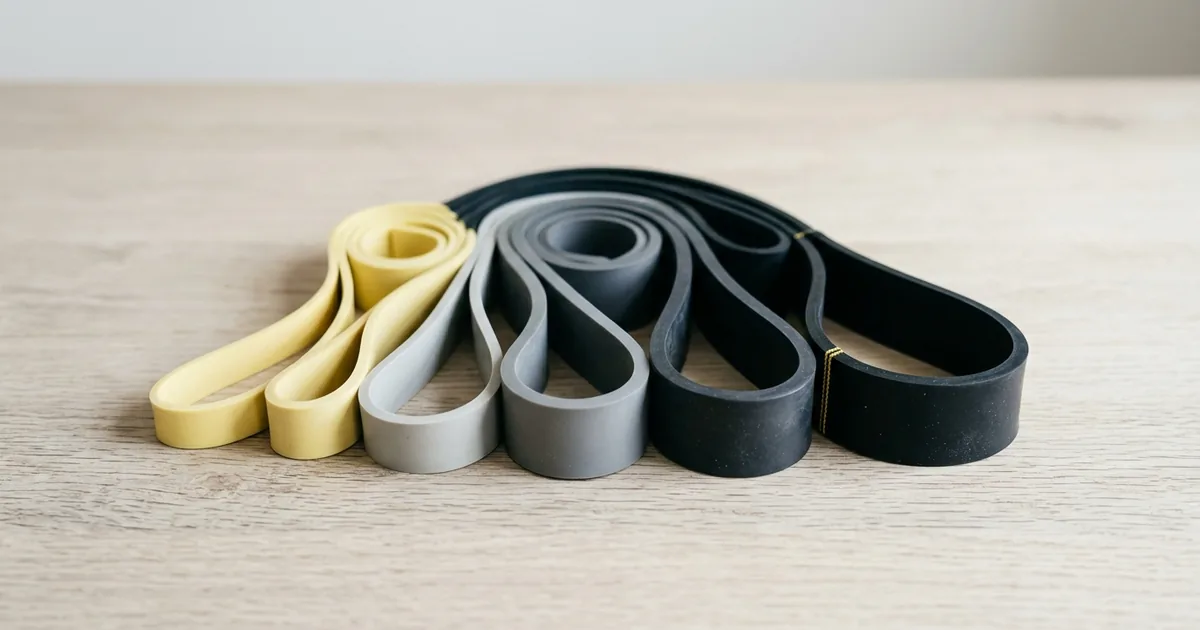
Continuous loops of flat rubber, usually sold in a graded set from light to heavy. Loop bands excel at lower body work, glute activation, and mobility drills. You step inside the loop, position it above the knee or around the ankles, and the constant closed-loop tension keeps your stabilizer muscles firing throughout the set.
These look closer to a cable machine attachment. A rubber tube runs between two molded handles, which makes them the closest substitute for gym cable exercises like rows, presses, and pull-aparts. If your goal is to mimic gym machine movement patterns at home, tube bands with handles are the strap format to start with.
Long, flat, and often reinforced at the ends with fabric loops, this is the format most people mean when they search for a resistance bands strap specifically. They are built for anchoring, looping around a door, a pole, a squat rack upright, or your own foot, and pulling from a fixed point. Because they are flat rather than round, they sit more comfortably against skin during stretching and mobility work, and they are less prone to snapping under repeated door-anchor use.
A short accessory strap with a cushioned stopper on one end, designed to wedge into any door frame. Pair it with a loop band or tube band and you instantly convert any door into a cable station. This is the single cheapest way to unlock chest press, tricep pushdown, and lat pulldown patterns at home.
Bands are graded by tension, usually color-coded, but the labeling is not standardized across brands. What matters is understanding the practical difference between levels so you buy the right spread for your training.
Best for warm-ups, shoulder prehab, rotator cuff work, and rehab-style movements. If you are recovering from an injury or new to resistance training altogether, start here regardless of what the packaging suggests.
The workhorse level for most strength-training accessory movements: bicep curls, lateral raises, face pulls, glute bridges. Most people spend 60 percent of their training time in this band.
Used for compound patterns like assisted pull-ups, banded squats, and deadlift accommodating resistance. If you are an intermediate or advanced lifter using bands to supplement barbell work, this is the range you will reach for most.
The smartest purchase is never a single band. It is a set that spans light to heavy, because a single strap that is right for your triceps will be far too light for your glutes.
A resistance bands strap is not a niche accessory. It covers full-body training when you understand how to anchor it and angle the pull.
Anchor the strap at chest height for presses and flys. Anchor it low for rows and rear-delt pulls. Anchor it overhead for pulldowns and tricep extensions. The strap’s job is simply to create a fixed point, your job is to change the angle of your body relative to that point to target a different muscle.
Loop bands dominate here. Place a loop above the knees for lateral walks and clamshells, or around the ankles for kickbacks and fire hydrants. Flat straps anchored to a low point work well for banded deadlifts and glute bridges with added resistance at the hip.
Anti-rotation work is where bands genuinely outperform free weights, because the strap resists your body’s rotation the entire time you hold a position, not just at the top of a rep.
Below are three ready-to-use routines. Each one needs nothing but a strap set, an anchor point, and around 20 to 30 minutes.
Rest 60 seconds between exercises for the first two weeks, then reduce to 30 seconds as conditioning improves.
Superset exercises 1 and 2 with minimal rest, then move through the remaining pairs to keep heart rate elevated throughout.
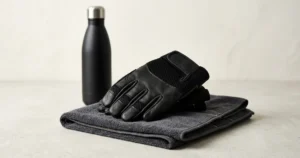
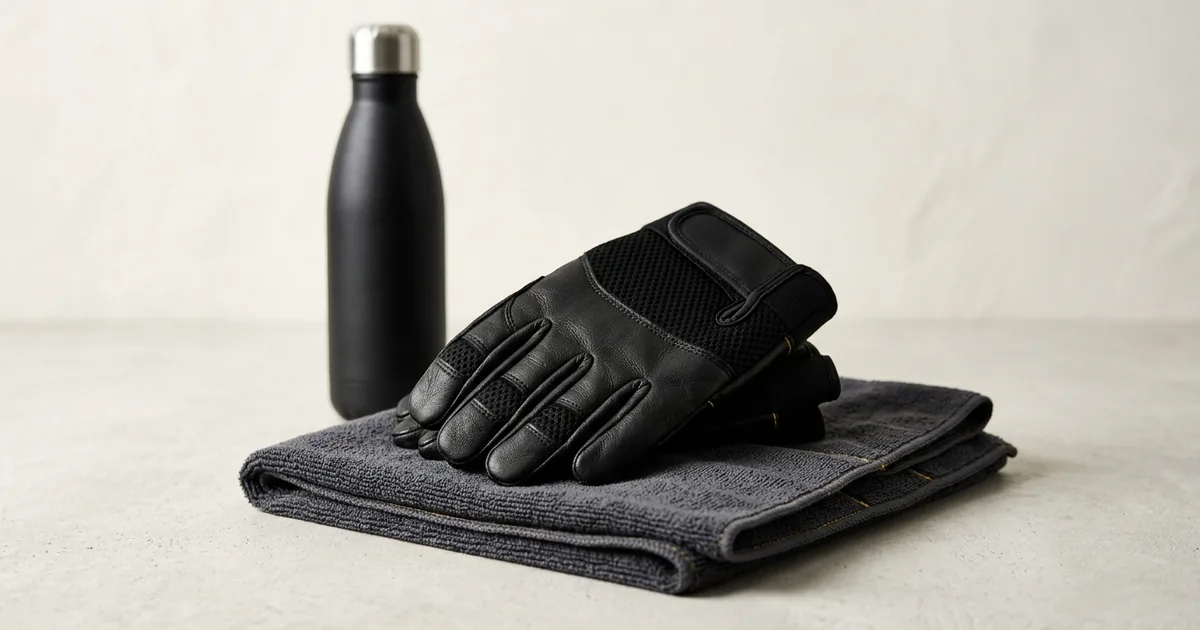
This routine needs no door, pole, or rack, only your own bodyweight as the anchor, which makes it the version to keep in your gym bag for hotel stays or long weekends away from a full setup. Pack a quick-dry microfiber towel alongside it and you have a complete travel kit that fits in a laptop bag pocket.
Buying decisions should follow your training goal, not the other way around. Work through these questions before you buy.
Strength training calls for tube bands with handles and a door anchor. Mobility and stretching call for flat, wide strap bands without handles. Rehab work calls for a light-to-medium graded loop set.
Beginners rarely need extra-heavy bands on day one. Buy a set that spans light through heavy so you are covered as strength improves, rather than replacing single bands every few months.
If you train primarily at home with a door available, a door anchor strap pays for itself immediately. If you train in a gym with a rack, a flat strap with a secure loop end works directly on any upright post.
Latex bands offer the most stretch and snap-back, but degrade faster under direct sun exposure. Fabric-wrapped straps last longer under heavy anchor use and do not pinch skin, which matters for lower body loop work. Check stitched loop ends for reinforced bar-tack stitching, this is the point that fails first on low-quality straps.
A single band locks you into one resistance level for every exercise. A set gives you the range to progress from a warm-up movement straight into a heavy compound lift within the same session.
A resistance bands strap performs best as part of a small, complementary gear stack rather than as a standalone purchase. Pair strength work from the bands with cardio intervals on a beaded jump rope for a complete conditioning session that needs no more than two square meters of floor space. Add a vibration plate for pre-workout activation or post-session recovery, and you have covered strength, cardio, and recovery without a single piece of gym machinery in the room. Browse the full fitness essentials range or check what has just landed in the new arrivals section to build out the rest of your home setup.
A resistance bands strap is durable, but it is not indestructible, and poor storage is the number one reason bands fail early.
One band cannot serve a bicep curl and a banded deadlift. Buy a graded set from the start and save yourself a second purchase within a month.
A door anchor on a hollow door, or a strap looped over an unstable chair, is a common cause of injury. Always anchor to a fixed, load-rated point, a solid door frame with a proper anchor, a squat rack, or a wall-mounted anchor point.
Bands increase resistance the further you stretch them, which means the end range of a movement is often the hardest part, the opposite of a free weight. Slow down the final quarter of each rep rather than rushing through it.
Jumping straight to your heaviest band for a working set skips the light-resistance activation phase that primes smaller stabilizer muscles, particularly around the shoulder. Spend two to three minutes on a light band before loading up.
This is not a beginner-only tool. The applications shift depending on who is training.
Bands teach movement patterns without the intimidation factor of a loaded barbell. Someone new to training can learn a squat, a row, and a press pattern safely before ever touching free weights.
Bands add accommodating resistance to barbell lifts, increasing tension at the top of a squat or deadlift where the bar alone gets easier. This teaches explosive strength through the entire range of motion.
Physiotherapists use light bands for rotator cuff, ankle, and knee rehabilitation because the low, controllable resistance protects joints while still building strength.
Anyone who spends more nights in hotels than in a home gym needs a resistance bands strap in their carry-on. It is the only strength tool that meets airline carry-on limits without a single compromise on training quality.
A resistance bands strap works best inside a structured weekly split rather than random daily sessions. A simple three-day split covers the full body without overlap:
Rotate resistance levels weekly, moving up a band once you hit the top of your rep range for two sessions in a row. This progressive overload principle applies to bands exactly as it does to free weights, the only difference is your progression lever is a color-coded strap instead of a heavier plate.
A resistance bands strap earns its place in any training bag because it does more with less: less space, less weight, less cost, and still delivers a full-body training stimulus that scales from rehab work to advanced strength training. Choose a graded set over a single band, match the format (loop, tube, or flat strap) to your training goal, and store it out of direct sunlight to protect the elastic over time. Whether your session happens in a fully equipped gym, a spare room at home, or a hotel floor on a work trip, the right strap turns any space into a training space.
A strap is typically a long, flat band with reinforced loop ends built for anchoring to a door, rack, or pole, giving you multi-angle pulling exercises. A loop band is a smaller closed circle, usually used around the legs or ankles for lower body activation work like lateral walks and glute bridges. Most complete sets include both formats.
A graded set of three to five bands covering light, medium, and heavy resistance is enough to train your entire body. A single band limits you to one exercise category, while a full set lets you warm up light and progress to heavy compound movements within the same session.
For most accessory and hypertrophy work, yes. Bands provide constant tension through the full range of motion, which dumbbells cannot match at the top of a lift. For maximal strength training with very heavy loads, bands work best as a supplement to free weights rather than a full replacement.
Use a proper door anchor attachment rather than looping the band raw over a hinge, keep the anchor point at the correct height for the exercise, and check that the loop stitching sits flat against the anchor without twisting. Chalk or a light grip aid also helps on tube band handles during sweaty sessions.
With proper storage away from direct sunlight and regular checks for micro-tears, a quality strap lasts well over a year of consistent use. Latex bands degrade faster under UV exposure than fabric-wrapped straps, so storage habits matter as much as the material itself.
Last updated: September 27, 2026 A resistance band costs less than a single personal training session and fits in a
آخر تحديث: 27 سبتمبر 2026 مساحة غرفة النوم الإضافية أو زاوية من الصالة كافية لبناء روتين تمرين حقيقي، بشرط اختيار
Last updated: September 27, 2026 Typing “best gym near me” into your phone gives you a list ranked by distance,