

Last updated: September 6, 2026
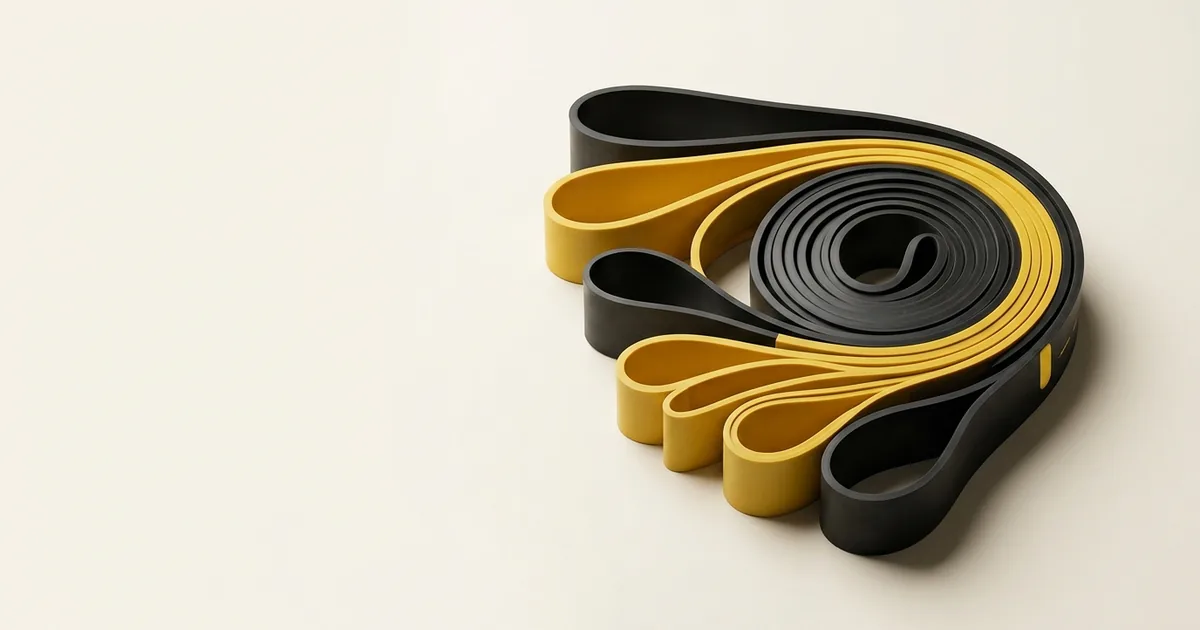
A resistance band weighs less than a phone charger, fits in a laptop bag, and can load a squat, a row, or a shoulder press as hard as a rack of dumbbells if you use it right. That is the entire case for resistance band workouts: portable tension that scales from rehab-level light to strength-level brutal, with zero dependency on a gym floor. This guide breaks down the types of bands worth owning, the science behind why they work, full routines you can run today, and how to structure a program around them whether you train in a gym, a spare room, or a hotel corridor.
Free weights and bands both create resistance, but the way that resistance behaves through a movement is completely different. Understanding this difference is the key to programming resistance band workouts that actually build strength instead of just producing a pump.
A dumbbell is heaviest relative to your leverage at the bottom of a curl and lightest at the top. A band works in reverse. Tension is lowest at the start of the stretch and climbs as you extend the band, meaning your muscles are forced to fight hardest at the point in the range where you are mechanically strongest. This is called an ascending strength curve, and it is why band presses, rows, and squats feel deceptively brutal in the last few degrees of the movement.
Because bands never go slack under proper setup, there is no momentum to hide behind. Every rep is controlled from end to end, which builds better mind-muscle connection and reduces the cheat-reps that creep into dumbbell training when fatigue sets in. For anyone rebuilding strength after an injury, or anyone who trains alone without a spotter, this is a genuine safety advantage. There is no bar to drop, no plate to catch, just tension you can release at any point.
Not all bands are built for the same job. Buying the wrong type is the number one reason people quit on resistance band workouts within a month.
Small continuous loops, usually flat fabric or latex, used around the ankles or above the knees. Built for glute activation, lateral walks, and hip stability work. Every warm-up before a lower body session should include at least one loop band drill.
Long tubes with molded handles on each end, sometimes with a door anchor. These replace cable machine movements: rows, presses, face pulls, tricep pushdowns. If you are building a home or travel setup meant to replace a gym session rep for rep, this is the category to prioritize.
Woven, non-slip bands used for glute bridges, hip thrusts, and lateral band walks. They grip skin and fabric better than rubber loops, which matters once sweat gets involved. Pair one with a microfiber workout towel and you solve the slip problem entirely during high-rep glute finishers.
Short bands with two fixed handles shaped like a figure 8. Compact and rigid, best for isolated arm and shoulder work where you need short-range, high-tension movement, such as bicep curls or lateral raises in a tight space like a hotel room.
Rigid Fitness exists around one idea: your training should not stop because your location changed. Bands are the clearest expression of that.
Bands do not replace the gym floor, they extend it. Loop a band around a squat rack for banded deadlifts, attach it to a pull-up bar for assisted or resisted chin-ups, or use it as an accommodating resistance tool layered onto a barbell lift to break through a sticking point. Bands also fill the gaps when equipment is occupied. If the cable station is taken, a tube band gives you the same row or press pattern in the empty half of the room.
A resistance band workout needs a doorframe, a chair, or a couple of square meters of floor. No rack, no plates, no noise that disturbs neighbors below. For home training that still hits every major muscle group across a week, bands paired with bodyweight work cover the load-bearing gap that used to require a full rack setup.
This is where bands separate themselves from every other strength tool. A carry-on sized band kit rolls into a suitcase corner and takes up less space than a pair of shoes. Anchor it to a door, a bed leg, or a railing, and a full session is available in a hotel room in under ten minutes of setup. No gym membership, no improvising with luggage as dumbbells, no missed training days on a business trip.
Electromyography studies on banded movements consistently show comparable or higher muscle activation in stabilizer muscles compared to free weight equivalents, particularly in shoulder and hip work. The reason is simple: bands do not just resist the primary movement, they resist any deviation from it. A banded lateral raise punishes shoulder rotation the moment your form drifts, which forces the smaller stabilizing muscles around the joint to fire harder to keep the movement clean.
This also makes resistance band workouts a preferred tool in physiotherapy and return-to-training programs. Low, controllable load with constant tension lets a rebuilding joint work through a full range without the compressive spike that a loaded barbell creates at the bottom of a lift. Many athletes keep a light band in their bag specifically for shoulder and hip prehab work on non-lifting days, well before or after a heavier session.
This is a complete session, roughly 40 to 45 minutes, that hits every major muscle group. Run it two to four times a week depending on your split.
A short warm-up on a vibration platform before this block increases blood flow and range of motion, particularly useful in cooler months or early morning sessions when muscles are stiffer.
Anchor the tube band at chest height for presses, waist height for rows, and overhead or under a foot for presses and curls. Handles get slippery fast once palms sweat, so a pair from the gym gloves and straps range keeps grip secure through the higher rep ranges this style of training demands.
Higher rep ranges are non-negotiable here. Bands are lightest at the bottom of most lower body movements, so low reps under-load the muscle. Fifteen to twenty controlled reps with a band that fights back hard at lockout is where the growth stimulus actually lives.
Anti-rotation work with a band is one of the few core exercises that trains the core’s actual job, resisting rotation rather than creating it. This carries over directly to squat and press stability.
Finish with static band-assisted stretches for hamstrings, chest, and shoulders, holding each for 30 seconds. Wipe down handles and anchors before packing away, sweat left on rubber degrades it faster than almost anything else.
A structured block beats random daily sessions. This is a simple four-week progression built entirely around bands, suitable for home, gym, or travel use.
Three full-body sessions per week, moderate band tension, 12 to 15 reps per exercise, 60 to 90 seconds rest between sets. The goal is movement quality, full range of motion, and control on the eccentric (lowering) phase of every rep. Do not rush this phase even if the tension feels light, this is where the mind-muscle connection that makes later phases effective gets built.
Move to a heavier band or double up bands on key lifts (chest press, squat, row). Drop rest to 45 to 60 seconds and add a fourth session focused purely on conditioning: circuits of squat, row, press, and lunge back to back for four rounds with minimal rest. By the end of week four you should notice a clear jump in the band tension you can control through a full range without form breaking down.
Repeat the block with the next band tension up, or shift focus toward one of the specific goals below once the foundation is solid.
Bands are a tool, not a program by themselves. How you structure sets, reps, and rest around them depends entirely on what you are training for.
Prioritize slow eccentrics (3 to 4 second lowering phase), higher volume (4 to 5 sets), and shorter rest (45 to 60 seconds) since bands cannot load a true 1-rep max the way a barbell can. Stack two bands of different tension on major lifts to increase total resistance once single-band tension becomes easy for 20 clean reps.
Circuit format works best. Pick five to six exercises covering upper body, lower body, and core, and run them back to back with 15 to 20 seconds rest between exercises and 90 seconds between full rounds. Four rounds takes about 25 minutes and produces a genuine conditioning effect. Pairing a banded circuit with short bursts on a jump rope between rounds turns a strength session into a hybrid conditioning session without adding equipment bulk to your bag.
Light band tension, high reps (20 to 25), full pauses at end range, and slow controlled tempo throughout. This category is about restoring or protecting joint function, not chasing fatigue. Shoulder external rotations, banded hip flexor stretches, and ankle dorsiflexion drills fall here. Ten minutes a day of this work, separate from your main training session, keeps nagging joint issues from becoming training-limiting problems.
When a band kit is the only tool available, structure the session around supersets to compensate for the lack of heavy load: pair a push movement with a pull movement (band press superset with band row) and a lower body movement with a core movement (banded squat superset with Pallof press). Four rounds of two supersets covers the whole body in about 30 minutes with nothing but a door anchor and a hotel room floor.
Buying one band and expecting it to cover every movement is the most common setup mistake. A proper kit covers a tension range, not a single number.
Most bands are color-coded by tension, typically light, medium, heavy, and extra heavy. Start a kit with at least three tensions. Light bands are for warm-ups, mobility, and small stabilizer muscles (rotator cuff, glute medius). Medium and heavy bands cover the big compound patterns (squat, press, row). Extra heavy bands are for assisted pull-ups or advanced lifters stacking bands for extreme tension at lockout.
Latex bands offer the smoothest tension curve but degrade faster in direct sun and heat, a real factor in Gulf climates where a bag can sit in a hot car. Fabric-covered bands last longer, resist rolling, and grip better against skin during glute and hip work, though they add slight bulk to a travel kit. For a portable kit meant to survive UAE and KSA conditions, fabric-covered loops plus latex tubes for handled movements is the most practical combination.
Handled tube bands are better for gym-style pressing and pulling patterns where grip comfort over higher rep ranges matters. Loop bands are better for lower body and stability work where the band sits on the body rather than in the hand. A complete kit needs both, they are not interchangeable for every movement. Browse the current lineup under new arrivals to see the latest band and grip additions before building out a kit.
Resistance band workouts get stronger when combined with a small set of other portable tools rather than treated as a standalone system.
None of these add meaningful bulk to a bag, which keeps the entire kit within the portable gym, home, and travel philosophy the bands themselves are built around.
Most people who quit on bands after a few weeks are not failing because bands do not work, they are failing because of a handful of avoidable setup and programming errors.
The most common myth around resistance band workouts is that they cannot build real strength because you cannot add weight the way you do to a barbell. Bands progress differently, not less effectively.
Combine two or three of these methods across a training block and a single band kit can carry a lifter’s progression for months before a heavier tension grade is even necessary.
Resistance band workouts solve the one problem that ends more training streaks than any other: inconsistency caused by location. A kit that fits in a small bag delivers a full-body training stimulus whether the setting is a fully equipped gym, a home floor, or a hotel room on a work trip. Build a kit across a tension range, structure sessions around real progression methods, pair the bands with a small set of complementary portable gear, and the excuse of not having access to equipment stops applying. The training never has to stop just because the location changed.
Bands can build genuine muscle and strength when programmed with proper volume, controlled eccentrics, and progressive tension increases. The ascending strength curve of a band actually challenges muscles harder at the top of a movement than a free weight does, which drives real hypertrophy when reps and tension are managed correctly.
Three is enough to start: a light loop band for warm-ups and stability work, a medium tube band with handles for pressing and rowing patterns, and a heavier band for lower body compound movements. Add tensions as current ones stop challenging you.
Yes, when structured as circuits with short rest periods. Running five to six exercises back to back for multiple rounds raises heart rate and builds conditioning while still applying muscular tension, giving a combined strength and cardio effect in one session.
Fabric-covered bands grip skin and fabric better than smooth latex, and drying hands or working surfaces with a towel before each set prevents sweat-related slippage. Checking anchor points before every session also prevents band movement mid-set.
For most strength, conditioning, and mobility goals, yes, a well-built band kit covers the same major movement patterns as a gym floor. Very advanced strength training aiming for maximal loads eventually benefits from barbell work, but the majority of general fitness goals are fully achievable with bands alone.


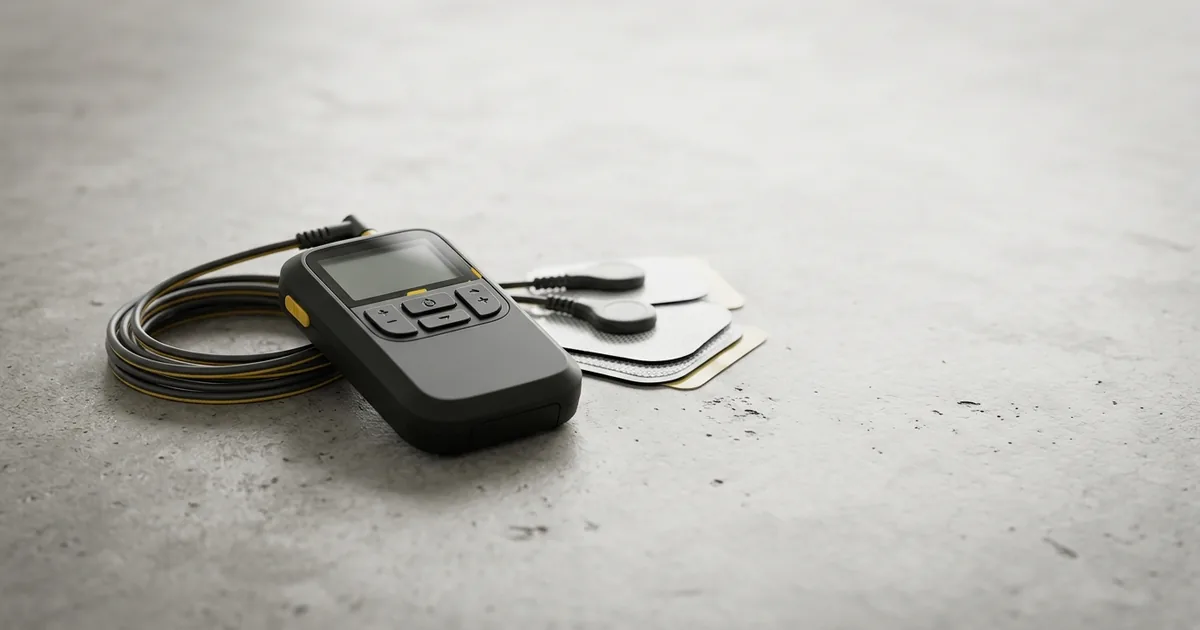
Last updated: October 21, 2026 Sore legs the day before a big lift. Tight shoulders after three straight gym sessions.
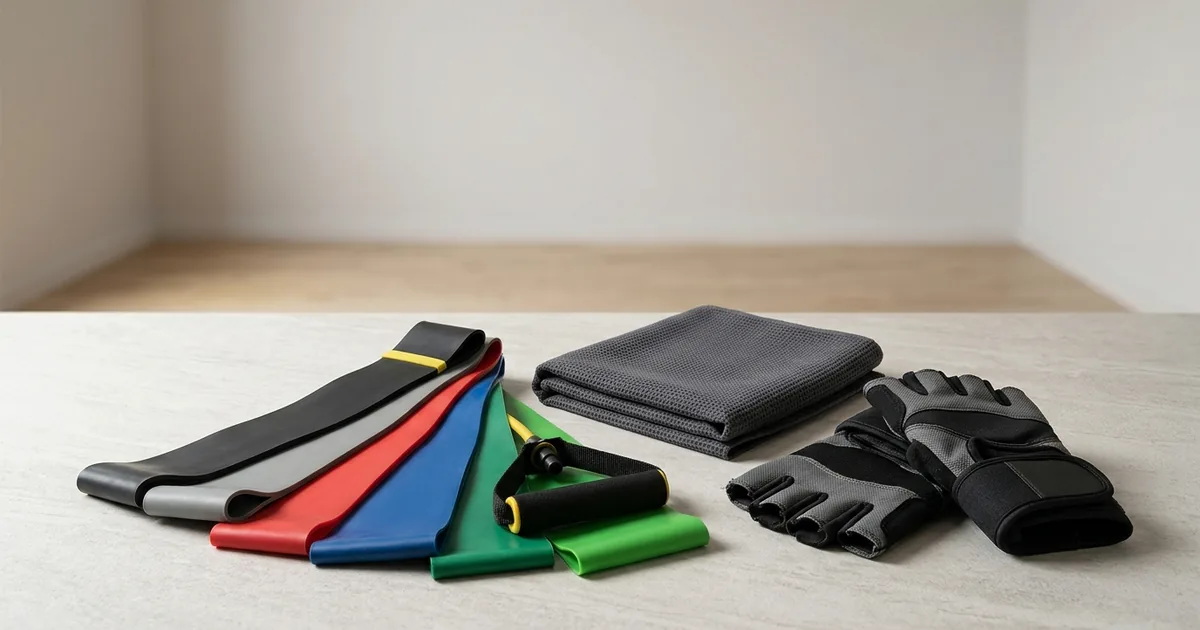
Last updated: October 21, 2026 Most home gyms fail for the same reason: the gear doesn’t match the space, the
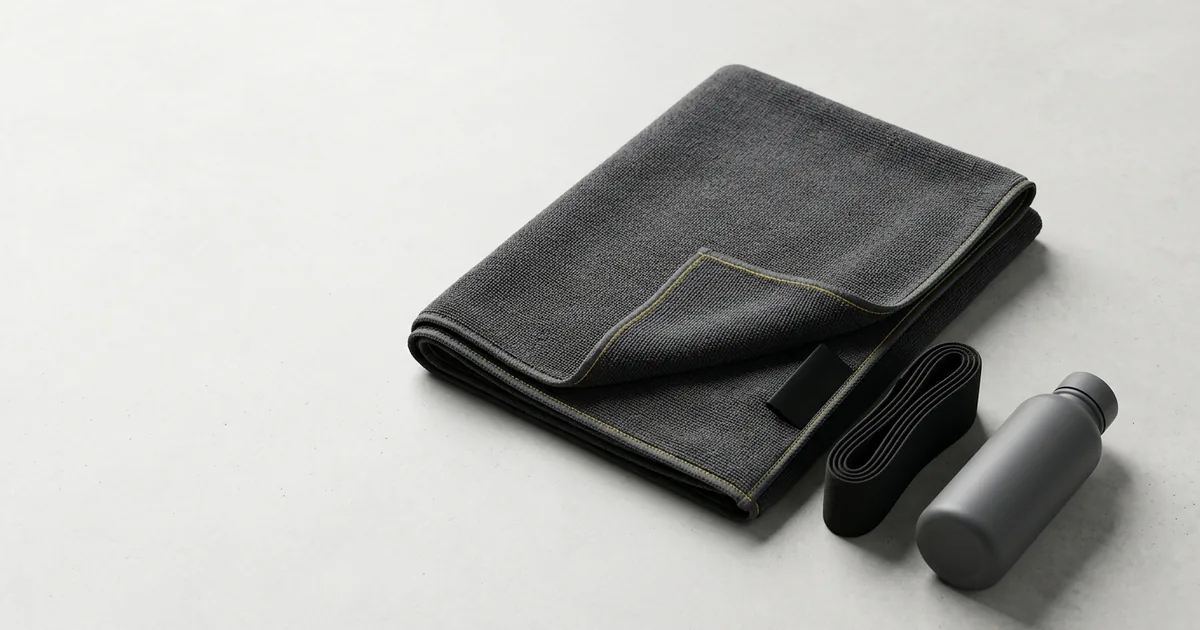
Last updated: October 18, 2026 Most people buy a gym towel the way they buy a phone charger, fast, cheap,