
Last updated: July 29, 2026
A walking pad solves a problem that most home fitness gear ignores: consistency. You do not need a spare room, a gym membership, or a block of free time to log daily steps. You need a flat surface, a power socket, and about 20 minutes. For residents in Dubai, Abu Dhabi, Sharjah, and Riyadh living in apartments where outdoor walking means dodging heat for eight months of the year, a walking pad is not a luxury add-on. It is the most practical piece of gear you can own.
This guide breaks down exactly what separates a good walking pad from a bad one, what you should expect to pay in AED (and SAR if you are buying from KSA), and how to build it into a real routine instead of letting it collect dust under the bed.
The regional climate is the single biggest reason walking pads have exploded in popularity across the Gulf. Between May and September, outdoor walking in Dubai or Riyadh is not a serious option for most of the day. Malls offer air-conditioned walking routes, but they are crowded, inconsistent, and not built for a structured cardio session. A walking pad removes the climate variable entirely. You get the same flat, controlled surface every single day, regardless of what it is doing outside.
The second reason is space. Villas are less common than compact apartments in cities like Dubai, Abu Dhabi, and Jeddah. A treadmill with handlebars and an incline motor can take up a footprint that most apartment dwellers simply do not have. A walking pad is built to slide under a bed, stand upright in a closet, or tuck behind a sofa. It is designed for homes where every square meter is already accounted for.
The third reason is behavioral. Step count is one of the most reliable predictors of long-term health outcomes, and it is far easier to hit 8,000 to 10,000 steps a day when you can walk while on a video call, while reading, or while watching a show, instead of needing a dedicated workout window. A walking pad turns passive time into active time without demanding extra hours from your day.
Not all walking pads are built the same, and the differences matter more once the pad is actually sitting in your living room. Here is what actually affects day-to-day usability.
Most walking pads are built for speeds between 1 km/h and 6 km/h, which covers slow recovery walks up to a brisk incline-free power walk. A motor rated below 1 HP will struggle with continuous use and tends to overheat during longer sessions. Look for a continuous duty rating of at least 1.5 HP if you plan to walk daily for 30 minutes or more. If you are heavier than 90 kg or plan to jog occasionally, a stronger motor keeps the belt speed consistent instead of lagging under load.
A narrow deck feels fine for the first five minutes and uncomfortable after twenty. Look for a walking surface at least 40 cm wide and 100 cm long. Anything smaller forces an unnatural gait, which increases the risk of missteps, especially if you are tall or have a longer stride. Weight capacity matters just as much. Most quality walking pads support 100 to 120 kg. Buying below your actual body weight shortens the belt’s lifespan and increases motor strain.
This is the most underrated spec on any walking pad listing. If you live in a building with shared walls or floors in Dubai Marina, Business Bay, or similar dense residential areas, a noisy motor becomes a real problem, especially if you walk early morning or late evening. Quality pads run at 40 to 50 decibels, roughly the volume of a quiet conversation. Anything louder will be noticeable to neighbors below you and disruptive to anyone else at home.
Since the entire appeal of a walking pad is compact storage, check the folded dimensions before buying, not just the unfolded footprint. Some pads fold flat to slide under a bed frame with 15 cm of clearance. Others fold into a thicker block that needs a closet or storage room. If you live in a studio or one-bedroom apartment, prioritize under-bed storage compatibility.
Basic walking pads are flat. Some mid-range and premium models add a manual or auto incline of up to 15 percent, which increases calorie burn significantly without increasing speed. If your goal is fat loss rather than just step count, incline capability is worth the extra cost. If your goal is simply staying active during work calls, a flat deck is enough.
Rigid Fitness builds around one idea: gear that moves with you, whether that is between rooms in your home, in and out of a gym bag, or across a border for work travel. A walking pad fits that philosophy better than almost any other cardio option.
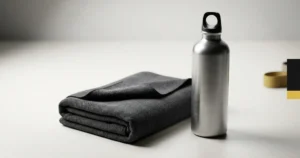
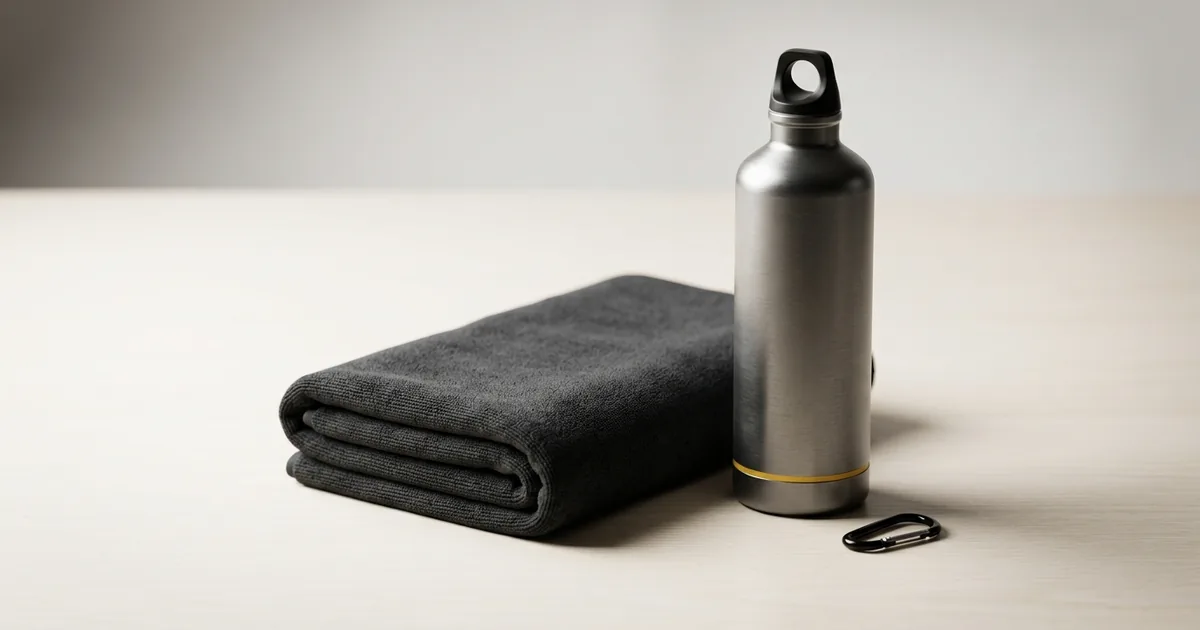
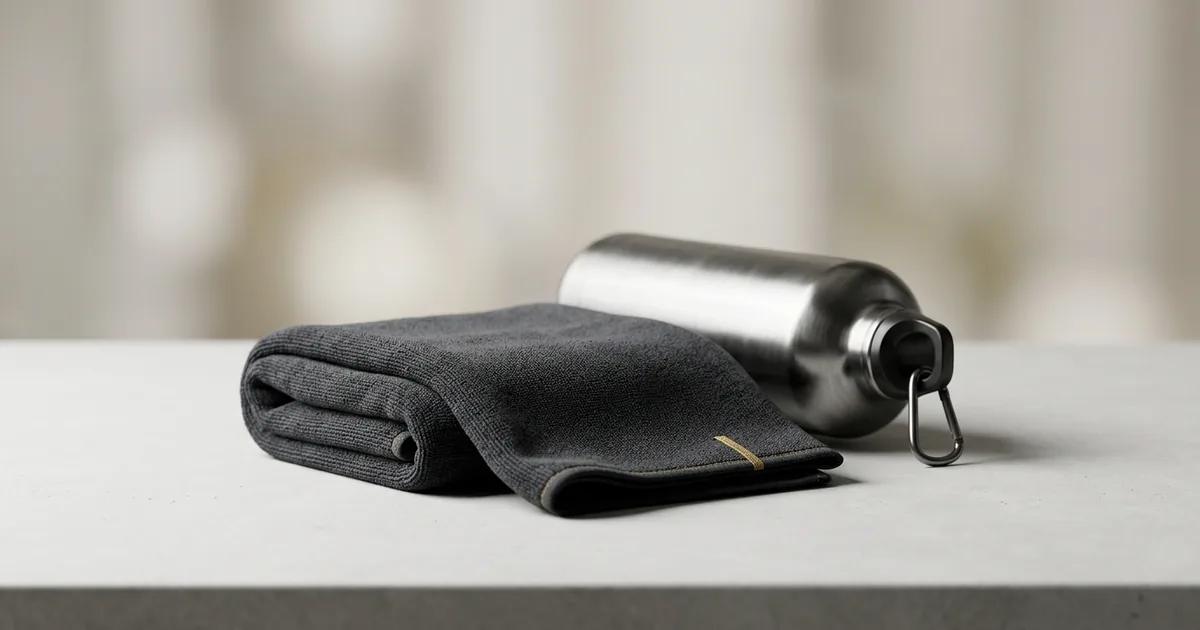
This is the primary use case. Set it up in a home office corner, a living room, or a bedroom, and use it during calls, while reading, or as a dedicated 20 to 30 minute session before or after work. Pair it with a set of microfiber workout towels nearby, since even low-intensity walking in a warm apartment builds up sweat faster than people expect.
If you already have a home gym corner with a vibration plate for recovery and mobility work, a walking pad rounds out the setup with genuine cardio volume. Vibration plates are excellent for circulation, muscle activation, and short recovery sessions, but they do not replace sustained cardio. Running both in rotation, walking pad for steady-state cardio, vibration plate for recovery days, covers more training bases than either does alone.
Compact walking pads without handlebars are light enough, in the 20 to 25 kg range, to be worth taking to a second home or a longer stay abroad, especially if you are used to daily step counts and do not want to rely on hotel gym treadmills, which are often outdated or occupied during peak hours.
Pricing in the UAE market generally falls into three tiers.
Entry-level (600 to 1,100 AED): Basic flat-deck pads, 1 to 1.5 HP motors, no incline, minimal app connectivity. Good for light daily walking, not built for heavier or long-duration use.
Mid-range (1,100 to 2,000 AED): Stronger motors, wider decks, better noise insulation, sometimes a basic incline function. This tier covers most home fitness buyers who want a daily-use pad without over-spending.
Premium (2,000 to 3,500+ AED): Auto-incline, app-based workout tracking, higher weight capacity, quieter motors, and better long-term durability. Worth it if you plan to use the pad five or more days a week for a year or longer.
For buyers browsing from Saudi Arabia, expect roughly equivalent pricing in SAR after conversion, generally sitting between 600 SAR for entry-level pads up to 3,500 SAR for premium models. Always check whether delivery to Riyadh, Jeddah, or Dammam is included or charged separately, since walking pads are bulky enough that shipping cost can shift the total price meaningfully.
Where you place the pad affects how consistently you use it. A few practical rules apply regardless of whether you are in a Dubai apartment, an Abu Dhabi villa, or a Riyadh compound.
Position it near a desk if you plan to walk during work calls, or in front of a TV or window if you plan to use it for dedicated sessions. Avoid carpeted areas if possible, since thick carpet can affect belt stability and airflow underneath the motor.
Hard flooring, tile, or a thin mat underneath works best. The motor housing needs airflow, especially in the UAE and KSA where indoor temperatures during summer months can still run warmer than ideal even with air conditioning. Leave at least 5 cm of clearance around the motor housing and avoid pushing the pad flush against a wall.
Walking pads draw continuous power during use. Avoid daisy-chaining through multiple extension cords or shared power strips with other high-draw appliances. A direct wall socket connection is safer and reduces the risk of voltage drops that can affect motor performance.
A walking pad is most effective as part of a small, rotating setup rather than a standalone purchase. A few pairings work particularly well for home fitness in the UAE.
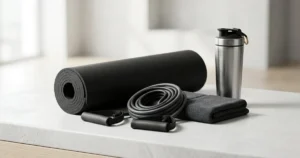
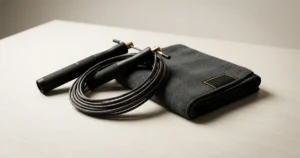
For interval variety, keep a beaded jump rope nearby. Alternate three minutes on the walking pad with one minute of rope work for a simple, effective interval circuit that raises heart rate faster than steady walking alone. For recovery days, a short session on a vibration plate after walking helps with circulation and muscle recovery, especially on days following longer walking sessions. And since sweat management matters even during low-intensity indoor cardio, keeping a set of microfiber workout towels within reach keeps the pad and surrounding floor dry and hygienic.
If you are building a broader home setup, it is worth browsing the fitness essentials category for complementary gear, or checking the new arrivals section for the latest additions to the lineup.
Start with 15 to 20 minutes at 3 to 4 km/h, once a day. Focus on consistency over intensity. The goal in the first two weeks is simply building the habit of stepping on the pad every day, not maximizing calorie burn.
Move to 30 to 40 minutes at 5 to 6 km/h, four to five times a week. If your pad has incline capability, add a 5 to 8 percent incline to increase intensity without increasing speed, which is easier on joints while still raising heart rate.
Alternate 3 minutes at 6 km/h flat with 2 minutes at 4 km/h on a 10 to 12 percent incline. Repeat for 30 to 45 minutes. This combination builds both cardiovascular capacity and lower-body endurance more effectively than flat walking alone.
For those using the pad during work hours, keep speed low, around 2 to 3 km/h, and treat it as background movement rather than a workout. Even at this pace, two to three hours of accumulated walking time across a workday adds meaningful step count without affecting focus or typing accuracy.
Heat and dust both affect walking pad longevity more in this region than in cooler, drier climates.
Sand and fine dust are common in Gulf homes, even with air conditioning running constantly. Wipe down the deck and motor housing weekly with a dry microfiber cloth to prevent buildup around ventilation points, which can cause the motor to run hotter than it should.
Most walking pads need belt lubrication every three to six months depending on usage frequency. Check your manual for the specific lubricant type, since using the wrong product can cause the belt to slip or degrade faster.
If folding the pad away between sessions, avoid storing it in direct sunlight, such as near a balcony door, since prolonged heat exposure can affect the belt material and internal electronics over time.
UAE and KSA both run on 220-240V standard household power, which is generally compatible with most walking pads sold in the region. Still, confirm voltage compatibility before importing a pad from outside the GCC, since mismatched voltage can damage the motor or void warranty coverage.
Buyers new to walking pads tend to repeat the same handful of mistakes.
Buying based on price alone: The cheapest option often has the weakest motor and shortest lifespan under daily use. If you plan to walk most days of the week, a mid-range pad will outlast an entry-level one by a wide margin.
Ignoring noise ratings: This becomes a real issue only after the pad is already installed and neighbors start noticing. Check decibel ratings before buying, not after.
Underestimating deck size needs: Taller users or those with a longer stride often find compact decks uncomfortable after the first few sessions. Always check deck length against your height before ordering.
Skipping maintenance: A neglected walking pad in a dusty environment wears out significantly faster than one maintained on a regular schedule.
Treating it as a standalone solution: Walking alone is excellent for baseline activity, but pairing it with strength work, mobility sessions, or interval training produces far better overall fitness outcomes than walking in isolation.
The best walking pad for home fitness in UAE is the one that matches your actual living situation, not the one with the most marketing hype. Prioritize motor strength, deck size, and noise level over flashy extras, budget realistically in AED based on how often you will actually use it, and treat it as one piece of a broader home fitness routine rather than a single solution. Done right, a walking pad becomes the easiest habit you keep long after the treadmill dreams fade.
Entry-level pads start around 600 to 1,100 AED, mid-range options with better motors and noise insulation run 1,100 to 2,000 AED, and premium pads with incline and app tracking go from 2,000 to 3,500+ AED. Choose based on how many days a week you plan to use it.
Quality walking pads run at 40 to 50 decibels, which is quiet enough for apartment use, including early morning or late evening sessions. Always check the decibel rating before buying, since cheaper models can run noticeably louder.
Yes, as long as it is placed away from direct sunlight and wiped down weekly to prevent dust buildup around the motor. Regular belt lubrication every three to six months also helps maintain performance in dusty indoor environments.
Incline is useful if your goal is higher calorie burn without increasing speed, but it is not necessary for general step-count goals or desk walking. A flat deck is sufficient for most beginner and casual users.
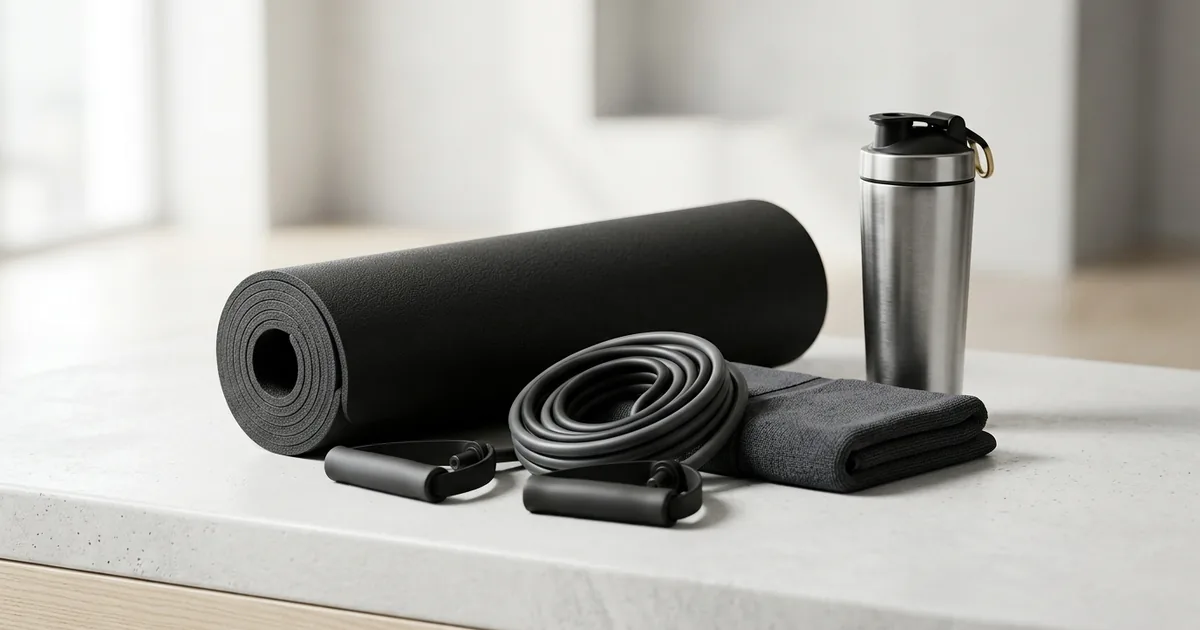
A vibration plate works well for recovery days, a jump rope adds interval variety, and microfiber towels help manage sweat during longer sessions. Together these cover cardio, recovery, and hygiene without needing a full gym setup.
Last updated: July 29, 2026 If you searched ‘gym towel cotton on body,’ you’re probably comparing the classic cotton gym
Last updated: July 29, 2026 A sweat towel is the one piece of gear most lifters forget until the middle
Across six months of Google search data from this region, the clearest pattern is not about equipment at all. People