

Last updated: August 2, 2026
Typing “best gyms nearby” into Google is usually the last step before a decision you’ll live with for 12 months. A membership contract, a commute you’ll do four to six times a week, and a monthly debit that keeps hitting your account whether you show up or not. Most people pick based on proximity and a walk-through with a smiling sales rep. That’s how you end up paying for a gym you stop visiting by week six. This guide breaks down what actually matters when picking a gym near you in the UAE or KSA, and where a home or travel setup quietly outperforms even the best-located gym on the map.
Distance on a map is not the same as distance in your schedule. A gym 3km away that requires two traffic lights, a parking hunt, and a lift ride can cost you more time than a gym 8km away with a direct route and dedicated parking. When people search “best gyms nearby,” what they’re actually asking is: where can I train without friction becoming the reason I skip a session?
Friction is the real enemy of consistency, not motivation. Motivation is unreliable by design. It spikes after a good meal, a New Year, or a photo that triggered some self-comparison. It fades within three weeks. What keeps people training long after motivation disappears is low friction: gear that’s ready, a location that doesn’t cost you 40 minutes round trip, and a routine that doesn’t require negotiation every single day. So before ranking gyms by star reviews, rank them by how much friction they add to your week.
Skip the marketing tour for a minute. Here’s what actually predicts whether you’ll still be a member in six months.
Measure the actual door-to-door time at the hour you’d realistically train, not at 11am on a Sunday when the sales rep drove you there. Peak traffic in Dubai, Riyadh, or Jeddah can double a commute that looked short on a map. If your realistic commute is over 20 minutes each way, you are adding close to 3.5 hours a week just getting to and from a bench press.
Visit the gym at the time you’d actually train, typically 6-8am or 6-9pm. A gym that looks spacious at 2pm can turn into a queue for every rack by 7pm. Ask the front desk directly how busy it gets during your exact time window. If they dodge the question, that’s your answer.
Walk the floor and check for worn cables, wobbly benches, and machines with an “out of service” sign that’s been there since last month. A gym with fewer stations that are well maintained beats a gym with twice the floor space and half of it broken.
Check the state of the mats, the smell near the cardio section, and whether wipes and sanitizer stations are actually stocked, not just present as a sign on the wall. This is a small detail that tells you everything about how the place is run day to day.
Ask for the total cost in AED including registration fees, annual maintenance charges, and freeze policies. Many gyms in the UAE and KSA quote a low monthly rate but attach a one-time joining fee that can add 300-600 AED to your first payment. Get every number in writing before signing anything.
If group classes or a trainer session are part of why you’re joining, check the actual weekly schedule, not a generic “we offer classes” answer. Confirm your preferred class times aren’t already overbooked or frequently cancelled.
The fitness market across the Gulf has matured fast, but the experience still varies sharply by city, neighborhood, and price tier.
Premium chains and boutique studios dominate central Dubai and Abu Dhabi, often with strong facilities but membership costs that can run from 250 AED to over 800 AED monthly depending on location and access level. Community gyms inside residential towers are usually included in rent or offered at low daily rates, but the gear selection is often limited to a treadmill, a multi-station machine, and a few dumbbells. These are fine for light maintenance but rarely enough for serious progressive training.
The Saudi market has expanded rapidly since gyms opened to mixed and women-only formats more broadly. Riyadh and Jeddah now have a strong mix of large-format fitness clubs and smaller neighborhood setups. Pricing tends to be competitive, but availability of quality strength stations during peak evening hours is still a common complaint in fast-growing areas where membership volume has outpaced floor space.
Budget gyms across both markets can be a reasonable starting point if your training needs are simple, cardio, basic strength work, and a treadmill. Where they typically fall short is specialty gear like cable stations, functional trainers, or dedicated mobility zones. That gap is exactly where a personal setup at home becomes useful, even for people who keep an active gym membership.
Even the best-located gym has three built-in limitations that no amount of proximity fixes.
Every session costs you the workout time plus the travel time. Over a year, a 20-minute round trip four times a week adds up to roughly 69 hours, nearly three full days, spent just getting to and from a gym. That’s before you’ve done a single rep.
The best gym near you is still shared with everyone else who works the same hours you do. Waiting for a rack, a bench, or a rope during the one hour you have free is a hidden cost that never shows up in the membership brochure.
Business trips, weekend getaways, family visits back home, none of these pause with your gym membership. If your only training option is a fixed location, every trip becomes a forced break. A portable setup solves this permanently, letting your training follow your schedule instead of the other way around.
The most consistent training setup isn’t the nearest gym, it’s the one that’s always within reach, whether that’s your living room, a hotel room, or your actual gym floor. This is the entire idea behind portable workout gear: build a setup once, and it goes wherever you go.
A vibration plate takes up less floor space than a yoga mat and delivers a warm-up or recovery session in ten minutes flat. No commute, no waiting for a foam roller someone else is using, no gym hours to work around. It’s one of the few pieces of gear that genuinely earns its place in a small apartment or a hotel room during a work trip.
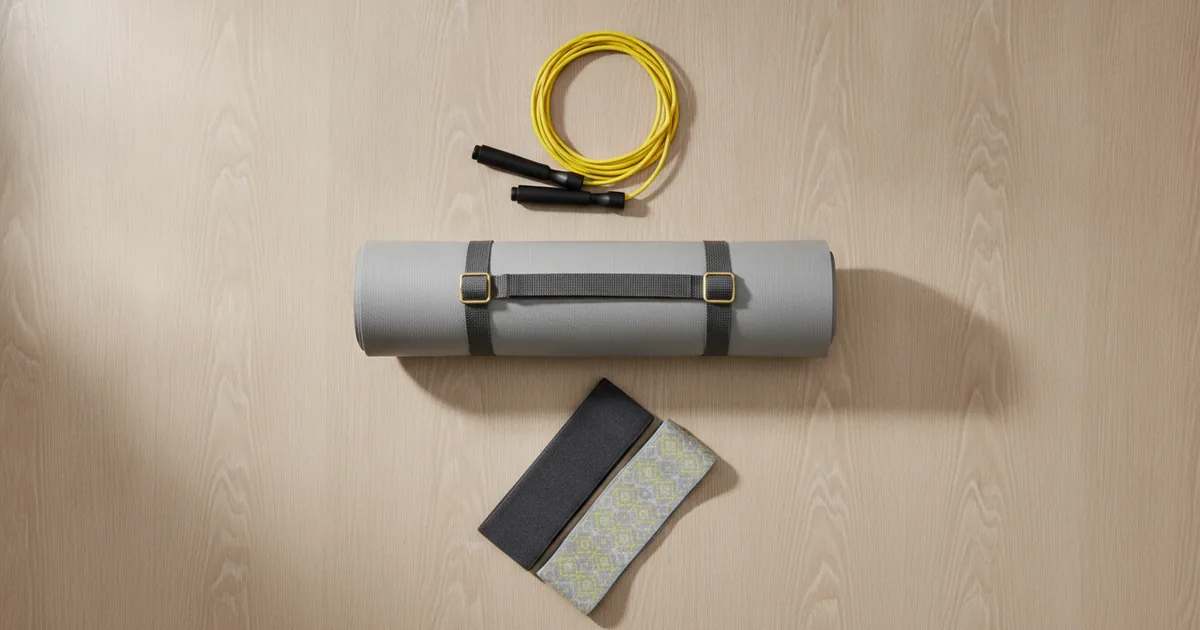
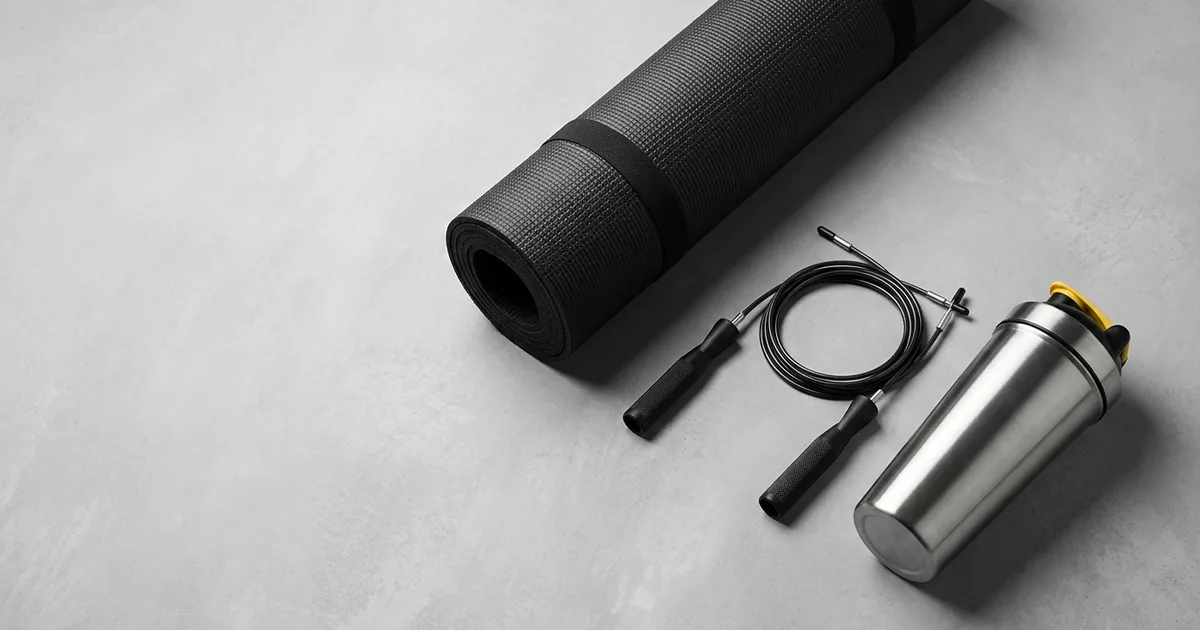
An adjustable jump rope replaces an entire cardio section. Ten minutes of skipping burns comparable calories to a light jog, with zero wait for machine access and zero dependency on a gym’s opening hours. It packs into a bag with room to spare, which makes it the default cardio tool for anyone who travels for work or splits time between two cities.
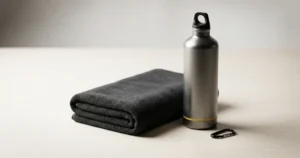
Shared gym benches and mats are a hygiene compromise most people accept without thinking about it. A set of microfiber workout towels solves this at home and at the gym, drying faster than cotton and folding small enough to live permanently in a gym bag.
Beyond the core pieces, the fitness essentials collection covers resistance bands, grip tools, and mobility gear that fill in the gaps a gym membership leaves behind. For anyone building a setup from scratch, the new arrivals page is the fastest way to see what’s currently available without digging through the entire catalog.
The strongest approach for most people isn’t choosing between a gym membership and a home setup, it’s running both. Use a nearby gym for heavy compound lifts that genuinely need a rack, a bar, and plates. Use a home or travel setup for everything else: warm-ups, mobility work, recovery, cardio, and any session that happens on a day you can’t make it to the gym.
This hybrid model removes the single point of failure. If the gym is packed, closed for maintenance, or simply too far given your day’s schedule, your training doesn’t stop, it just shifts to the setup you already have at home. People who train consistently for years almost always run some version of this model, even if they never call it that.
Run the numbers before deciding where to put your budget. A mid-range gym membership in the UAE or KSA typically runs 200-500 AED monthly once fees are included, which totals 2,400-6,000 AED a year. A core portable setup, a vibration plate, a jump rope, a set of towels, and a few essentials, is a one-time cost that’s frequently a fraction of a single year’s membership, and it keeps working for years without a recurring bill. This isn’t an argument against gym memberships, it’s a case for not treating a gym as your only option, especially when travel, irregular hours, or peak-time crowding are already working against you.
Never sign a 12-month contract off a single walk-through. Ask for a trial day or a one-week pass and actually train during it, at your real schedule, not the gym’s quiet hours. Bring your own towel and check whether the locker rooms, water stations, and floor space hold up under normal daily use rather than a freshly cleaned demo state. Talk to two or three current members in the changing room, not the staff, about what the gym is actually like six months in. This single conversation often reveals more than the entire sales pitch.
Instead of relying on a single “best gyms nearby” search result, build a shortlist using a repeatable process.
This process takes a week or two longer than walking into the first gym you find and signing on the spot. It also dramatically increases the odds you’re still training there, consistently, a year from now.
The best gyms nearby aren’t always the ones ranked highest in a search result or the ones with the flashiest lobby. They’re the ones with the shortest real commute, the least peak-hour crowding, well-maintained gear, and honest pricing in AED. Even then, no single location covers every scenario, travel, odd hours, or a day when the gym floor is packed solid. Pairing a solid nearby gym with a portable setup at home closes that gap permanently, so your training never depends on one address, one schedule, or one membership card.
Both matter, but gear quality and peak-hour crowding usually predict long-term consistency better than raw distance. A slightly farther gym with well-maintained stations and manageable crowds beats a nearby gym with broken cables and a queue for every rack.
Mid-range gyms usually run 200-500 AED monthly once joining fees and annual charges are factored in, totaling roughly 2,400-6,000 AED a year depending on location and access level.
Yes. A home or travel setup covers warm-ups, recovery, cardio, and mobility work on days you can’t reach the gym, during business trips, or when peak hours make the gym floor too crowded to train efficiently.
Get the total annual cost in AED in writing, visit during your actual training hours to check crowding, inspect gear condition, and confirm freeze policies for travel before committing to anything beyond a monthly trial.
A vibration plate for warm-ups and recovery, an adjustable jump rope for cardio, and a set of quick-dry towels cover most of the gaps a nearby gym leaves, especially for travel days or crowded peak hours.
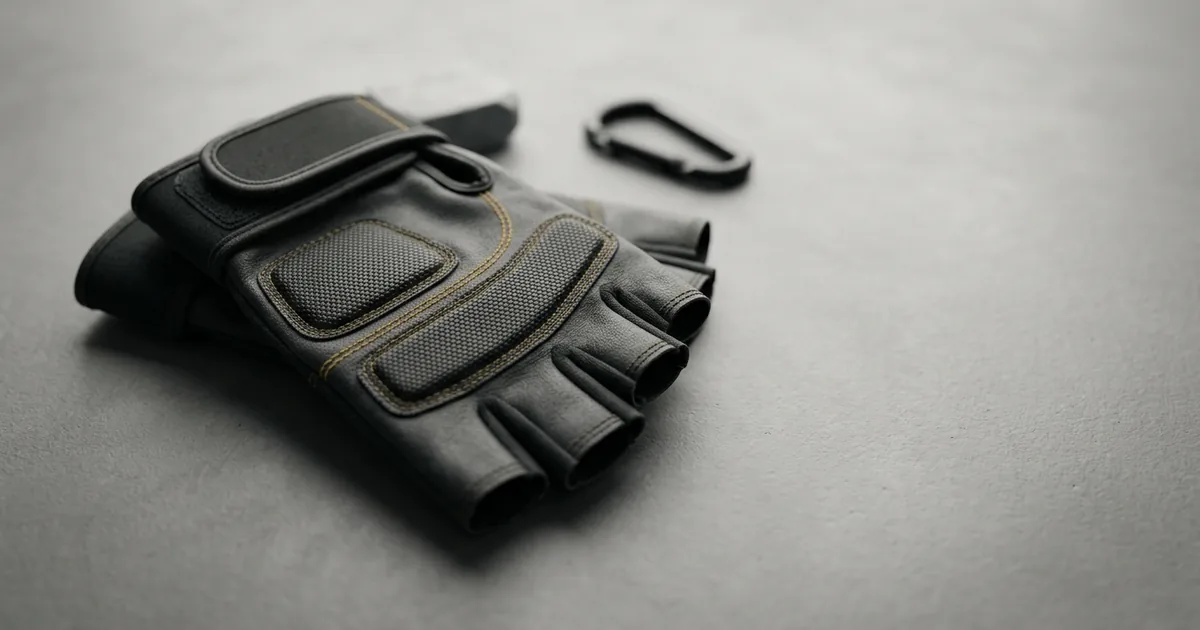
Last updated: August 2, 2026 Grip fails before muscles do. That is the reality for most lifters, and it is
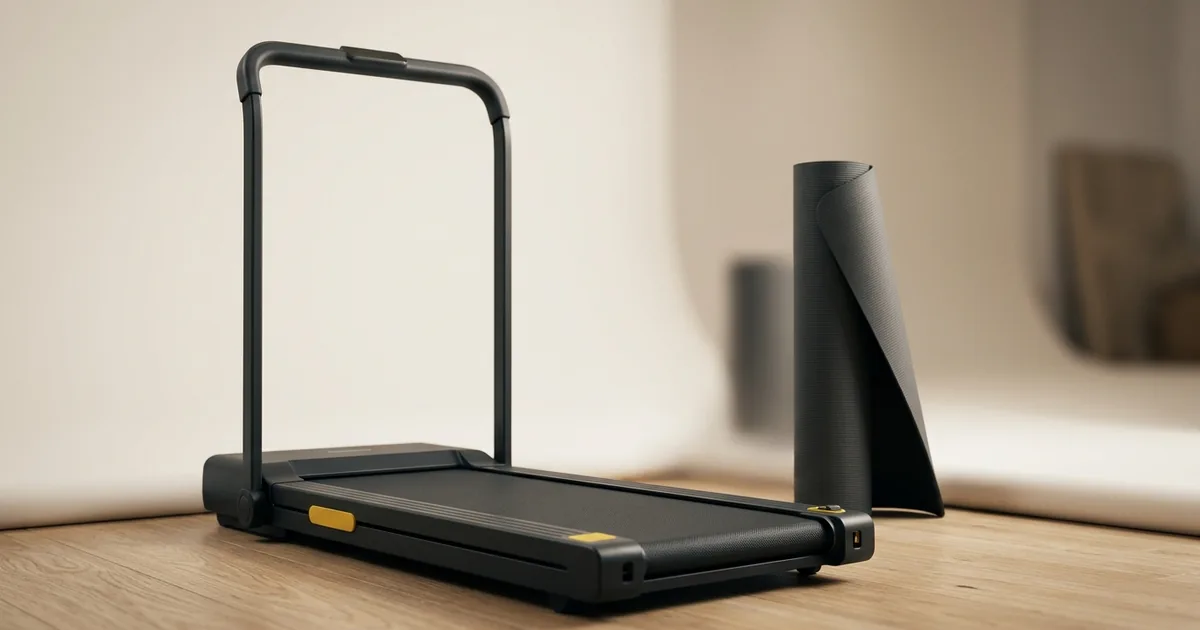
Last updated: August 2, 2026 Training with friends, family, or roommates at home cuts the excuse list in half. No
Last updated: August 2, 2026 A workout routine in UAE only works if it survives real life here: 45C summers,