
Last updated: August 23, 2026
Every gym bag has one of these two. The question is which one earns the spot. A protein shaker gets you a fast, lump-heavy mix in seconds, while a portable blender turns fibrous fruit, oats, and thick powders into a smooth drink you’d actually pay for at a smoothie counter. If you’ve been switching between the two, or arguing with a training partner about which one deserves the shelf space, this guide settles it with facts, not brand loyalty.
We’ll break down how each one performs on mixing quality, ingredient range, portability, cleaning, battery life, durability, and price in AED. By the end, you’ll know exactly which tool matches your goals, whether you’re training at a gym in Dubai, mixing shakes at home in Riyadh, or packing for a trip where a proper blender isn’t an option.
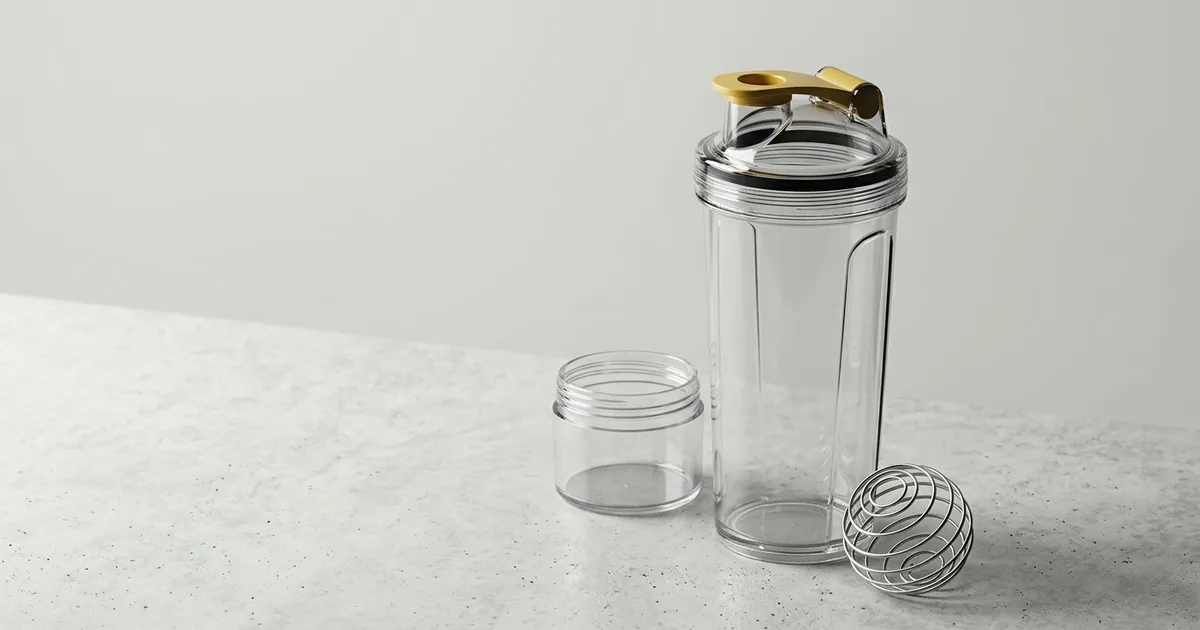
A protein shaker is a manual mixing bottle, usually built with a wire whisk ball, mesh grid, or spring agitator inside. You add liquid, add powder, close the lid, and shake by hand for 15-30 seconds. No batteries, no motor, no charging cable. It’s the tool that built the supplement industry, and for a reason: it’s fast, cheap, and nearly indestructible.
Most shakers hold between 500ml and 700ml, use BPA-free plastic, and come with a flip-cap or screw-cap lid. The agitator design is what separates a good shaker from a bad one. A basic ball only breaks up clumps on the surface, while a full mesh disc pushes powder through a fine grid, giving you a smoother result with less residue at the bottom.
The mechanism is pure physics. As you shake, the internal agitator moves at high speed inside the liquid, colliding with clumps of powder and breaking them apart through repeated impact. There’s no cutting or blending action, just repeated collision. This works well for whey isolate and fine powders, but it struggles with anything fibrous, frozen, or naturally thick, like oats, spinach, or frozen banana.
A portable blender is a compact, battery-powered blending bottle with a small motor and rotating blade set at the base. Instead of shaking, you press a button and the blade spins at high RPM, cutting through ingredients rather than just colliding with them. This is why a portable blender can process frozen fruit, ice, oats, seeds, and leafy greens into a genuinely smooth drink, something no amount of shaking will ever achieve.
Modern portable blenders, like the USB-C rechargeable portable blender, run on a rechargeable battery instead of disposable ones, charge through a standard USB-C cable, and are built with BPA-free jars so you’re not blending your smoothie in questionable plastic. Blade housings are usually detachable for cleaning, and most models include safety locks so the blade won’t spin unless the jar is sealed correctly.
The core difference between a shaker and a blender comes down to one word: cutting. A blade spinning at thousands of RPM shears through cell walls in fruit and vegetables, releasing more texture and flavor than any manual shake could. This is also why blenders can process ingredients a shaker physically cannot handle, like ice cubes, frozen mango chunks, or whole oats.
This is where the gap is widest. A shaker is built for one job: dissolving protein powder into milk or water. It does this job well when the powder is fine and the liquid isn’t too thick. But add oats, nut butter, or frozen fruit, and you’ll be picking clumps out with your teeth.
A portable blender handles all of that without complaint. Because the blade cuts rather than collides, it produces a genuinely smooth texture even with fibrous or frozen ingredients. If your “protein shake” is really a full meal replacement smoothie with banana, oats, peanut butter, and spinach, a shaker simply isn’t built for that job. A blender is.
A shaker is limited to powders, liquids, and maybe a small scoop of creatine or BCAA. Anything solid and fibrous will just sit at the bottom, undissolved. A portable blender opens the door to whole ingredients: frozen fruit, fresh vegetables, oats, seeds, ice, yogurt, and nut butter. If your nutrition plan leans toward whole-food smoothies rather than isolated powder shakes, the blender wins outright.
Shakers win here, no contest. They’re lighter, slimmer, and don’t have a motor or battery to carry around. A shaker fits into any gym bag pocket, survives being tossed around, and needs zero setup. A portable blender is still compact compared to a countertop model, but it’s bulkier than a shaker and adds weight because of the internal motor and battery.
That said, “portable” in portable blender means something specific: it’s built to travel, unlike a full-size kitchen blender. It’s still small enough to fit in a backpack, gym bag, or carry-on, and it doesn’t need to sit near a wall socket while blending. For frequent travelers who still want proper smoothies on the road, that portability matters more than the extra grams.
Shakers are simple to clean: rinse, maybe run through a dishwasher, done. The mesh disc or wire ball can trap residue if you don’t rinse right after use, but there are no electronics to worry about and no seals that can fail from water exposure.
Portable blenders need slightly more care. The blade base usually detaches from the jar for cleaning, and you should avoid submerging the motor housing in water. Most models are designed for quick self-clean cycles, where you add water and soap, run the blade for a few seconds, and rinse. It’s not difficult, but it’s an extra step compared to just rinsing a shaker bottle.
This category doesn’t apply to shakers at all, and that’s exactly the point. A shaker never runs out of charge, never needs a cable, and works identically on day one and day one thousand.
A portable blender depends on its battery. Most USB-C rechargeable models deliver anywhere from 10 to 20 blending cycles per full charge, which is usually enough for several days of daily use. Charging takes an hour or two depending on the model. If you forget to charge it, though, you’re stuck with a bottle you can’t use, something a manual shaker never has to worry about.
Shakers are near-indestructible. Drop one, throw it in a bag with weights, leave it in a hot car, it’ll still work. The only parts that wear out are the lid seal and the flip-cap hinge, and even those tend to last years with normal use.
Portable blenders have more components that can fail: the motor, the battery, the blade seal, and the charging port. Quality build matters a lot more here than with a shaker. A well-built model with a reinforced blade base and a proper battery management system will last years, while a cheap one may lose battery capacity or leak around the blade seal within months. This is why sourcing from a brand that tests for BPA-free materials and blade safety locks matters more with blenders than shakers.
Shakers are the budget option, typically priced well under blender range, making them an easy add-on to any order. Portable blenders cost more upfront because of the motor, battery, and blade assembly, but they replace what would otherwise require a countertop blender plus a to-go cup. When you calculate the cost of a smoothie shop visit multiple times a week, a one-time investment in a portable blender pays for itself fast.
A shaker makes noise only from the ball or disc hitting the sides during shaking, which is minimal. A portable blender’s motor produces a noticeable hum while running, similar to a mini kitchen blender but shorter in duration, usually running for only 15-30 seconds per blend. It’s not silent, but it’s brief enough that it won’t disturb a shared office kitchen or hotel room for long.
If your post-workout routine is a scoop of whey and water, a shaker is all you need. It’s fast, it lives in your gym bag next to your microfiber workout towel and lifting straps, and it never lets you down between sets. Grab it, shake it, drink it, move on to your next exercise. For pure post-training protein intake, this is the simpler, more reliable tool.
But if your gym bag also carries oats, banana, or a nut butter packet for a bigger post-workout meal replacement, a portable blender earns its space instead. You’ll get an actual smooth shake rather than a gritty mix with floating chunks.
At home, a portable blender makes far more sense. You’re not limited by convenience the way you are at the gym, and you likely have more variety of ingredients on hand: fresh fruit, spinach, yogurt, seeds. A morning smoothie routine benefits massively from a blender’s cutting power versus a shaker’s collision-based mixing. Pair your morning routine with recovery tools like a vibration platform for a full at-home wellness setup, then finish with a proper blended breakfast instead of a rushed protein shake.
Travel is where the decision gets personal. A shaker is lighter, doesn’t need charging, and clears airport security without a second glance. A portable blender, on the other hand, lets you maintain your nutrition habits on the road, blending fresh fruit or hotel-room oats into something that actually tastes good, not just “good enough.” If you travel often and care about food quality over convenience, the blender is worth the extra bag space. If you’re a minimalist packer who just needs a quick whey mix, stick with the shaker.
Ask yourself three questions before deciding:
For many people, the real answer isn’t picking one over the other, it’s owning both. A shaker for quick gym-day protein, and a portable blender for home smoothies, travel days, or when you want a proper meal in a cup rather than a quick mix.
Check the new arrivals at Rigid Fitness for the latest portable gear built around these exact standards, tested for gym, home, and travel use.
We build portable workout gear for people who move between the gym, home, and the road without wanting to compromise on quality. A shaker and a portable blender aren’t competitors on our shelf, they’re two tools for two different jobs. Our USB-C rechargeable portable blender is built with a BPA-free jar, safety-locked blade base, and fast charging so it keeps up with a routine that doesn’t slow down for anyone. If your nutrition habit is a simple powder shake, our shakers get the job done without adding weight to your bag.
Protein shaker vs portable blender isn’t a question with one universal winner. A shaker is the fastest, lightest, most reliable way to mix a basic protein shake, and it will never let you down at the gym. A portable blender is the smarter pick when you want whole-food ingredients, smoother texture, and a genuine smoothie rather than a lumpy mix. Match the tool to what you’re actually putting in the bottle, and you’ll never second-guess the choice again.
No. A shaker uses a wire ball or mesh disc that collides with clumps, it doesn’t cut. Frozen fruit, ice, and fibrous ingredients need a blade to break down properly, which is why a portable blender handles them and a shaker doesn’t.
If you regularly blend whole fruit, oats, or greens, yes. The extra cost replaces countertop blender purchases and smoothie shop visits over time. If you only mix powder and liquid, a shaker delivers the same result for less money.
Most USB-C rechargeable portable blenders deliver 10 to 20 blending cycles per full charge, depending on battery capacity and blend duration. A full charge typically takes one to two hours.
Yes, slightly. Shakers can usually go straight into a dishwasher or get rinsed by hand. Portable blenders need the blade base detached from the jar, and the motor housing should never be submerged in water. Most models support a quick self-clean cycle with soap and water.
Yes, portable blenders are allowed in both carry-on and checked luggage since they use a standard rechargeable battery similar to other small electronics. Just make sure the jar is empty and dry before packing it.
Last updated: October 21, 2026 Sore legs the day before a big lift. Tight shoulders after three straight gym sessions.
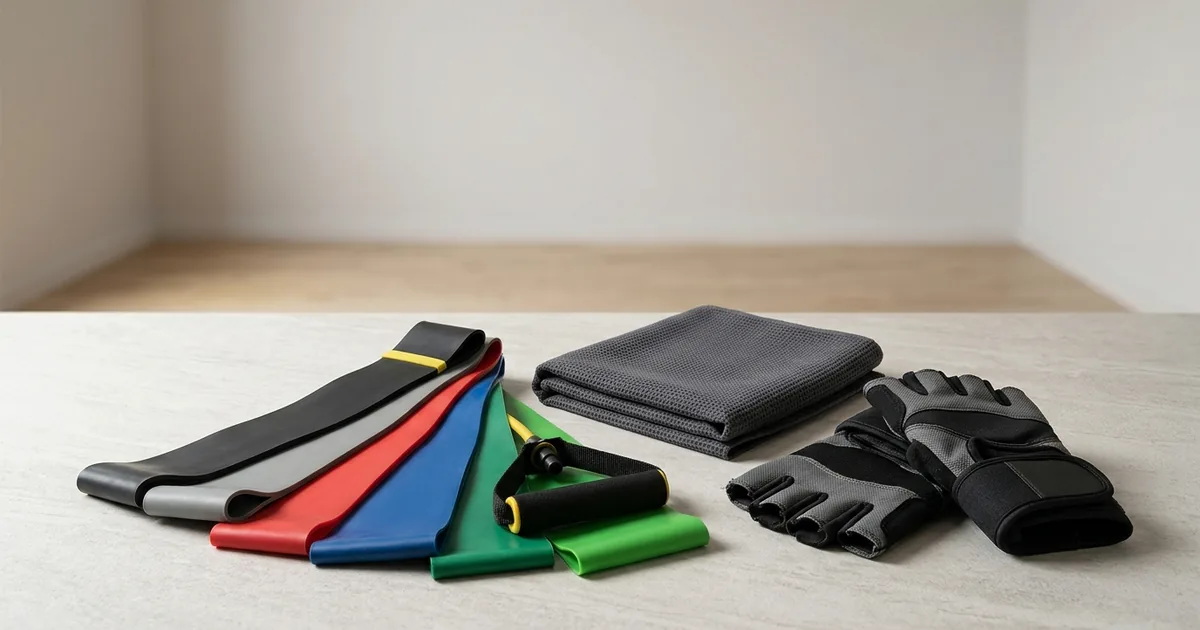
Last updated: October 21, 2026 Most home gyms fail for the same reason: the gear doesn’t match the space, the
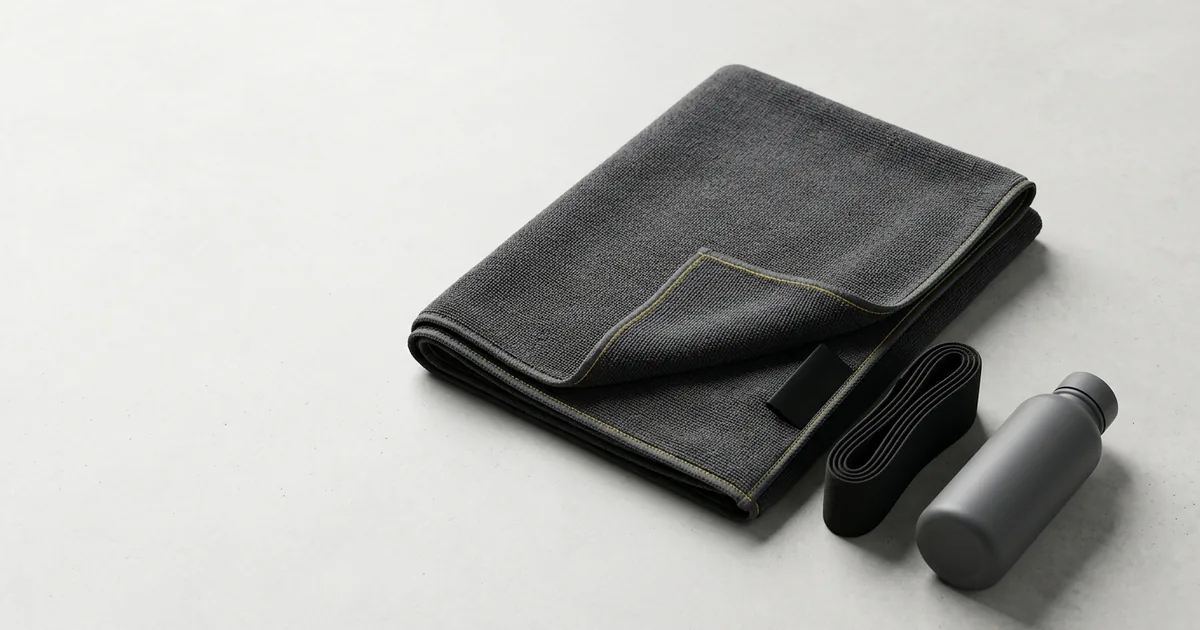
Last updated: October 18, 2026 Most people buy a gym towel the way they buy a phone charger, fast, cheap,