
Last updated: August 9, 2026
A resistance band set and loop bands solve different problems, even though they get lumped into the same shopping search. A resistance band set is a system built for full-body strength work, with handles, ankle straps, and a door anchor. Loop bands are single continuous circles built for glute activation, mobility, and short bursts of tension work. Buying the wrong one means you either overpay for features you never use, or you undershoot what your training actually needs. This guide breaks down the real differences, where each one wins, and how to decide without guessing.
A resistance band set is a modular training system. It typically includes multiple long bands rated at different resistance levels, foam handles, ankle cuffs, a door anchor, and a carry pouch. The bands connect and detach from the handles, which means you can stack two or three bands together to increase load, or swap to a single light band for rehab-style movements.
This is the format most people picture when they think of home strength training gear. It is built to replace a cable machine, not to replace a single stretch band. A full resistance band set can train chest, back, shoulders, arms, legs, and core, using anchor points like a door, a squat rack, or your own bodyweight as the counter-resistance.
Some premium sets add a waist belt for resisted sprint drills, and a few include a workout guide card. None of that changes the core identity of the product: it is a system, not a single tool.
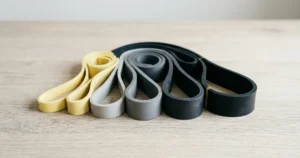
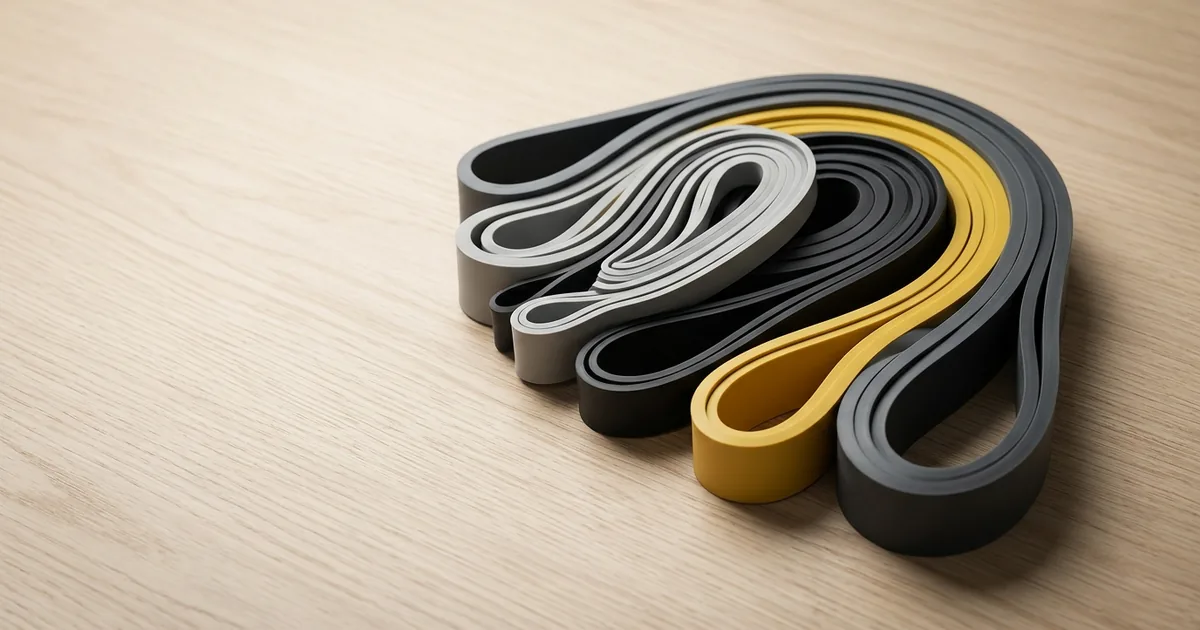
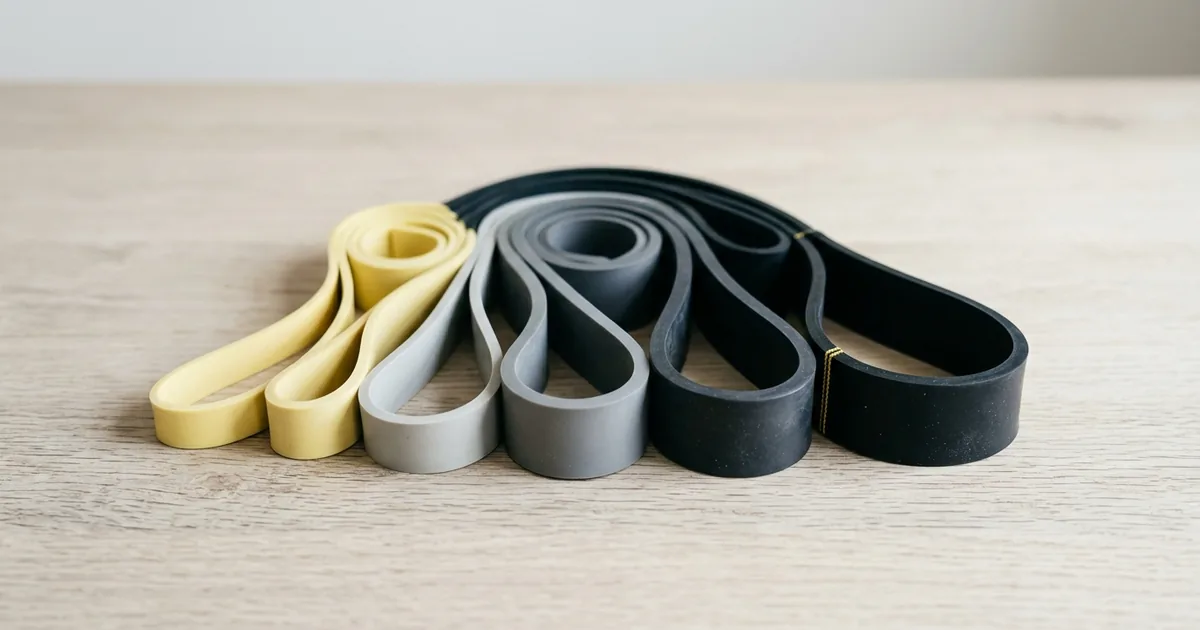
Loop bands, sometimes called mini bands or booty bands, are flat rubber loops with no handles, no clips, and no attachments. They come in a set of 3 to 5, again graded by resistance, usually sold as a small flat pack that fits in a pocket. There is nothing to assemble. You step into the loop, position it above or below the knee, around the ankles, or around the wrists, and the tension is immediate.
Loop bands are built around one job: creating constant tension through a short range of motion. That makes them the standard tool for glute activation, hip mobility, shoulder pre-activation, and lateral movement drills. They are not designed to replace heavy pulling or pressing work, and they are not meant to be anchored to a door.
Fabric loop bands (cloth-covered) have become more popular than pure latex loops because they do not roll up the leg during squats and lateral walks, and they last longer under repeated friction.
Both fall under the same product category on paper, but they behave nothing alike in a real training session. Here is where they actually separate.
A resistance band set is built for progression. Because the bands attach to handles, you can combine two or three bands on the same handle to jump from 10 kg of tension to 30 kg or more. This matters if your goal is strength building over months, not just a warm-up. Loop bands top out much lower. Even the heaviest loop in a standard pack rarely exceeds the tension of a mid-level tube band, because loop bands are not meant to carry heavy compound lifts. They are meant to isolate small muscle groups through short ranges.
If your training plan includes rows, presses, squats, and deadlift patterns done entirely with bands, a set with stackable tubes is the only format that scales with you. If your training plan is glute bridges, monster walks, and hip abduction work, a loop band’s lower ceiling is never a limitation, because you were never going to load those movements heavily anyway.
This is the widest gap between the two. A resistance band set, anchored to a door or a rack, opens up chest press, seated row, lat pulldown, overhead press, bicep curl, tricep pushdown, face pull, and rotational chop patterns. Add the ankle straps and you get cable-style kickbacks, hip abductions, and standing leg curls. It is genuinely a full gym substitute.
Loop bands stay in a narrower lane by design: lateral band walks, glute bridges, clamshells, banded squats, terminal knee extensions, shoulder external rotation, and ankle mobility drills. You will not press or row with a loop band, because there is nothing to hold onto and no anchor point to press against.
Loop bands win outright here. A pack of five loop bands weighs almost nothing and fits into a small zip pocket in a gym bag, a carry-on, or even a jacket pocket. They are the format most people actually use on a plane, in a hotel room, or during a lunch break at the office.
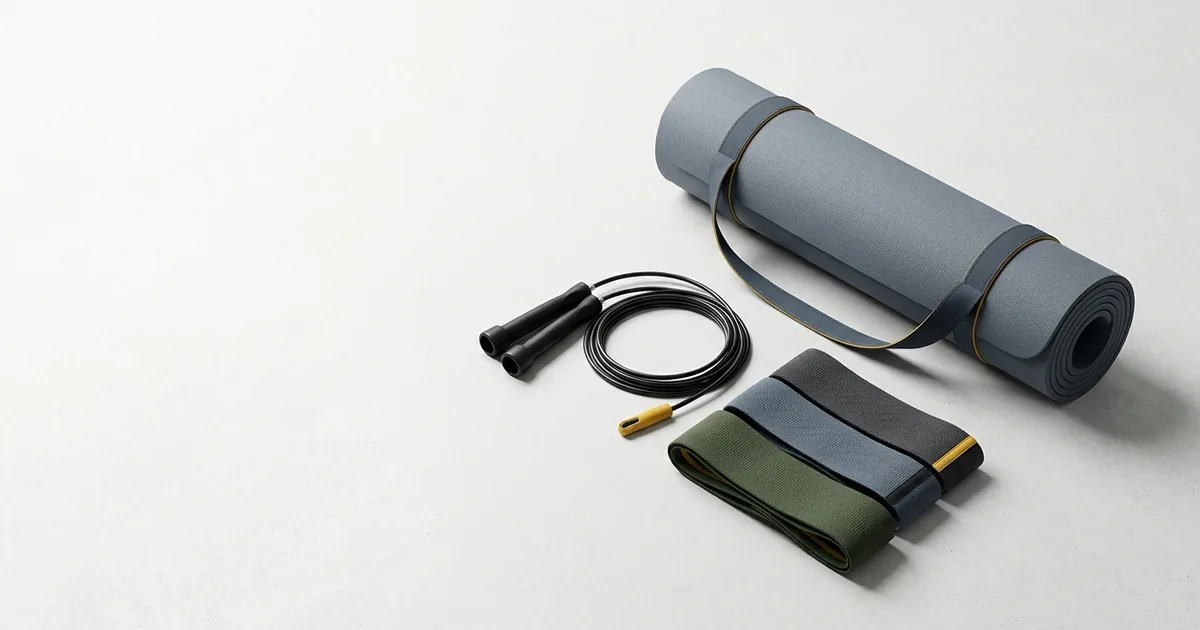
A full resistance band set is still travel-friendly compared to dumbbells or a bench, but it is bulkier. The handles, ankle straps, and door anchor add both weight and volume to the pouch. It fits in a suitcase without issue, but it is not something you casually toss into a small daypack the way you would a jump rope. If your priority is minimum pack size for a work trip, pair loop bands with something like a beaded jump rope and you have a complete travel session in under 500 grams.
Loop bands require zero setup. Step in, start moving. A resistance band set requires you to select the right band combination, screw or clip handles on, and find a stable anchor point, whether that is a door anchor wedged into a frame or a rack post. For a fast 15-minute session, that setup time matters. For a planned 45-minute strength session, it is a non-issue.
Tube bands in a resistance band set are more prone to snapping at the point where the band meets the clip, especially with cheap sets that use thin latex. Fabric loop bands rarely snap because there is no clip junction to fail, though they can lose elasticity over time from stretching. Latex loop bands can crack if stored folded for long periods or exposed to direct sun. In both categories, quality of material determines lifespan far more than which format you choose.
Loop band packs are the cheaper entry point, generally sitting in a lower price bracket because they use less material and have no hardware. A full resistance band set costs more because of the handles, straps, anchor, and heavier-duty tubing, but it replaces a far wider range of equipment. When you compare AED-per-exercise-unlocked, a resistance band set usually wins on value if you intend to use the full system. If you only need hip and glute work, loop bands are the cheaper and more efficient buy.
Neither builds muscle by itself. Muscle growth depends on progressive overload, consistency, and enough total volume, regardless of tool. But the format changes what movements you can progressively overload.
With a resistance band set, you can progressively overload pressing, pulling, and squatting patterns by stacking bands or shortening the anchor distance to increase tension. That means you can genuinely build chest, back, shoulder, and leg mass over months using bands alone, especially if you train to near failure on each set.
Loop bands are better used as an accessory tool. They excel at activating glute medius and glute max before a squat or deadlift session, which improves mechanics and can indirectly improve strength output on the main lift. They also work well for rehab and prehab, reinforcing hip stability and shoulder rotator cuff strength in a low-load, high-rep format. Used alone as a primary hypertrophy tool, loop bands plateau faster because the resistance ceiling is lower.
The honest answer: if your goal is visible muscle growth across the whole body, a resistance band set gets you there on its own. If your goal is fixing weak glutes, improving hip stability, or adding warm-up activation before heavier training, loop bands do that job better and cheaper.
Home training is where a resistance band set earns its price tag. With one door anchor, you can run a legitimate push, pull, and leg split without ever leaving your living room. A typical home split using only a band set looks like this:
Loop bands fit into a home setup as a warm-up and finisher tool rather than the main event. A five-minute activation circuit before leg day, using lateral walks and clamshells, primes the glutes before you load the heavier band-set squat pattern. Used together, the home combination is stronger than either format alone.
For recovery between sessions, pairing your band work with a few minutes on a vibration plate helps loosen tight hips and calves that get hammered by high-rep band training. It is a small addition that speeds up how quickly you bounce back for the next session.
Inside a commercial gym, bands play a supporting role rather than a replacement role, since barbells and machines already cover heavy loading. Here, loop bands are the more common sight for a reason: they slide into a warm-up before squats and deadlifts, adding glute activation and hip tracking cues in under five minutes. Many lifters keep a loop band pack in their gym bag specifically for this purpose.
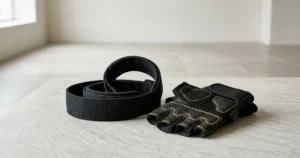
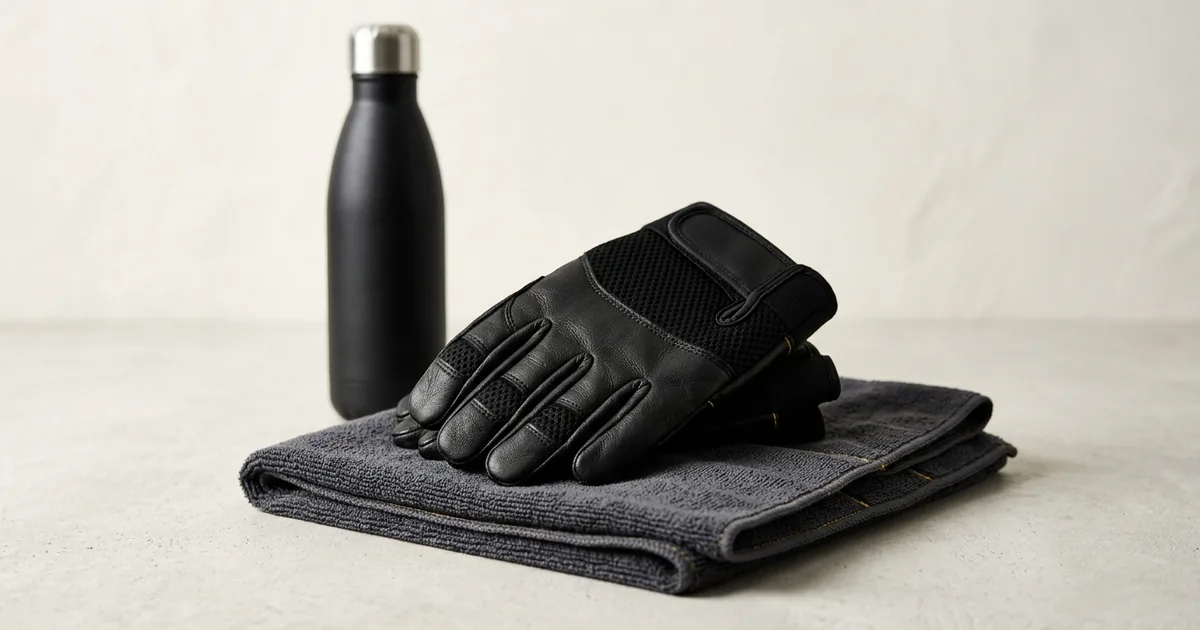
A resistance band set still has a place in a gym setting, mainly for assisted pull-ups (looping a heavy band over the bar and stepping into it to reduce bodyweight), banded deadlift variations that add accommodating resistance, and finisher supersets on cables when the rack is occupied. If you already train with barbells and machines, you will reach for loop bands far more often than the full set inside a gym environment. Keep a pair of gym gloves and straps in the same bag, since band work and heavy pulling both punish your grip over a session.
Travel is where the decision gets personal. If you are the type of traveler who wants a real workout in a hotel room, including presses and rows, pack the resistance band set. The door anchor works on almost any standard hotel door, and the whole kit rolls into a space smaller than a pair of shoes.
If you are traveling light, carry-on only, and your priority is just staying mobile and keeping the glutes and hips firing during long flights or desk-heavy work trips, loop bands are the better call. They weigh next to nothing and need no anchor point at all, which means they work in an airport lounge, a hotel hallway, or a cramped Airbnb with zero furniture to anchor to.
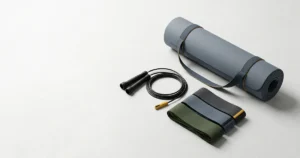
A strong travel kit for most people combines both: loop bands for daily activation and mobility, plus a lightweight cardio tool like a jump rope for a fast heart-rate spike in a small hotel room, with the full band set reserved for longer trips where a complete strength session matters.
Yes, and for most serious home or hybrid trainers, this is the actual answer rather than picking one over the other. A resistance band set covers the heavy lifting patterns: press, pull, squat, hinge. Loop bands cover the accessory and activation layer: glute medius, hip abduction, rotator cuff, ankle mobility. Neither format fully replaces what the other does well.
A practical combined kit costs little more than buying a single premium band set alone, and it covers roughly 90 percent of what a full home gym would offer, minus true heavy barbell loading. If you are building a gear collection from scratch, start with the full resistance band set for the training base, then add a loop band pack once you notice specific weak points, usually the glutes or hips, that need isolated activation work.
Run the loop band circuit as a warm-up before the full-body band set session, and you have a single 45 to 50 minute workout that hits activation and heavy pattern loading in one block.
Bands should be clearly labeled by resistance level, either by color or by a printed kg range. Unlabeled bands make it impossible to track progress, since you cannot tell if you are actually getting stronger or just guessing at tension.
For a resistance band set, inspect where the tube meets the metal clip. This junction is the most common failure point. Reinforced stitching or a molded rubber sleeve over the clip adds significant lifespan. For loop bands, check the seam if it is fabric-covered. Loose stitching there means the cover will separate from the latex core within a few months of regular use.
Some listings advertise a resistance band set but only include tubes and a bag, with no handles or door anchor. Confirm the full contents before buying, especially if the reason you are choosing a set over loop bands is specifically for pressing and rowing movements.
Heavier or more advanced lifters need the highest resistance band included in a set to actually challenge them on squats or presses. If you are already comfortable with moderate dumbbell weights, check that the set includes at least one band rated in the higher tension bracket, or plan to stack two bands together from day one.
Bands absorb sweat fast, especially loop bands worn directly against skin during high-rep sets. Keep a microfiber workout towel nearby to wipe bands and skin between sets, both for hygiene and to stop bands from slipping during sweaty sessions.
New band designs and improved clip systems get released regularly. Check the new arrivals section before buying to compare the latest resistance band sets and loop band packs side by side on build quality and included accessories.
A resistance band set and loop bands are not competing for the same job, so the real question was never which one is better. A resistance band set is the closer thing to a portable gym, built for pressing, pulling, and squatting patterns with real progression. Loop bands are the lighter, cheaper, faster tool for activation, mobility, and hip and glute isolation work. If you only have budget for one and you train at home or travel for work, the full set gives you more range. If you already lift and just need a warm-up and glute tool, loop bands are the smarter buy. For most people building a serious portable training kit for gym, home, and travel, the right answer is both, used for what each one actually does best.
For most beginners, a resistance band set offers more value because it covers pressing, pulling, and squatting patterns with a door anchor and handles. Loop bands are a good add-on once you want dedicated glute and hip activation work, but on their own they cover a narrower range of movements.
No. Loop bands are designed for short-range, lower-load movements like lateral walks, clamshells, and glute bridges. They do not have handles or an anchor point, so they cannot replicate presses, rows, or heavy squat patterns the way a resistance band set can.
It depends on build quality. Tube bands in a resistance band set are more prone to failure at the clip junction if the stitching is weak. Fabric-covered loop bands avoid that clip failure point entirely but can stretch out and lose tension over time with heavy use.
Loop bands win on pure portability since they are flat, light, and need no anchor point, making them ideal for hotel rooms and carry-on bags. A resistance band set is bulkier but delivers a more complete strength session if you have the extra space in your luggage.
For a complete home or hybrid training setup, yes. Use the resistance band set for heavy pressing, pulling, and squat patterns, and use loop bands for glute activation, hip mobility, and rehab-style accessory work. Together they cover far more ground than either format alone.


Last updated: September 27, 2026 A resistance band costs less than a single personal training session and fits in a
آخر تحديث: 27 سبتمبر 2026 مساحة غرفة النوم الإضافية أو زاوية من الصالة كافية لبناء روتين تمرين حقيقي، بشرط اختيار
Last updated: September 27, 2026 Typing “best gym near me” into your phone gives you a list ranked by distance,