

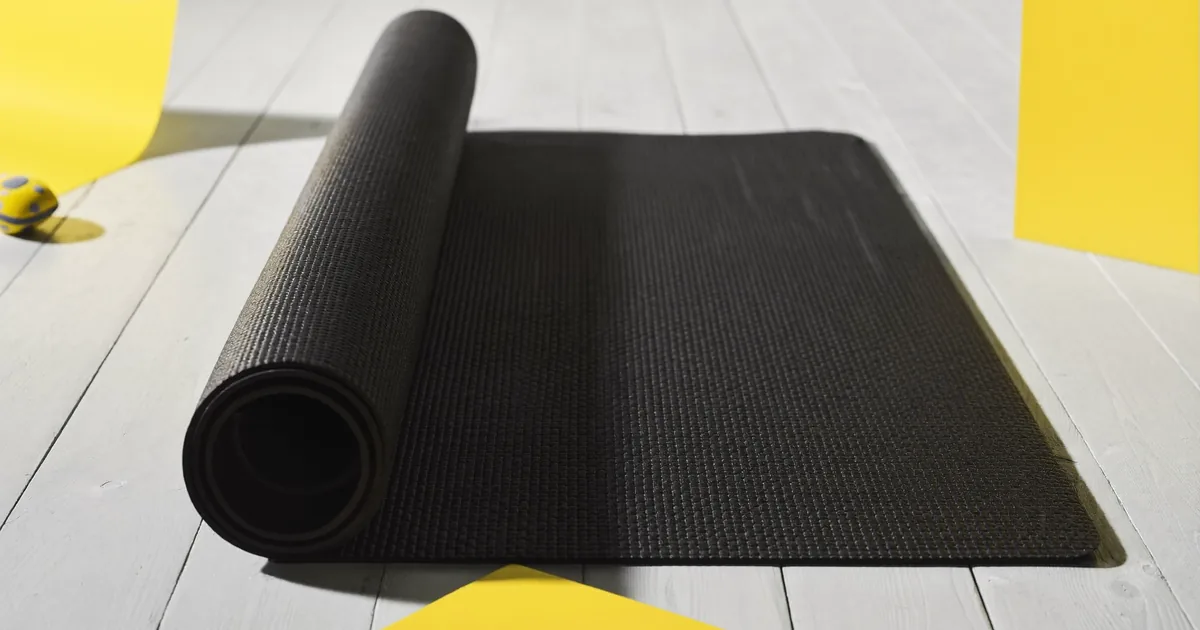
A standard yoga mat runs about 68 inches long and 24 inches wide. Step onto one at 5’10” or taller, or try a lunge, a side plank, or a full sun salutation, and your hands or feet land on bare floor. A yoga mat 6ft x 4ft solves that problem outright. At 72 inches by 48 inches, it gives you double the width and extra length, turning a narrow strip into an actual training surface. This guide breaks down what that size means in practice, who needs it, what it’s made of, and how to pick one that works for yoga, mobility, bodyweight training, and everything in between.
Size numbers on a product page mean nothing until you picture them on your floor. A 6ft x 4ft mat measures 72 inches by 48 inches, roughly 183cm by 122cm. Compare that to a standard mat at 68in x 24in (173cm x 61cm) and the difference is stark: you’re getting almost exactly double the surface area.
That extra width is the real upgrade. A standard mat width barely fits your shoulders in a plank position, let alone a wide-legged forward fold or a lateral lunge. At 4 feet wide, you get room on both sides of your body for arm variations, side stretches, and floor-based strength work without your hand or elbow sliding off the edge and onto hard tile or wood.
The extra length matters just as much if you’re tall. A 6-foot mat comfortably fits users up to roughly 6’2″-6’4″ with a few inches of buffer at the head and feet, which is where most standard mats fall short.
| Mat Type | Length | Width | Best For |
|---|---|---|---|
| Standard mat | 68in (173cm) | 24in (61cm) | Basic yoga, shorter users, minimal floor space |
| Long mat | 72-74in (183-188cm) | 26in (66cm) | Taller users needing extra length only |
| Yoga mat 6ft x 4ft | 72in (183cm) | 48in (122cm) | Yoga, mobility, floor training, multi-position workouts |
| Wide mat | 72in (183cm) | 36in (91cm) | Middle ground between standard and full 6×4 |
If you’ve ever rolled out a mat and immediately felt boxed in, the width is usually the issue, not the length. A 6ft x 4ft mat removes that limitation entirely.
Not everyone needs the largest mat on the market. But for a specific set of use cases, it’s the difference between a comfortable session and a constant fight with the floor.
If you’re above 5’10”, a standard 68-inch mat cuts off before your full range of motion does. Downward dog, full-body stretches, and lying leg raises all push past the edge. A 6-foot length gives enough room to move without recalculating your position every few minutes.
Yoga isn’t the only thing happening on a mat anymore. Mobility drills, core circuits, stretching routines, and bodyweight strength work all use floor space in wider, less linear patterns than a straight yoga flow. Wide mats support lateral movement, star-shaped stretches, and multi-directional core work without constant repositioning.
Some households use one mat for two people, a parent and child stretching together, a couple doing partner yoga, or simply someone who wants enough room for a mat-sharing session without elbows colliding. A 4-foot width fits two people side by side for basic stretching, something a standard mat can’t do.
For home training setups, a 6×4 mat often replaces the need for a separate floor tile section. It becomes the designated zone for warm-ups, cool-downs, and any floor-based segment of a workout, cutting down on gear clutter and giving the space a defined purpose.
If pets wander into your training area, or kids are nearby during a session, the extra buffer zone around your body means fewer interruptions and less need to pause mid-stretch to reposition.
The term “yoga mat” undersells what a 6ft x 4ft surface actually does. In a home or travel setup, this size functions as a full floor-training station, not just a yoga prop.
Push-ups, mountain climbers, burpees, and plank variations all need lateral and forward space. A wide mat lets you move through a circuit without stepping off the edge mid-rep, which matters when you’re working at pace and don’t want to break form to check your footing.
Hip openers, hamstring stretches, spinal twists, and foam-roller work all benefit from width. You’re not confined to a straight line, so you can rotate, extend an arm out to the side, or bring a knee across your body without hitting bare floor.
Russian twists, leg raises, dead bugs, and rotational core drills use more lateral space than people expect. On a narrow mat, your elbows or feet regularly land off the edge. A 4-foot width keeps the entire movement contained.
A larger mat becomes the base layer for a broader training setup. Many home users place a vibration plate at one end of the mat for warm-ups or recovery sessions, then use the remaining space for stretching or floor work immediately after. The mat protects flooring, keeps grip consistent between segments, and defines the workout zone without needing separate tiles.
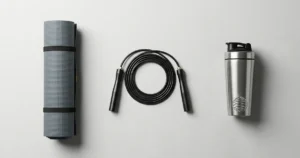
Warm-ups before a mat session also matter. A few minutes with a jump rope raises heart rate and loosens joints before you transition to floor work, and having a dedicated mat space nearby makes that transition seamless rather than a scramble to find room.
Size is only one half of the decision. The material and thickness determine how the mat actually feels under your hands, knees, and feet, and how long it holds up.
NBR mats are soft, cushioned, and budget-friendly. They’re common in larger sizes because the material is light enough to keep a 6×4 mat manageable to carry, but they compress over time with heavy use and don’t offer the firmest grip for sweat-heavy sessions.
TPE is a strong middle-ground choice. It’s lighter than rubber, offers decent grip, and is generally free of the stronger odors associated with PVC. For a large-format mat, TPE keeps the total weight reasonable while still providing solid cushioning.
PVC mats are durable and grippy, holding their shape well over repeated use. They tend to be heavier, which matters more at 6×4 size since you’re covering double the surface area. If portability isn’t a priority, PVC is a reliable long-term option.
Natural rubber delivers the best grip, especially in sweaty conditions, and has strong eco credentials. It’s also the heaviest option, which is worth factoring in if you plan to roll and unroll a large mat frequently, or travel with it.
At 6ft x 4ft, thickness has a bigger impact on total weight than it does on a standard-size mat, simply because you’re multiplying the material across a much larger surface. A 10mm mat at this size can get noticeably heavy, so match thickness to your actual use case rather than defaulting to the thickest option available.
With size settled, the rest of the decision comes down to a short list of practical questions.
Pure yoga favors thinner, grippier mats for balance and stability. Mixed floor training, mobility, and stretching benefit from slightly thicker cushioning. If you’re using the mat as a general floor-training zone rather than strictly for yoga, lean toward 6mm-8mm.
A large mat that lives permanently in one spot can be heavier without issue. If you’re rolling it up daily, storing it in a closet, or taking it between rooms, weight becomes a real factor. Lighter TPE or NBR options are easier to manage at this size than natural rubber or thick PVC.
Tile and hardwood need a mat with strong grip on the underside to prevent sliding, especially at a larger size where more surface area means more potential for shifting during dynamic movement. Carpeted floors are more forgiving but can still benefit from a non-slip backing for stability during standing poses.
Closed-cell mats resist moisture absorption, wipe clean easily, and don’t harbor bacteria as readily, which matters for shared or humid environments. Open-cell mats often grip better but absorb sweat and need more frequent washing. For a mat this size, closed-cell is generally the more practical choice for day-to-day maintenance.
If travel is part of your routine, look for a mat that rolls down to a manageable diameter and comes with a strap or bag. Foldable options exist too, though folding creases can affect how flat the mat lies over time. A rolled mat at 6×4 size is bulkier than a standard mat, so factor that into how you’ll actually transport it.
A large mat works best when it has a defined role in your space rather than being unrolled and rolled up every single session.
Pick a spot with enough clearance on all sides, ideally near a wall for balance poses but with open floor in front for lateral movement. Avoid placing it directly under ceiling fans or in high-traffic walkways where it’ll get stepped on outside of workout time.
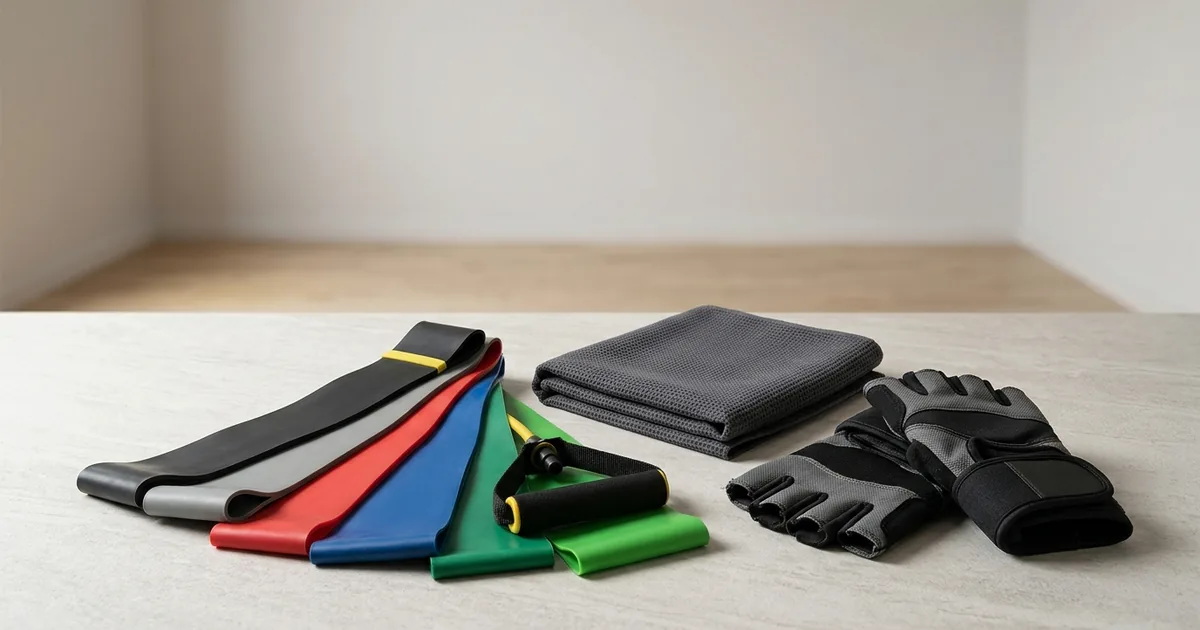
Many home setups treat the mat as the anchor point for a broader routine: a warm-up phase, a main floor segment, and a cool-down, all happening within the same footprint. Keeping a core set of fitness essentials nearby, resistance bands, a foam roller, light dumbbells, means you’re not walking across the room mid-session to grab gear.
Longer floor sessions mean longer stretches without a break. Keeping a portable blender bottle at the edge of the mat means you’re not interrupting a stretch sequence to walk to the kitchen for water or a shake between segments.
Rolling the mat and standing it in a corner, or using a wall-mounted mat hook, keeps floor space clear when you’re not training. Avoid leaving it flat under furniture or in direct sunlight for extended periods, which can degrade certain materials faster than normal use.
Shared gym floors often provide their own mats, but they’re rarely the size or cleanliness level you’d want for extended floor work. Bringing your own 6ft x 4ft mat gives you a consistent surface regardless of what’s available on the floor that day, and avoids direct contact with shared gym flooring. Rolling it out in the stretching zone or a corner of the free-weights area gives you a defined space to move through mobility work before or after a session.
A 6×4 footprint takes up more shared floor space than a standard mat, so timing matters during busy hours. Off-peak sessions give you room to use the full size without crowding neighboring stations. During peak hours, be mindful of the extra space you’re occupying compared to a standard mat user.
For travel, portability shifts from a nice-to-have to a requirement. A lightweight TPE or foldable mat keeps the packed size manageable inside a suitcase or gym bag. The upside of bringing a larger mat while traveling is consistency, hotel rooms and rented apartments rarely have enough clear floor space, but having your own defined mat area means you can still run a full mobility or bodyweight routine regardless of the room layout.
Pack it alongside other portable gear built for travel-friendly training. Checking new arrivals regularly is a good way to find compact, travel-ready pieces that complement a floor-based routine without adding bulk to your bag.
A larger mat sees more surface contact per session, which means more sweat, more dust, and more wear if it’s not maintained properly.
Wipe the surface down after every session with a damp cloth or a light mat-specific cleaning spray. Avoid harsh chemical cleaners, which can break down the surface material and reduce grip over time. For a deeper clean, a mild soap and water solution works for most materials, followed by a full air-dry before rolling.
Never roll a mat while it’s still damp. Trapped moisture leads to odor and, over time, material breakdown or mold in humid climates. Hang it flat or drape it over a chair until fully dry before rolling for storage.
Roll from the top down with the surface facing outward, keeping the roll as tight and even as possible. Loose rolling on a mat this size leads to a bulky, unstable roll that’s harder to store and more likely to unfurl unevenly next time you use it.
Store rolled mats upright rather than flat wherever possible, and avoid stacking heavy items on top of a stored mat, which can create permanent indentations, particularly in thicker foam-based materials.
Some “long” mats add length without adding width, which solves height issues but not the space constraints during wider movements. Confirm both dimensions before buying, not just the headline length.
A thick, dense mat at 6×4 size can weigh significantly more than expected. If daily transport is part of your routine, check the weight spec, not just the thickness, before committing.
Grip varies significantly between materials and even between mats of the same material from different production batches. Where possible, test grip with damp hands or feet, since that’s the condition you’ll actually be training in.
A mat that grips well on carpet might slide on tile. Match the underside texture to your actual training surface, not a generic “non-slip” label alone.
A yoga mat 6ft x 4ft isn’t an oversized version of a standard mat, it’s a different training surface entirely. The extra width unlocks movements a narrow mat can’t support, the extra length removes the constant repositioning taller users deal with, and the larger footprint turns a single mat into a functional floor-training zone for yoga, mobility, and bodyweight work alike. Match the material and thickness to how you’ll actually use it, keep portability in mind if you’re moving it often, and maintain it properly to get years of consistent use. Get the size right, and the rest of your floor routine gets easier by default.
It depends on your space, but 72in x 48in fits comfortably in most bedrooms and living room corners. Roll it out only during sessions and store it upright afterward if floor space is limited during the rest of the day.
6mm works well for general yoga and mixed floor training. Go with 8mm or more if you spend extended time in stretches or mobility work and want extra cushioning for knees and hips.
Yes. The extra width supports bodyweight circuits, core work, stretching, and mobility drills that need lateral space, not just linear yoga flows. Many users treat it as a general floor-training zone rather than a yoga-only mat.
Wipe it down after each session with a damp cloth or mild cleaning spray, avoid harsh chemicals, and always let it fully air-dry before rolling for storage. This keeps grip intact and prevents odor buildup.
Yes, though weight and roll diameter matter more at this size than with a standard mat. Choose a lighter material like TPE if portability is a priority, and pack it with other travel-friendly gear to keep your setup compact.


Last updated: October 21, 2026 Sore legs the day before a big lift. Tight shoulders after three straight gym sessions.
Last updated: October 21, 2026 Most home gyms fail for the same reason: the gear doesn’t match the space, the
Last updated: October 18, 2026 Most people buy a gym towel the way they buy a phone charger, fast, cheap,