
Last updated: September 16, 2026
A single resistance band folds into a bag smaller than a water bottle and delivers a training stimulus that rivals a full rack of dumbbells. That is not a marketing line, it is physics. Bands create variable resistance, meaning tension climbs as you stretch them, forcing muscles to work harder through the exact range where free weights lose tension. For anyone training between a gym, a spare room, or a hotel floor, mastering the best resistance band exercises is the fastest way to build strength without depending on a rack of iron.
This guide breaks down exactly which movements deliver results, how to structure them into a real workout, and how to progress so bands never feel like a compromise.
Bands get dismissed as a warm-up tool or a rehab accessory. That reputation is outdated. Used with intent, bands challenge stabilizer muscles, build joint control, and let you train to failure safely, without needing a spotter or a loaded barbell.
If you already train at a gym and want to accelerate mobility work or finish a session with a burnout set, browse the latest gear drops to see what pairs well with your current setup.
Not all bands do the same job. Picking the right type for the right movement changes everything about how effective your session feels.
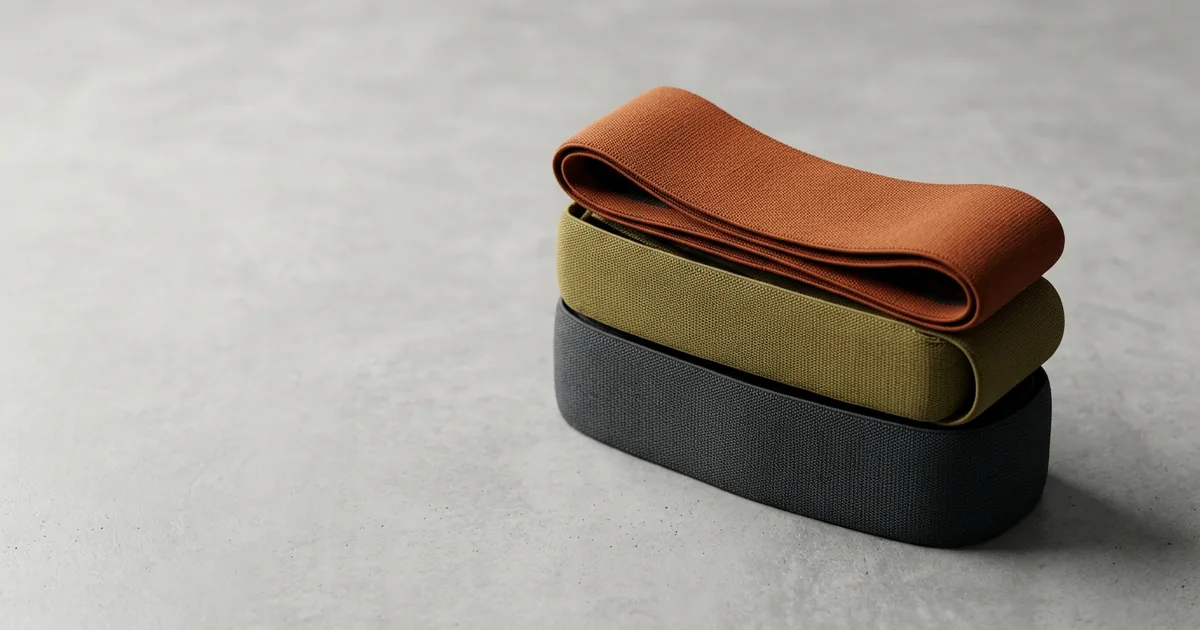
Short, continuous loops used mainly for glutes, hips, and shoulder activation. Ideal for lateral walks, banded squats, and warm-ups before heavier lifting.
These mimic cable machine movements, think rows, presses, and pull-aparts. Best for building a full upper-body session that feels closer to gym equipment without the bulk.
Compact and rigid, these are excellent for isolated arm work like curls and presses in tight spaces such as a hotel room.
Thin, wide bands used for controlled, low-load work, often favored for shoulder prehab and light conditioning circuits.
Most serious lifters end up with a mix of two or three types rather than relying on just one. If you are building a home or travel kit from scratch, start with a loop set and one long tube with handles, that combination alone covers 80 percent of the exercises below.
Below is a breakdown organized by region of the body, with form cues and common errors to fix immediately.
Anchor the band behind you at chest height, press the handles forward until arms are extended, then control the return. This builds pressing strength while forcing the core to resist rotation.
Anchor the band at chest height in front of you, pull the handles toward your ribs, squeeze the shoulder blades together for a full second before releasing. Rows are the most underused movement in home training and directly counter the forward-hunched posture from desk work.
Stand on the band with feet shoulder-width apart, press handles from shoulder height straight overhead. Keep ribs tucked to avoid arching the lower back.
Stand on the band, curl handles toward shoulders, keep elbows pinned to your sides. Slow the eccentric phase to two to three seconds for more time under tension.
Anchor the band overhead, push handles down until arms are fully extended, keep elbows tucked. This isolates the triceps in a way few bodyweight moves can replicate.
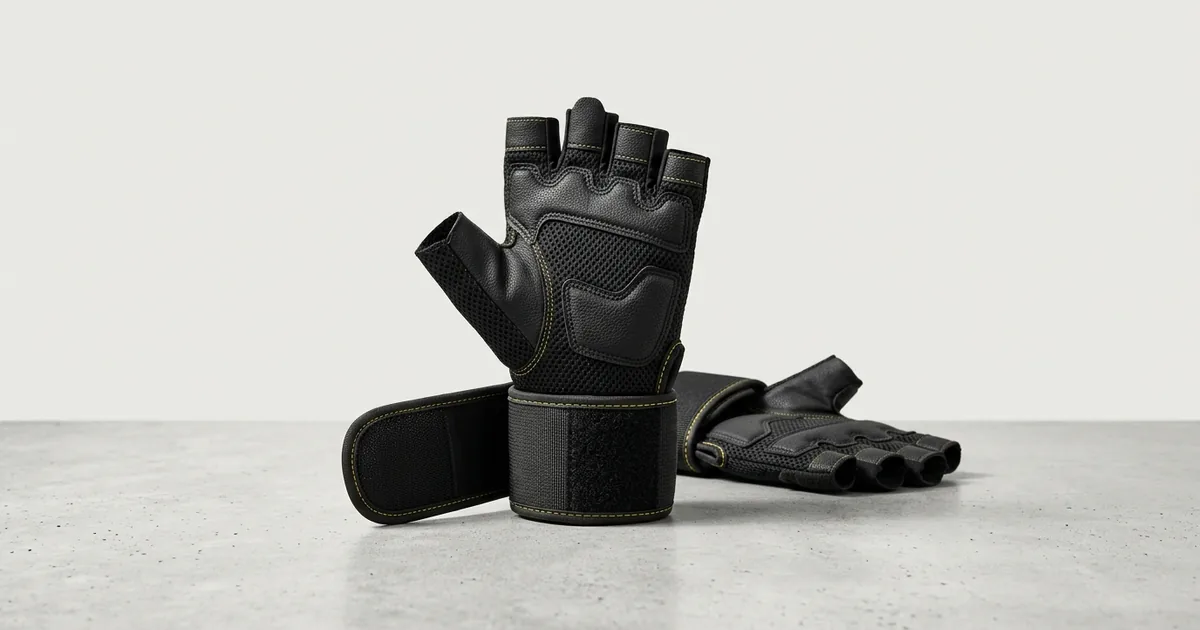
Grip fatigue shows up fast during high-rep band work, especially on rows and pulldowns. A pair from the gym gloves and straps collection keeps your hands locked onto the handles so your set ends because your muscles gave out, not your grip.
Stand on the band with feet hip-width apart, hold handles at shoulder height, squat down keeping knees tracking over toes. The band adds resistance exactly where a bodyweight squat gets easy, near the top of the movement.
Loop a mini band above the knees, drop into a quarter squat, and step sideways maintaining tension throughout. This is one of the most effective glute medius exercises available, and it directly reduces knee cave during heavier lifts.
Loop the band above the knees, lie on your back, drive hips upward while pressing knees outward against the band. Pause at the top for a two-count squeeze.
Stand on the band, hinge at the hips keeping the bar path (or handles) close to your legs, drive hips forward to stand. This teaches proper hip hinge mechanics without loading the spine the way a barbell deadlift does.
Loop a band around the ankles, take wide diagonal steps forward and backward. Brutal on the hip stabilizers, and a favorite pre-run or pre-leg-day activation drill.
Anchor the band at chest height to your side, press the handle straight out from your chest and resist the band’s pull to rotate you. This is arguably the single best anti-rotation core exercise that exists, band or otherwise.
Anchor the band low or high, rotate through the torso pulling the handle across your body diagonally. Builds rotational power used in almost every sport.
Anchor the band overhead, pull the handle down toward your knees while crunching the abs, control the return. A rare way to load the abs the way you would load any other muscle group.
Combine a squat with an overhead press using a band anchored underfoot. This raises heart rate quickly and works as a finisher for time-crunched sessions.
Loop a band around the ankles and shuffle side to side for time. Excellent for conditioning without impact on the joints, and easy to fit into a small hotel room or living room.
Programming matters more than the exercise list itself. Below are three ready-to-use sessions built entirely around the movements above.
Finish any of these sessions with a quick recovery routine. A few minutes on a vibration platform helps loosen the legs after high-rep band squats and walks, and it fits in the same small footprint as your band kit.
Bands respond differently than free weights, so the usual 8-12 rep range for hypertrophy still applies, but you will need to manage progression differently.
A band that challenges your chest press will feel like nothing during a bicep curl. Match band tension to the muscle group, smaller muscles need lighter resistance.
Releasing tension too fast on the return phase removes half the benefit of the exercise. Control the band back to the start position every single rep.
Anchoring too high or too low changes the entire resistance curve of a movement. A chest press anchored at ankle height turns into an incline press, not the flat press you intended.
Bands still load joints and connective tissue under tension. A rushed warm-up before loaded squats or presses is still a rushed warm-up, band or barbell.
Band selection depends on your training goal more than your fitness level.
Whatever the goal, keep a gym towel with a hanging pocket nearby for band sessions, sweat on the handles reduces grip and can shorten the lifespan of the material over time. It also keeps your towel accessible mid-set instead of buried in a gym bag.
High-rep band training generates more metabolic fatigue than most people expect, especially in the shoulders and glutes. Rehydrating properly matters just as much here as after a heavy barbell session. Mixing a post-workout shake in an electric protein shaker bottle saves time between sets if you are running a fast circuit-style workout and need to refuel immediately after.
For those training exclusively with bands, whether at home or while traveling for work, a simple weekly split keeps progress consistent.
This structure hits every major muscle group twice a week, which is enough frequency to build real strength even without free weights in the mix.
The best resistance band exercises are not a downgrade from a fully loaded gym, they are a different tool that solves a different problem: training anywhere, anytime, without excuses. Whether you are building a home setup, filling gaps between gym sessions, or keeping a routine intact while traveling across the UAE or KSA for work, bands deliver real strength when the programming is right. Start with the movements above, progress the tension deliberately, and treat every rep with the same discipline you would bring to a barbell. The results follow the effort, not the equipment on the floor.
Yes, as long as you manage tension and volume properly. Bands provide constant resistance throughout the full range of motion, which creates enough mechanical tension to drive muscle growth when reps stay in the 10-15 range and progression is tracked over time.
Two is enough to begin: one loop band for lower body and hip work, and one long tube band with handles for upper body pressing and pulling movements. You can build a complete full-body routine with just this combination.
Three to five sessions per week works well, since bands are joint-friendly and allow for quicker recovery between sessions compared to heavy free weight training. Rotate between upper body, lower body, and core-focused days.
Yes, rubber and latex bands stretch out and weaken with heavy use, especially with sweat exposure and improper storage. Rinse and dry bands after sweaty sessions and store them away from direct sunlight to extend their lifespan.
For portability, yes. A full band kit weighs a fraction of even a single pair of adjustable dumbbells and fits into a carry-on bag, making it the practical choice for anyone training consistently while traveling.
آخر تحديث: 16 سبتمبر 2026 ما هي أفضل القفازات الرياضية للراحة والثبات؟ الإجابة المباشرة أن القفازات المثالية هي التي تجمع
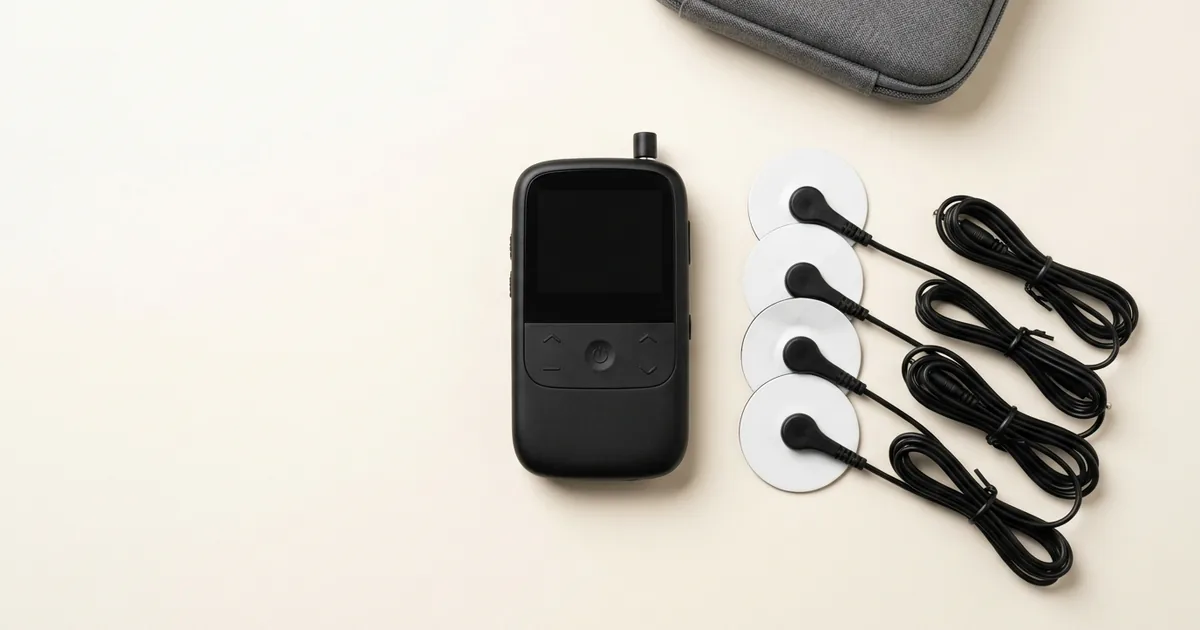
Last updated: September 13, 2026 An EMS stimulator for muscle recovery sends low-frequency electrical pulses through the skin to trigger
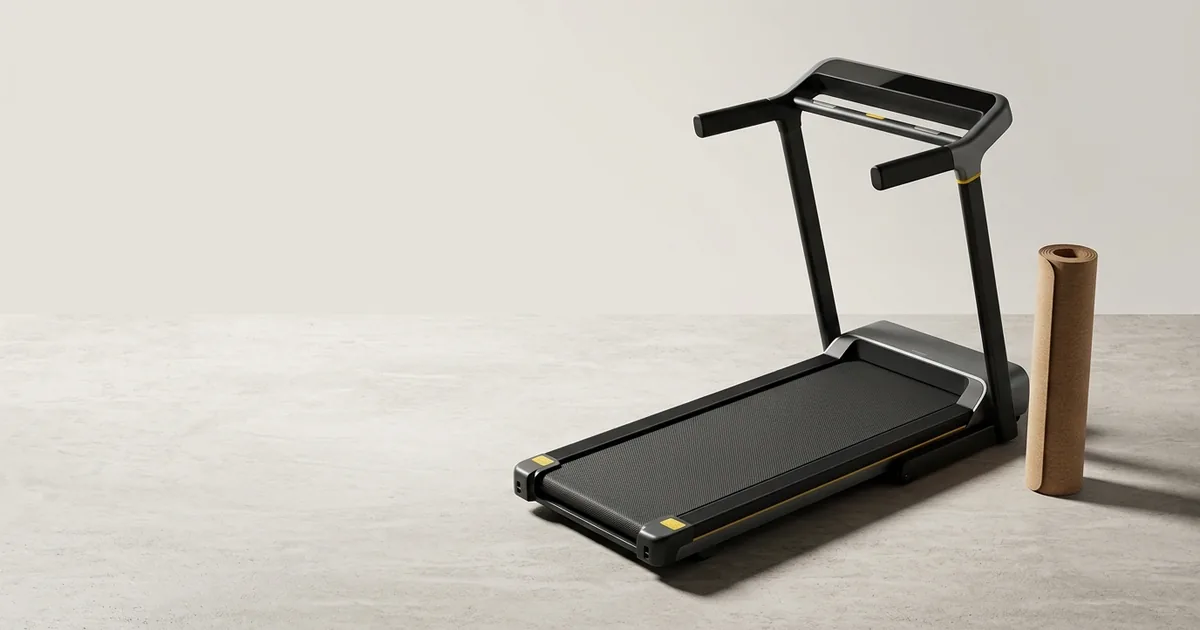
آخر تحديث: 13 سبتمبر 2026 لا تحتاج غرفة كاملة ولا استثمارًا ضخمًا لتبني عادة تمرين ثابتة في البيت. كل ما