
Last updated: October 28, 2026
A vibration plate workout for beginners works because it asks for less time and less guesswork than almost any other training method. You stand, sit, or move through simple positions on a vibrating platform, and the rapid oscillations force your muscles to contract dozens of times per second to stabilize your body. No complicated programming. No steep learning curve. Just a plate, your bodyweight, and ten to twenty minutes. This guide breaks down exactly how to start, what to do in your first sessions, and how to build a routine that actually produces results.
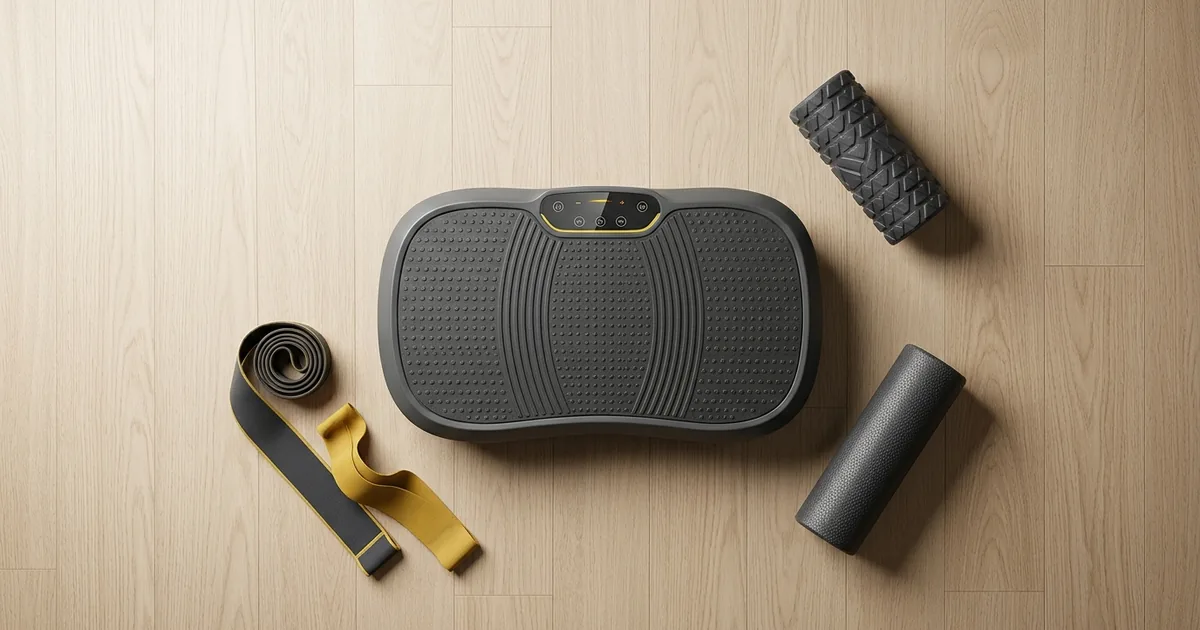
A vibration plate sits on a motorized base that oscillates up and down or side to side at a set frequency, usually measured in hertz. When you stand on it, your muscles receive thousands of micro-contractions per minute as they work to keep you stable. This is called reflexive muscle activation, and it’s the core mechanism behind every benefit a vibration plate offers.
For a beginner, this matters because you get a meaningful stimulus without needing heavy external load, complex technique, or long sessions. The plate does part of the work by creating instability. Your body responds by recruiting more muscle fibers than a normal static stretch or light bodyweight move would trigger on its own.
None of this replaces strength training or cardio. A vibration plate is a tool that complements your routine, speeds up warm-ups, and adds a recovery option that doesn’t require foam rolling for twenty minutes on a hard floor.
Vibration training suits a wide range of people, but it’s especially effective for certain starting points.
If you haven’t trained consistently before, a vibration plate gives you a low-barrier entry point. You learn to control your posture and engage your core without needing to master a squat rack or a barbell first.
After weeks or months away from training, joints and connective tissue need to reacquaint themselves with load. Vibration plate sessions rebuild that tolerance gradually, which makes the transition back to full training smoother.
Long hours sitting lead to tight hip flexors, weak glutes, and stiff lower backs. A short vibration plate circuit at home before or after work reactivates those muscles without needing a full gym session.
If your schedule includes hotel rooms, serviced apartments, or short stays, a compact plate solves the “no gym access” problem. It packs the same logic as the rest of a portable training setup, including a jump rope for cardio and light gear for strength.
Before you step on the plate, a few setup decisions determine whether your first session feels productive or confusing.
Most vibration plates offer adjustable intensity levels, often ranging from low to high frequency settings. As a beginner, start at the lowest setting. Your nervous system needs time to adapt to the sensation of constant micro-movement. Jumping to a high setting in week one usually leads to shaky legs, poor form, and an early session cut-off.
Train barefoot or in thin-soled shoes. Thick cushioned sneakers absorb the vibration before it reaches your muscles, which defeats the purpose. Place the plate on a flat, stable floor, ideally with a small rubber mat underneath if you’re on tile or hardwood, to reduce noise and plate movement.
Cap your first few sessions at 10 minutes total, broken into short intervals of 30 to 60 seconds per exercise with rest in between. This isn’t a durability test. The goal is adaptation, not exhaustion.
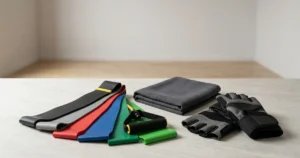
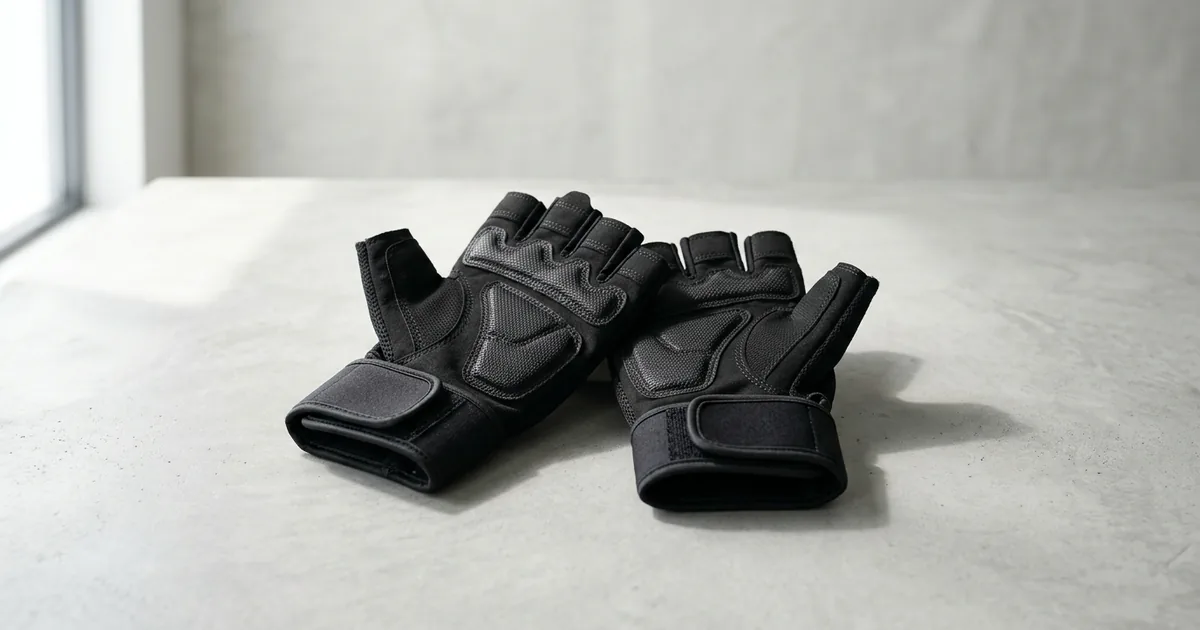
Comfortable, fitted activewear works best since loose clothing can catch on the platform edges during position changes. If your routine includes any pushing or pulling movements on the plate, a pair of gym gloves adds grip and reduces hand fatigue during static holds like planks.
Below is a structured first-month approach. It starts simple and builds complexity as your body adapts to the vibration stimulus.
Goal: get comfortable with the sensation and basic positions. Low frequency setting throughout.
Repeat the circuit twice, resting 30 to 45 seconds between rounds. Total time: roughly 10 to 12 minutes.
Once the foundation phase feels manageable, increase the frequency setting by one level and extend each hold to 40 to 45 seconds. Add movement-based exercises to the mix.
This phase runs 15 to 18 minutes including rest, and it’s a reasonable point to settle into as your regular three to four times per week routine.
A vibration plate workout for beginners works best as part of a weekly structure rather than a standalone habit done randomly. Here’s a simple four-day framework.
Focus on squat holds, calf raises, and glute bridges. Pair with a short mobility stretch afterward while the muscles are warm.
Plank variations, push-ups on the plate, and seated core twists. This day complements any upper-body strength work you’re doing elsewhere in your week.
Low-intensity, low-frequency session focused purely on circulation. Gentle standing holds and seated positions for 8 to 10 minutes, nothing demanding.
Combine two exercises from each category above into one longer session, 18 to 20 minutes with structured rest intervals.
On days you’re not using the plate, you can rotate in other portable tools. A few rounds with a jump rope covers cardio, and keeping a shaker ready for post-session protein means recovery nutrition isn’t an afterthought. An electric protein shaker removes the clumping issue that comes with manual mixing, which matters when you’re training multiple times a week and want consistency without extra effort.
This is the most common error. A high setting feels more “intense,” but it often leads to poor posture as your body fights to stay stable rather than training the target muscles properly. Build up gradually over two to three weeks.
Standing with straight, locked knees sends the vibration directly into the joints instead of being absorbed by the muscles. Always keep a soft bend in the knees during standing exercises.
Because sessions are short, it’s tempting to do two or three a day when starting out. The muscular and circulatory response needs recovery time just like any other training stimulus. Three to four sessions per week is a sensible starting frequency.
A rounded back during a squat hold or a sagging hip during a plank cancels out much of the benefit and increases strain risk. Treat every position on the plate with the same attention to form you’d give a floor exercise.
Vibration training supports circulation and muscle activation, but it isn’t a replacement for a calorie-aware diet or a full resistance training program if your goal is visible fat loss. Treat it as one piece of a broader routine, not a standalone solution.
While generally low-risk, vibration plate training isn’t suitable for everyone. Speak with a healthcare provider before starting if you have any of the following:
For most healthy adults, including complete beginners, short low-frequency sessions are well tolerated. When in doubt, start lower and shorter than you think you need to.
After four to six weeks of consistent sessions, your body adapts to the baseline stimulus. At this point, progression comes from a few adjustable variables rather than simply adding more time.
Move up one level at a time, giving your body a week or two to adjust before increasing again.
Holding light dumbbells during squat holds or performing push-ups with feet elevated on a bench while hands stay on the plate increases the demand without needing a completely new exercise list.
Moving from a two-foot stance to a staggered stance, and eventually to single-leg holds, increases the stabilization challenge significantly. This is one of the simplest ways to keep the training effect, without adding more time to your session.
Use the plate as a 5 to 8 minute warm-up before a resistance session to pre-activate the muscles you’re about to train, or as a 10 minute cool-down to support recovery afterward. This positions the plate as a tool inside a bigger training system rather than a replacement for it.
Not all plates are built the same, and for a beginner setup at home or for travel, a few specs matter more than flashy marketing claims.
A compact platform that fits under a bed or in a closet makes it realistic to actually use consistently. If travel is part of your routine, weight matters as much as footprint.
Look for multiple speed or frequency settings rather than a single fixed intensity. This is what allows the progression structure outlined earlier in this guide.
A plate that wobbles excessively or shifts position during use is both a safety issue and a frustration. Check for a non-slip surface and a solid base.
If you’re training in an apartment or shared space, a quieter motor matters for staying consistent without disturbing others, especially for early morning or late evening sessions.
The vibration platform available through Rigid Fitness is built around exactly this brief: compact enough for home or travel, adjustable enough to support a full beginner-to-intermediate progression, and stable enough for daily use. If you’re assembling a broader home setup, the new arrivals range is worth a look for complementary gear that fits the same portable, no-excuses approach to training.
3 sessions, 10 minutes each, lowest frequency setting. Focus: static squat hold, calf raise, plank, seated rest.
4 sessions, 12 minutes each, lowest to second setting. Add wide stance hold and extend plank duration.
4 sessions, 15 minutes each, second frequency setting. Introduce squat to calf raise, single-leg balance, push-ups.
4 sessions, 18 minutes each, second to third frequency setting. Full circuit combining lower body, core, and balance work, with glute bridges and standing core twists added.
By the end of week four, most beginners have a solid foundation to either maintain this routine long-term or begin layering in external resistance and more advanced positions.
You don’t need a spreadsheet to know a vibration plate routine is working. A few simple markers are enough.
That last point matters more than any other metric. A vibration plate workout for beginners only produces results if it gets used consistently, and the entire appeal of this method is that it’s short enough and simple enough to fit into even a packed week.
A vibration plate workout for beginners doesn’t need to be complicated to be effective. Start at a low frequency, keep sessions short, prioritize posture over intensity, and build gradually over four weeks. The combination of low joint impact, fast sessions, and genuine muscle activation makes it one of the more practical entry points into structured training, whether you’re working out at home, at the gym, or on the road. Pick a stable, portable plate, commit to three to four sessions a week, and let the progression plan above carry you from your first static hold to a full standing circuit.
Start with 10 minutes per session in your first two weeks, using the lowest frequency setting. As your body adapts, you can extend sessions to 15-18 minutes by week three or four, adding more exercises rather than just more time.
Three to four sessions per week is a sensible starting frequency. This allows enough stimulus for adaptation while giving your muscles and nervous system time to recover between sessions.
A vibration plate supports circulation and muscle activation, which can complement a weight loss routine, but it isn’t a standalone fat-loss solution. Pair it with resistance training, cardio, and a calorie-aware diet for actual fat loss results.
Yes, for most healthy adults. Start at the lowest frequency setting, keep knees slightly bent, limit early sessions to 10 minutes, and avoid training if you have a recent surgery, pregnancy, cardiovascular condition, or balance disorder without medical clearance first.
Train barefoot or in thin-soled shoes so the vibration reaches the muscles properly. Wear fitted activewear to avoid loose fabric catching on the platform, and consider gym gloves if your routine includes planks or push-ups on the plate.
Last updated: October 28, 2026 A 40 square meter apartment is not an excuse to skip training, it’s a design
Last updated: October 28, 2026 Your grip fails before your muscles do. That is the uncomfortable truth behind most stalled
Last updated: October 21, 2026 Sore legs the day before a big lift. Tight shoulders after three straight gym sessions.