
Last updated: October 11, 2026
A rigid fitness centre is not a building. It is a personal performance system built from portable gear that moves with you between the gym, your living room, and the hotel room on a work trip in Riyadh or Dubai. In 2026, the people getting the best results are not the ones with the most expensive gym memberships. They are the ones who have assembled a tight, reliable set of gear they trust, know how to use, and can set up anywhere in under five minutes. This guide shows you exactly how to build that system.
The term describes a self-contained training setup, a compact collection of gear that covers strength, conditioning, mobility, and recovery without requiring a dedicated room or a long-term lease. It is the opposite of a commercial gym. Instead of driving to one fixed location with fixed hours, you carry your centre with you, or you keep a lean version of it at home that never goes unused because it is always within reach.
Think of it as three overlapping setups that share the same core gear:
The rigid fitness centre concept works because it removes the single biggest reason people stop training consistently: access. When your gear travels with you, there is no excuse tied to location.
Commercial gyms in the UAE and KSA are excellent for heavy compound lifting and machines that need real weight stacks. But they fail in a few predictable ways: they close during renovations, they get overcrowded during peak hours, they are sometimes far from where you actually spend your week, and they do not travel with you to Jeddah, London, or a weekend in the mountains. A rigid fitness centre fixes every one of these gaps.
A moderate session you actually complete beats a perfect session you skip because the gym was a 40-minute round trip. Owning your own gear collapses that friction. You train because the barrier to starting is almost zero.
Shared gym gear gets worn, shared, and sometimes poorly maintained. When you own your own grips, straps, and bands, you control their condition and you know exactly how they will perform under load.
Gym memberships are a recurring cost that does not scale down when you travel for work or relocate between cities. A personal centre is a one-time investment that appreciates in value every month you use it.
Outdoor training in the UAE and KSA is only realistic a few months of the year. A rigid fitness centre lets you train indoors, in air conditioning, without depending on a club’s opening hours during Ramadan, public holidays, or extreme summer heat.
A complete personal training system covers four pillars. Skip one and your setup becomes lopsided, usually in the direction of strength while mobility and recovery get ignored.
This is the foundation. Resistance bands, adjustable dumbbells, a pull-up bar, and grip accessories fall here. The goal is progressive overload using gear that compresses into a bag rather than bolts to a floor.
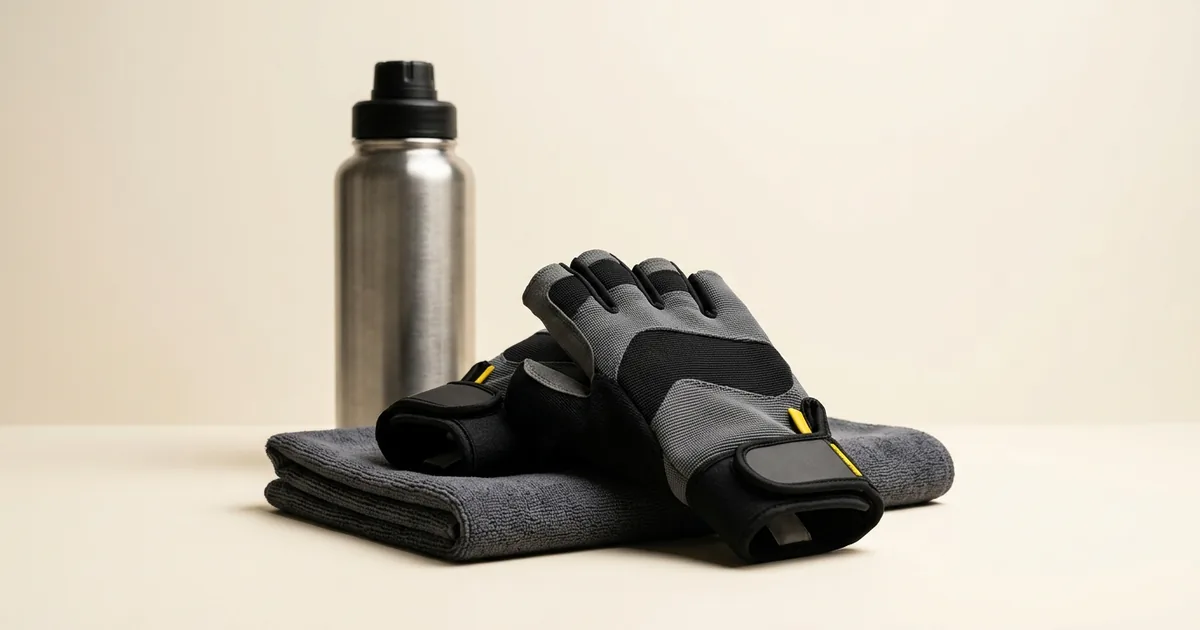
Grip support matters more than most people think. Wrist straps and lifting gloves protect your hands during pulling work and let you push grip-limited exercises like deadlifts and rows further before your forearms give out before your target muscle does. Browse the gym gloves and straps collection to round out this pillar.
Conditioning gear needs to be light, fast to deploy, and brutally effective. A jump rope is the single best return on investment in this category. A few hundred jumps replicate the cardiovascular demand of a much longer run in a fraction of the time and space. The beaded, tangle-free adjustable jump rope is built for this exact role, it works on hotel carpet, garage flooring, or a gym turf lane without snagging mid-set.
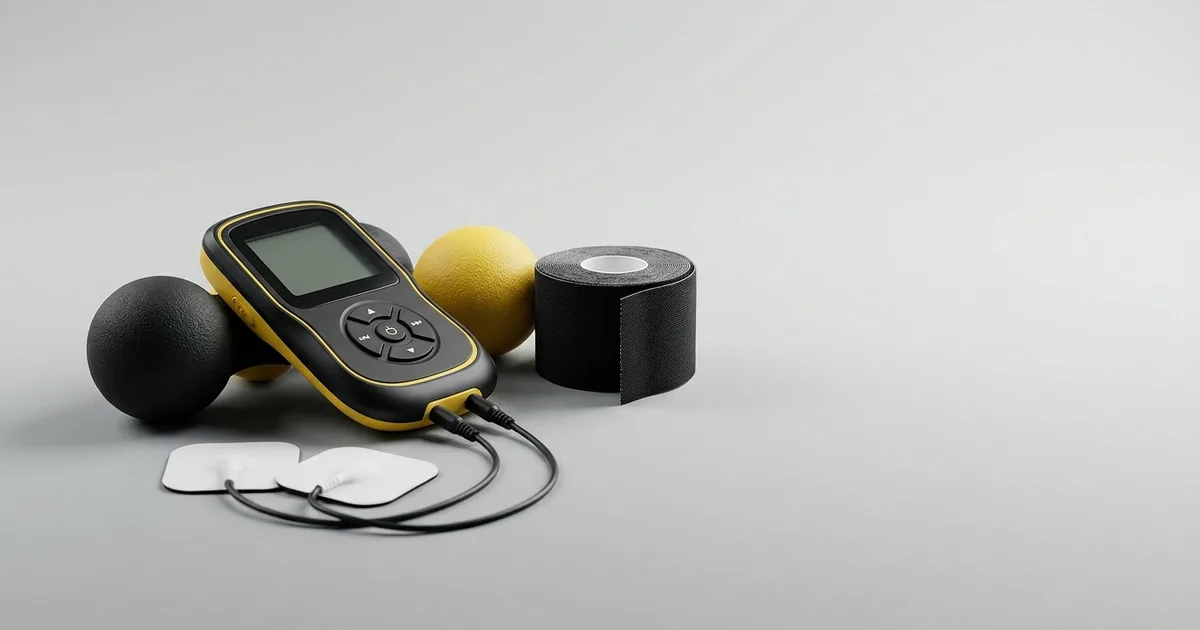
Recovery gear is the most skipped pillar and the one that determines whether your strength and conditioning work actually compounds over months. A vibration platform speeds up muscle recovery between sessions by increasing local blood flow and reducing soreness, which means you can train the same muscle group again sooner without a performance drop. The vibration platform for exercise and recovery fits into a home or gym-based centre and takes up less floor space than a yoga mat.
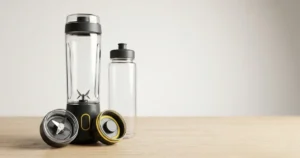
Training output depends on what happens before and after the session. A reliable shaker is not a gimmick, it is the difference between consistently hitting your protein targets and guessing. The electric protein shaker bottle blends supplements smoothly without clumping, which matters when you are drinking a shake in a car, a locker room, or a hotel lobby between meetings.
A home setup does not need a dedicated room. It needs a defined zone, a short gear list, and a habit of putting everything back in the same place after every session so setup time stays close to zero.
Look for a flat area at least 2 by 2 meters with enough ceiling clearance for a jump rope and overhead reaches. A balcony, a spare bedroom corner, or a section of a garage all work. Flooring matters more than square footage, rubber mats or interlocking tiles protect both your joints and your floor.
A practical home flow looks like this: five minutes on the vibration platform to raise core temperature and prime the nervous system, 20 to 30 minutes of band-resisted strength circuits, and a five to eight minute jump rope finisher. The entire session fits in 40 minutes without ever leaving your apartment.
Even with full access to a commercial gym, bringing your own gear upgrades every session. Shared gym equipment is built for the average user, not for you specifically, and your own gear fills that gap.
Let the gym handle heavy barbell work, cable stacks, and machines that need real weight plates. Reserve your personal gear for the warm-up, the accessory work, and the finisher, where portability and personalization matter more than raw load capacity.
Peak hours in Dubai and Riyadh gyms mean waiting for machines. A rigid fitness centre mindset means you never stand around waiting, you pull out your own band or rope and keep training while a machine frees up.
Travel is where most training programs collapse. A carry-on-sized kit prevents that collapse entirely.
A hotel room rarely has more than 3 by 3 meters of open floor. That is enough for a full-body band circuit covering push, pull, hinge, and squat patterns, followed by a jump rope conditioning block in the bathroom or hallway if ceiling height allows. Twenty minutes, zero equipment rented, zero gym day pass purchased.
Jet lag disrupts sleep, not your ability to move. Keep sessions shorter and lower intensity during the first 48 hours in a new time zone, then return to full intensity once your sleep schedule stabilizes.
If you are starting from zero, build in this order, each item unlocks more training options than the last.
This split works whether you are at home, in a commercial gym, or on the road, because every session is built around gear that travels.
Band-resisted presses, rows, and overhead work. Gloves on for every set past the warm-up. Finish with five minutes of jump rope to elevate heart rate before cooldown.
Band squats, hip hinges, and lateral band walks. Vibration platform for 10 minutes post-session to reduce next-day soreness.
Jump rope intervals, 30 seconds on, 30 seconds off, for 15 rounds. Shaker bottle ready immediately after for a fast-absorbing protein hit.
Vibration platform mobility flow, light band stretching, no high-intensity work. This is the day most people skip and the day that determines how well Day 1 through 3 compound over a month.
Combine every pillar, bands for strength, rope for conditioning, straps for grip-intensive finishers, and a shaker bottle to close the loop on recovery nutrition.
Repeat with progressive band resistance and higher jump rope volume each week. Rest two days, placed wherever your schedule allows.
One of the strongest arguments for a personal fitness centre is cost over time. A mid-range gym membership in Dubai or Riyadh often runs between 250 and 450 AED per month. Over a year, that is 3,000 to 5,400 AED, recurring indefinitely.
A complete personal gear setup, covering a jump rope, a full set of gloves and straps, a vibration platform, and a shaker bottle, is typically a single purchase that costs a fraction of one year of membership and keeps delivering value for years. Even when paired with a gym membership for heavy lifting days, the personal gear layer adds capability without adding a second recurring cost.
This phased approach spreads cost across a quarter instead of one large purchase and matches spending to actual training progress.
Overbuying gear you do not yet have a program for leads to unused inventory. Start with the four-pillar shortlist and expand only once you have a consistent weekly habit.
Strength and conditioning gear get all the attention while recovery tools get treated as optional. Without recovery, training volume plateaus because soreness and fatigue limit how hard the next session can be pushed.
Gear that is not stored in a consistent, visible spot gets forgotten. A single bag or shelf near the door removes the friction of finding everything before a session.
Packing training gear as an afterthought the night before a flight usually means it gets left behind. Keep a dedicated travel pouch pre-packed and ready at all times, separate from your home setup.
Rubber and foam-based gear can degrade faster in high heat and humidity if left in direct sun, such as inside a car during a UAE or KSA summer. Store gear indoors, away from direct heat exposure, to extend its lifespan.
A rigid fitness centre is only as reliable as the condition of its gear. A few habits extend the life of every piece significantly.
Wipe down gloves, straps, and the vibration platform surface after every session. Sweat accelerates material breakdown and odor buildup, especially in humid climates.
Keep bands away from direct sunlight to prevent the rubber from drying out and cracking. Store the jump rope coiled loosely rather than tightly wound to avoid kinks that affect spin consistency.
Rinse immediately after use rather than leaving residue to dry, this prevents buildup that is harder to clean later and keeps the next shake tasting clean.
Resistance bands typically need replacing every 6 to 12 months depending on usage frequency. Gloves and straps last longer but should be checked for seam wear every few months if used daily.
Frequent travel for work makes a fixed gym membership inefficient. A portable kit guarantees training continuity regardless of location.
A home-based setup removes commute time entirely, making it realistic to train during a nap window or before the household wakes up.
Low financial and logistical barriers make it easier to build consistency before committing to a gym membership or a more complex program.
Even serious lifters benefit from a personal gear layer for warm-ups, mobility, and conditioning that a commercial gym’s free weight section does not cover efficiently.
A rigid fitness centre is a mindset shift as much as a gear list. It means your training no longer depends on a single address, a membership card, or a fixed set of opening hours. Start with the four pillars, strength, conditioning, recovery, and nutrition, build your shortlist in order of impact, and keep the setup lean enough to travel in a single bag. Whether you are training at home in Dubai, at a gym in Riyadh, or from a hotel room on a business trip, the gear that matters most is the gear you actually own and know how to use. That is the entire point of building your own centre, consistency that does not depend on where you are.
It refers to a personal, portable training system built from gear covering strength, conditioning, recovery, and nutrition. The goal is a setup you can use at home, in a commercial gym, or while traveling, without being tied to one location.
A complete starter setup covering a jump rope, gloves or straps, a vibration platform, and a shaker bottle typically costs a fraction of one year of gym membership, which usually runs 3,000 to 5,400 AED annually in the UAE and KSA. Costs vary by brand and gear selection.
Yes. A 2 by 2 meter space with a flat floor and basic ceiling clearance is enough for a full strength and conditioning session using bands, a jump rope, and a vibration platform.
Pack a foldable resistance band set, an adjustable tangle-free jump rope, gloves or wrist straps, and a collapsible shaker bottle. All of these fit in a carry-on bag and support a full-body session in a hotel room.
Wipe down gear after every session, store bands away from direct sunlight, rinse your shaker bottle immediately after use, and replace resistance bands every 6 to 12 months depending on usage frequency.

آخر تحديث: 11 أكتوبر 2026 لم يعد التمرين الجاد مرتبطًا بصالة رياضية ضخمة أو جدول زمني ثابت. مع أدوات اللياقة
Last updated: October 7, 2026 A workout mat is the one piece of gear that touches every session you do,
آخر تحديث: 7 أكتوبر 2026 جهاز المشي الصغير هو الحل العملي لمن يريد الكارديو اليومي دون التضحية بمساحة المنزل أو