
Last updated: September 27, 2026
A resistance band costs less than a single personal training session and fits in a laptop bag, yet it can replace an entire rack of dumbbells if you use it right. This guide breaks down the best resistance band workout you can run in 2026, whether you are training in a fully loaded gym, a spare room at home, or a hotel corridor between meetings. No filler, no vague “do some bands” advice – just structured routines, exact exercises, and the reasoning behind each one.
Bands do something free weights cannot: they change resistance throughout the range of motion. At the bottom of a squat or the start of a row, tension is low. As you extend or pull further, tension climbs. This is called variable resistance, and it forces muscles to work hardest exactly where dumbbells and barbells often get easiest – lockout.
For anyone training in Dubai, Riyadh, Abu Dhabi or Jeddah who splits time between a commercial gym, a home setup, and frequent flights, portable workout gear like bands solves a real problem: consistency. You cannot pack a squat rack for a business trip. You can pack four bands and a door anchor.
A full set of bands weighs under a kilogram and rolls up smaller than a water bottle. That means zero excuses on travel weeks, zero cost of a monthly gym membership if you train at home, and zero setup time if you train at a commercial gym and just want to warm up or finish a session without waiting for a cable machine.
Not all bands do the same job. Building the best resistance band workout starts with knowing which band solves which problem.
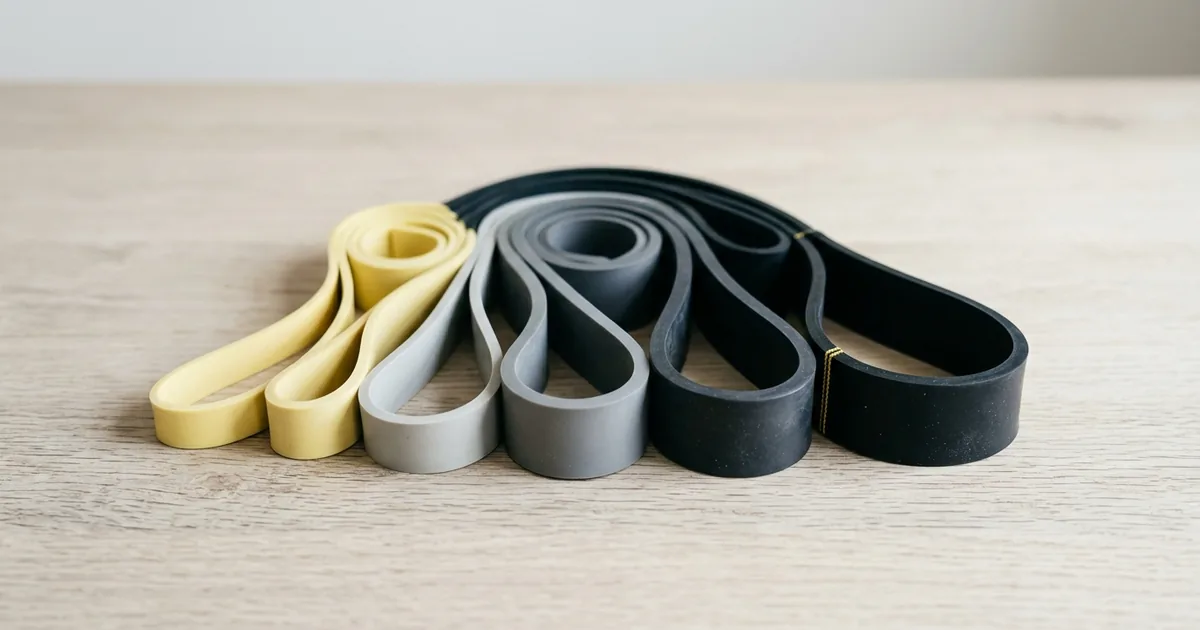
Short, continuous loops, usually placed around the thighs, ankles, or wrists. Best for glute activation, lateral steps, and warm-ups before leg day. Light-to-medium tension is usually enough.
Larger, flat loops used for pull-up assistance, deadlift patterns, squats, and banded presses. These carry the highest tension range and are the backbone of a serious banded strength session.
Look similar to cables you would find on a gym machine. The handles make pressing, rowing, and curling movements feel closer to free-weight training. Ideal for anyone building a home setup that mimics a cable station.
Compact, fixed-handle bands good for quick arm and shoulder isolation work. Excellent for travel because there is nothing to anchor.
Wider, non-slip bands designed to sit comfortably above the knee without rolling. Built specifically for glute bridges, banded squats, and lateral walks.
Most lifters end up needing two or three of these categories, not all five. If you are starting a band collection from scratch, check Rigid Fitness’s latest gear drops before buying anything, tension ratings and build quality vary a lot between brands.
Tension is usually labeled light, medium, heavy, or by color. There is no universal color code across brands, so always check the labeled resistance range in kilograms or pounds, not just the color.
A smart starter kit covers light, medium and heavy in loop form, plus one tube set with handles. That combination alone can run the entire routine below.
This is the core session. It is built in four blocks: warm-up, upper body, lower body, and core/finisher. Run it 3-4 times a week, resting at least one day between sessions if you are also lifting weights elsewhere.
The goal here is blood flow and joint readiness, not fatigue. Use a light band.
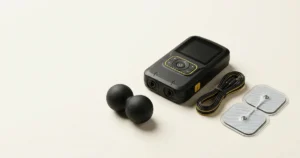
If you have access to a vibration platform, a 60-90 second stand before this warm-up further loosens the hips and calves, which pairs well with the band work that follows.
Use a medium or heavy tube band with handles, anchored at a door or rack. Rest 45-60 seconds between sets.
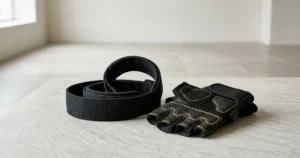
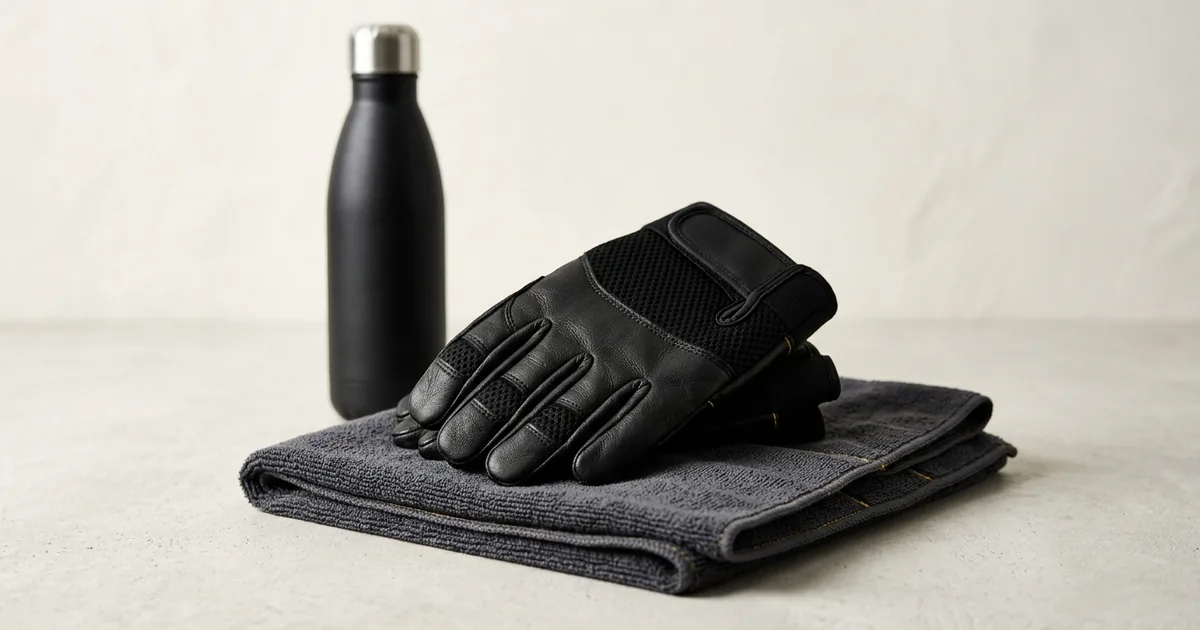
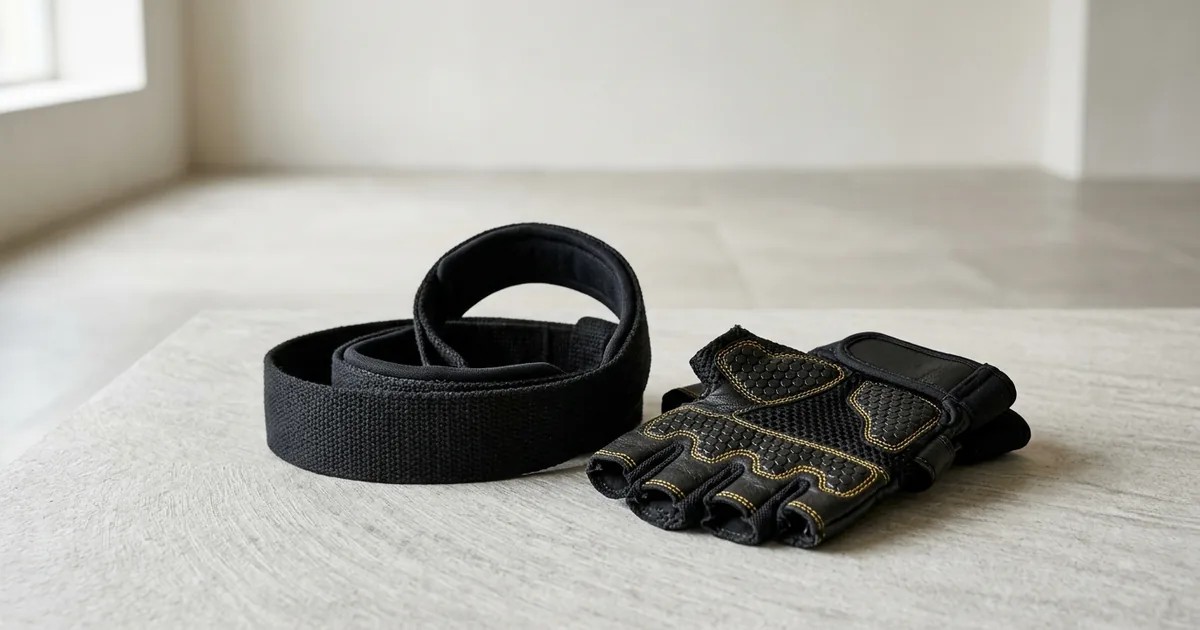
Grip fatigue shows up fast with tube bands, especially on rows and pulldowns. A pair of gym gloves or lifting straps keeps your hands from cramping mid-set so you can push the last few reps of each block.
Switch to a heavy loop band or fabric glute band. Lower body work with bands responds best to higher rep ranges, since peak tension is what drives growth here, not just load.
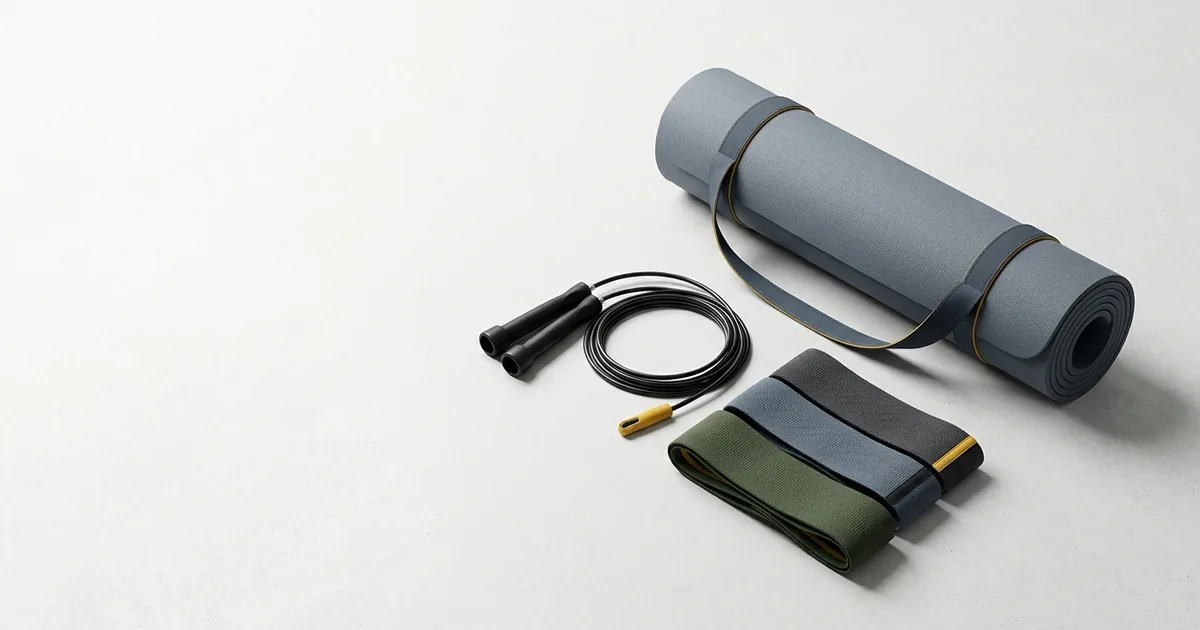
Finish with a 5-minute cardio burst to spike heart rate before the cool-down. A jump rope is the fastest way to do this without adding more gear to your bag, 3 rounds of 60 seconds skipping with 30 seconds rest works well after a banded lower-body block.
Home training removes the anchor points a gym gives you for free, cable stations, racks, pull-up bars. Solve this with a door anchor (a flat strap that wedges into a closed door) and you unlock 90% of the gym version of this routine.
Home training is also where a vibration platform earns its space. Ten minutes standing on it post-workout, especially after the lower-body block, speeds up recovery and reduces next-day stiffness without needing a foam roller session.
Hotel rooms rarely have anchor points, so the travel version of this routine leans on stance-based tension instead of doors and racks.
Pack one medium loop band, one heavy loop band, and a figure-8 band. That covers upper body, lower body, and core without a single anchor point. Total pack weight: under 400 grams.
Bands do not have to run solo. Some of the best sessions blend bands with other portable gear to build a session that rivals a full gym visit.
This structure covers strength, conditioning, and recovery in under an hour with three pieces of portable gear that fit in one bag.
The biggest mistake in banded training is staying on the same band forever. Progression still needs to happen, just differently than with plates.
Track your bands the same way you would track weights, note the color/tension and the number of reps completed. When 4 sets of 15 feels easy at the same band length, move up a tension level or add a second band.
If there is no tension at the start of a rep, you are only training half the range. Keep constant tension from the very first inch of movement.
A band that is perfect for lateral walks is far too light for a squat pattern. Match the tension to the movement, not the other way around.
A snapped band at full stretch stings. Inspect for nicks or thinning before every session, especially with tube bands that see heavy daily use.
Momentum defeats the purpose of a band. Controlled, deliberate reps keep tension where it belongs, on the muscle, not on the recoil.
Tube bands with handles put a lot of load directly into the hands and forearms. If grip fails before the target muscle does, your training stalls early. This is exactly the gap that gloves and lifting straps are built to close.
Higher rep, constant-tension training like this generates a specific kind of fatigue, more pump, more metabolic burn, and often more next-day soreness than an equivalent free-weight session at lower reps. Recovery matters just as much here.
The best resistance band workout does not have to stand alone. Here is a simple weekly frame that fits around a normal work schedule.
This split works whether your week includes a commercial gym visit, a home session, or a flight. Bands are the constant, everything else adjusts around them.
Bands teach movement patterns, squat, hinge, push, pull, without the intimidation of loaded barbells. Form errors show up immediately because slack tension feels wrong.
Consistency beats intensity for long-term results. A banded session in a hotel room beats a skipped week every time.
Lower joint stress and adjustable tension make bands a natural bridge back to heavier training after an injury or long break.
Bands added to barbell work, banded squats, banded bench press, create accommodating resistance that trains explosive strength through the lockout portion of a lift.
The best resistance band workout is not a single exercise list, it is a system that adapts to wherever you are, gym, home, or a hotel room in a different city. Four bands, a door anchor, and forty-five minutes cover a complete strength session that rivals a full gym visit. Pair it with the right recovery tools, sharp attention to tension and form, and a weekly structure that fits your actual schedule, and bands stop being a backup plan. They become the most reliable piece of gear in your entire setup.
3-4 sessions per week works well for most people, with at least one rest day between sessions if you are also lifting weights separately. Beginners can start with 2-3 sessions and add frequency as recovery improves.
Yes, when tension and rep ranges are matched to the movement. Bands provide constant tension and peak resistance at full extension, which drives muscle growth through a different loading curve than free weights, not a weaker one.
Start with a light-to-medium loop band for warm-ups and glute work, and a medium tube band with handles for pressing and rowing. Move up in tension once 3-4 sets of 12-15 reps feel easy with full control.
A door anchor unlocks more exercises like presses, rows and pulldowns, but it is not essential. Stance-based moves like squats, standing rows, and step-on presses cover most of a full-body session without any anchor point, which is ideal for travel.
If you complete all prescribed sets and reps with strict form and the last 2-3 reps no longer feel challenging, move up one tension level or add a second band for the same movement.
آخر تحديث: 27 سبتمبر 2026 مساحة غرفة النوم الإضافية أو زاوية من الصالة كافية لبناء روتين تمرين حقيقي، بشرط اختيار
Last updated: September 27, 2026 Typing “best gym near me” into your phone gives you a list ranked by distance,
Last updated: September 23, 2026 The question every serious lifter eventually asks is: what are the best gym gloves for