
Last updated: September 13, 2026
An EMS stimulator for muscle recovery sends low-frequency electrical pulses through the skin to trigger muscle contractions without lifting a single rep. Athletes use it to flush out soreness after leg day. Desk workers use it to keep muscles active during long sitting hours. Travelers use it because it fits in a laptop bag and needs no gym floor space. This guide breaks down exactly how the technology works, who benefits most, and how to choose one that fits a gym, home, or travel routine in the UAE and KSA.
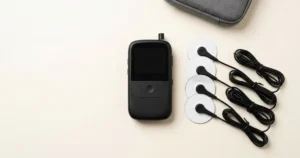
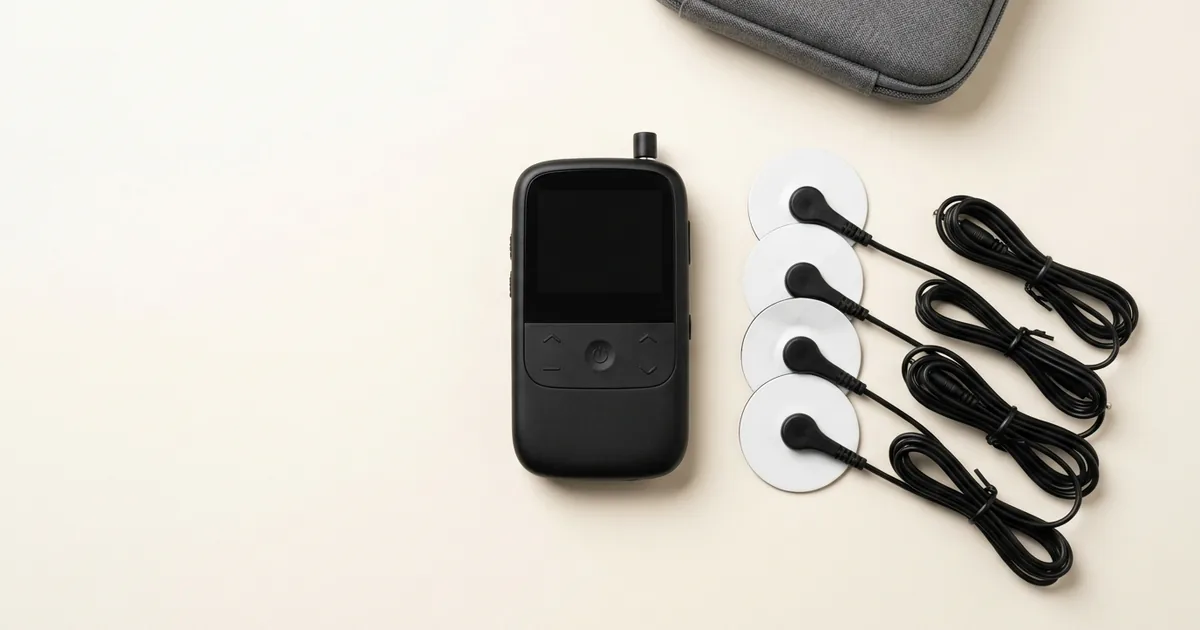
EMS stands for Electrical Muscle Stimulation. An EMS stimulator is a compact device, usually a control unit connected to adhesive gel pads, that delivers controlled electrical impulses directly to a muscle group. The pulses mimic the signals your brain naturally sends to muscles, causing them to contract and relax on command, even while you sit still.
Unlike a vibration plate that works through mechanical oscillation, an EMS stimulator works through direct nerve stimulation. Both fall under the same modern recovery and activation category, but they solve slightly different problems, which we cover further down.
Every voluntary muscle contraction starts as an electrical signal from your central nervous system. An EMS stimulator replicates that signal externally. When the pads are placed over a muscle belly and the unit is switched on, the electrical current depolarizes the underlying nerve fibers, forcing the muscle to contract, whether you’re trying to move it or not.
During normal exercise, your body recruits smaller motor units first, then larger ones as demand increases. EMS bypasses that natural order and can recruit a higher percentage of muscle fibers simultaneously, including deeper fibers that are harder to reach through bodyweight movement alone. This is one reason physiotherapists have used EMS for decades in muscle re-education after injury.
Different frequencies produce different effects:
A quality EMS stimulator lets you switch between these ranges depending on whether the goal is a post-workout cool-down or an active muscle session.
The appeal of an EMS stimulator comes down to efficiency. It delivers targeted muscle work in a package small enough to use on a couch, at a desk, or in a hotel room.
Low-frequency EMS settings increase local blood flow to a fatigued muscle, which helps clear metabolic waste faster than passive rest alone. Many lifters run a 15-20 minute low-intensity EMS session on rest days for legs, lower back, or shoulders.
A short EMS warm-up on a muscle group that tends to underfire, like glutes before a squat session, can improve the mind-muscle connection once you start the actual lift.
An EMS stimulator weighs a few hundred grams and runs on a rechargeable battery. It travels well, works without a power outlet mid-session, and needs zero setup space, which fits the same portable-gear philosophy behind products like a vibration platform or a compact jump rope – all gear built to move between gym, home, and travel without losing function.
For people sitting eight-plus hours a day, EMS on the lower back or glutes helps counteract stiffness that builds from prolonged inactivity. It’s not a replacement for movement, but it fills a gap that stretching alone doesn’t always solve.
When a joint injury limits how much force a muscle can safely produce through normal training, EMS allows that muscle to keep contracting under supervision, reducing the atrophy that happens during extended downtime.
Not all EMS stimulators are built the same. Picking the right type depends on which muscle groups you’re targeting and how often you plan to use it.
The most common type. A small control box connects to two or four gel pads that stick directly onto the target muscle. Best for targeted work like quads, hamstrings, lower back, or abs.
A wearable band, usually built for the core, with electrodes built into the fabric. Convenient for hands-free sessions but generally limited to abdominal muscles.
Used mostly in studio settings, these suits stimulate multiple muscle groups at once during an active workout. They’re effective but require supervision and aren’t practical for home or travel use.
A dual-channel unit runs two pad pairs at once, good for symmetrical work like both quads. A multi-channel unit can run four or more pad pairs simultaneously, useful if you’re targeting several muscle groups in one session.
Both fall under passive or semi-passive recovery gear, but they’re not interchangeable.
| Factor | EMS Stimulator | Vibration Platform |
|---|---|---|
| Mechanism | Direct electrical nerve stimulation | Mechanical vibration through the body |
| Target | Specific muscle groups via pads | Whole lower body or full body standing on the plate |
| Best for | Targeted recovery, activation, rehab | Circulation, balance work, warm-up |
| Space needed | None, fully portable | Small footprint, needs floor space |
Many home setups run both. A short session on a vibration platform before training to raise circulation, then an EMS stimulator post-workout for targeted recovery on the muscles that took the most load.
Lifters chasing progressive overload use EMS between heavy sessions to speed up recovery without adding extra training volume that could interfere with the next workout.
People who can’t commit to a full gym session every day still get value from a 20-minute EMS session on core or back muscles while working or watching TV.
A carry-on-friendly EMS stimulator means recovery doesn’t stop because you’re in a hotel room instead of a gym. Pair it with a compact microfiber towel for a full travel recovery kit that fits in one bag.
Under guidance from a physiotherapist, EMS supports muscle retention during recovery periods when full-range movement isn’t yet possible.
Pregnant women, people with pacemakers or other implanted electronic devices, and anyone with epilepsy should avoid EMS stimulators unless cleared by a doctor.
Pads adhere better and conduct more evenly on clean, dry, oil-free skin. Wipe down with a workout towel before placing pads, especially after a sweaty session.
Position pads along the length of the muscle belly, not on joints, bone, or broken skin. Most units come with a placement chart for major muscle groups.
Begin at the lowest intensity and increase slowly until you feel a strong, comfortable contraction, not pain. New users often overestimate the intensity needed on the first few sessions.
Use recovery-mode settings after training, and toning or endurance settings on rest days or during warm-ups.
15-25 minutes per muscle group, 3-4 times a week, is a realistic starting point for most goals. More isn’t always better since overstimulated muscles need recovery time just like they do after normal training.
Pair EMS with a short mobility warm-up. Since it needs no space, it works well squeezed into a morning or evening routine on rest days.
Use EMS as a post-workout cool-down on the muscle group you just trained, while you still have your gym gloves and straps gear bag packed, so the whole session, lift and recovery, happens in one visit.
Pack the EMS unit with a jump rope and towel for a self-contained travel kit. A quick cardio burst with a beaded jump rope, followed by an EMS recovery session, replaces an entire hotel gym visit.
Two channels cover most single-group needs. Four or more channels give flexibility to target multiple areas in one session, useful for people training full-body splits.
Look for a wide intensity range with fine adjustment steps, not just a few jumps. This matters more as you get used to the device and want finer control.
Gel pads wear out after repeated use. Check that replacement pads are easy to source before committing to a unit.
A rechargeable unit with a few hours of runtime per charge covers most weekly routines without needing daily charging, which matters for travel use.
Built-in programs for recovery, endurance, and strength save the guesswork of manually adjusting frequency and pulse width every session.
Since the whole point is flexibility across gym, home, and travel, prioritize a compact unit with a protective case over a bulkier model with extra features you won’t use.
Check the new arrivals section for the latest recovery gear landing in the UAE and KSA lineup, priced in AED with no import guesswork.
EMS supports recovery and activation. It doesn’t replace progressive resistance training for building strength or muscle size over time.
Sweaty or oily skin reduces pad adhesion and conductivity, leading to uneven or weak contractions and pads that peel off mid-session.
Higher intensity doesn’t always mean better results. Overdoing it early leads to muscle fatigue that interferes with actual training days.
Incorrect placement reduces effectiveness and can stimulate the wrong muscle entirely. Always check the placement diagram for each target area.
Buying locally means faster delivery, AED pricing without conversion guesswork, and warranty support that doesn’t involve shipping a unit overseas for repair. Rigid Fitness stocks portable recovery and training gear built for the gym-home-travel lifestyle, all listed under the new arrivals category as fresh gear lands.
An EMS stimulator earns its place in a training bag for one simple reason: it delivers targeted muscle work in a form factor small enough to use anywhere. Whether the goal is faster recovery after heavy lifting, muscle activation before a session, or staying consistent while traveling, the technology fills a gap that stretching and rest days alone don’t cover. Pick a unit based on channel count, pad quality, and portability, use it alongside solid training habits, and it becomes one more tool that keeps a routine running in the gym, at home, or on the road.
No. It supports recovery, activation, and muscle retention, but it can’t replicate the progressive overload needed to build strength or muscle size over time. Use it alongside training, not instead of it.
Most users get good results with 3-4 sessions per week, 15-25 minutes per muscle group. Daily use on the same muscle without rest can lead to fatigue that affects actual training performance.
It depends on intensity and muscle group. Low-frequency recovery settings are generally safe more often, but higher-intensity strength settings need rest days between sessions just like normal training.
It stimulates muscle contraction, not fat metabolism directly. It can support a training routine but shouldn’t be marketed or relied on as a standalone fat loss tool.
An EMS stimulator uses electrical pulses on targeted muscles through pads, while a vibration platform uses mechanical vibration through the whole body while standing on it. They solve different problems and often work well together in one routine.
آخر تحديث: 13 سبتمبر 2026 لا تحتاج غرفة كاملة ولا استثمارًا ضخمًا لتبني عادة تمرين ثابتة في البيت. كل ما
Last updated: September 9, 2026 You have forty-five minutes between a 7am call and a board deck that needs finishing.
آخر تحديث: 9 سبتمبر 2026 إذا كنت تبحث عن ادوات التمارين الرياضية في المنزل التي تجعل التمرين اليومي أسهل بدون