
Last updated: August 9, 2026
Resistance bands are the single most efficient piece of portable workout gear you can own in 2026. They cost less than a single gym session, fit in a carry-on, and let you build real strength at home, in a hotel room, or on the gym floor. If you are new to training or restarting after a break, resistance band exercises for beginners are the fastest way to build joint-friendly strength, fix movement patterns, and prepare your body for heavier training later. This guide breaks down exactly which bands to buy, how to warm up, and which exercises to start with, structured into a program you can actually follow.
Most beginners jump straight into dumbbells or gym machines and stall out within weeks. Bands solve the three biggest problems new trainees face.
Unlike a dumbbell, a band does not rely on gravity. Tension builds through the entire range of motion, which means your muscles work continuously instead of coasting at the top or bottom of a rep. This constant load teaches control before you add heavy weight, which lowers the risk of the sloppy form that causes early injuries.
Bands load the muscle without the jarring impact of a barbell dropping into a joint at the bottom of a squat or bench press. For beginners rebuilding strength after time off, or anyone with cranky shoulders or knees, this matters. You get the strength stimulus without the wear.
The biggest reason beginners quit is friction, driving to a gym, waiting for machines, or not knowing what to do once they arrive. A resistance band lives in a drawer, a gym bag, or a suitcase. You can train in your living room in the time it takes to boil water. Consistency beats intensity every time, and bands remove every excuse.
Not all bands are built the same, and using the wrong one for the wrong exercise is where most beginners get frustrated. Here is what you need to know before you start.
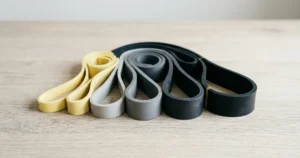
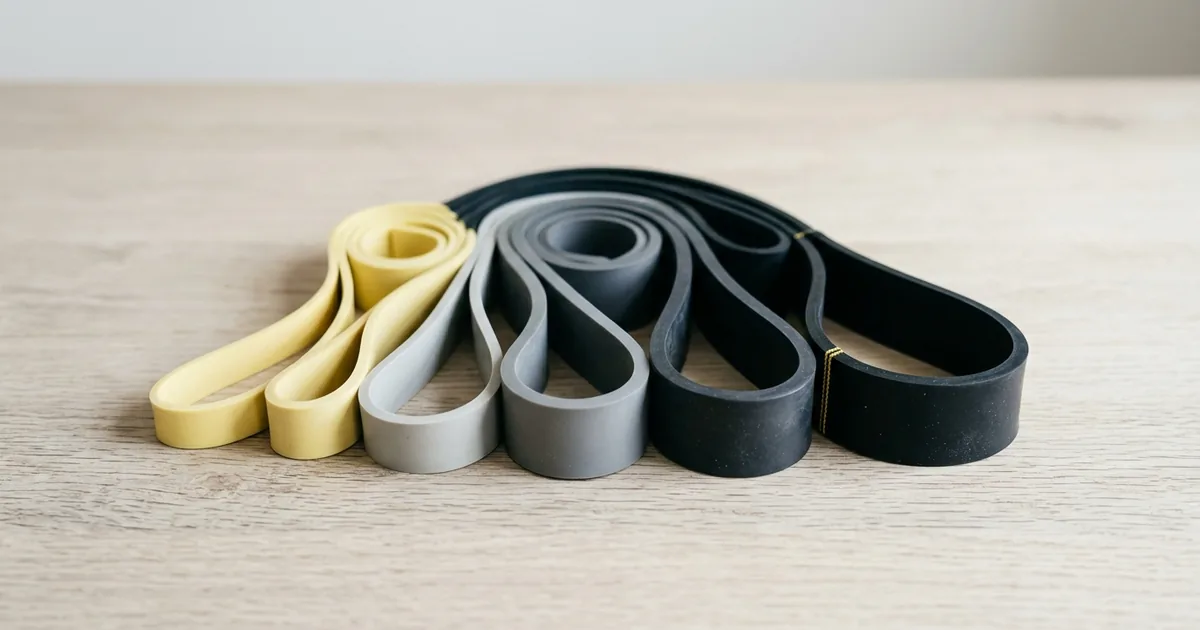
Small continuous loops, usually flat fabric or latex, used mainly for glutes, hips, and shoulder stability work. They are the best entry point for anyone starting with resistance band exercises for beginners because the movements are simple and the risk of snapping or slipping is low.
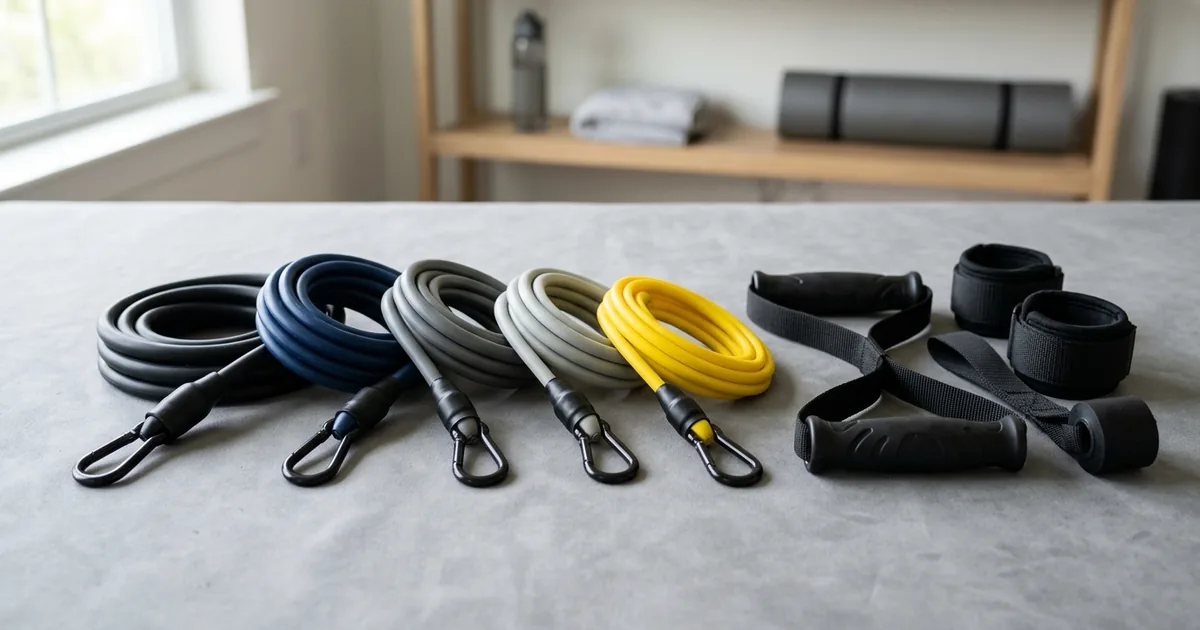
Long tubes with soft grip handles on each end, often sold with a door anchor. These mimic gym cable movements, rows, presses, curls, and pull-aparts, and are the closest thing to a portable cable machine. If you only buy one type of band, this is usually it.
Shaped like a figure 8 with two built-in handles, these are compact and excellent for chest presses, rows, and arm work without needing a door anchor. Great for travel because there is nothing to lose or misplace.
Thicker, non-slip fabric loops designed specifically for glute and hip work. They stay in place better than latex loops during squats and hip thrusts, which matters once you start adding more reps and sweat becomes a factor.
If you are unsure which set to start with, check the new arrivals collection for the latest band sets built for UAE and KSA home training conditions, tested for grip and durability in higher heat and humidity.
Resistance bands are graded by tension, usually labeled light, medium, heavy, and extra heavy, or by color. As a true beginner, resist the urge to buy the heaviest band on the shelf.
The goal in your first two to three weeks is to learn the movement pattern, not to max out effort. A band that lets you complete 15 to 20 clean reps with good form is the right starting point. You can always step further into a loop band or grab a heavier tube later.
A set with 3 to 5 tension levels costs barely more than one heavy band and gives you room to progress without buying again in a month. It also lets you match tension to the exercise, light for shoulder work, heavy for hip thrusts.
Latex bands are stretchy and affordable but can degrade faster in direct heat, which matters in Gulf climates if you store gear near a window or in a car. Fabric bands last longer under heavy glute work and will not roll or snap the way thin latex loops can.
Because bands work through full ranges of motion, a proper warm-up prevents the strain that comes from cold muscles moving too fast into stretch. Spend 5 to 7 minutes on the following before any resistance band session.
Shoulder rolls, hip circles, and ankle rotations, 10 reps each direction. This lubricates the joints you are about to load.
10 bodyweight squats, 10 glute bridges, and 10 arm circles. No band needed yet, just get blood into the muscles you will train.
Using your lightest band, do 15 to 20 slow pull-aparts at chest height. This primes the shoulders and upper back specifically for the pulling work ahead.
If your warm-up routine includes cardio, a few minutes on a vibration plate before band work is an efficient way to raise circulation and loosen the lower body without adding fatigue, especially useful on rest days between full sessions.
These moves build the pulling and pressing strength most beginners are missing, particularly in the upper back, which desk-bound lifestyles tend to weaken.
Anchor the band at chest height on a door or pole. Step back until there is tension, feet shoulder-width apart. Pull the handles to your ribs, squeezing your shoulder blades together, then release slowly. 3 sets of 12 to 15 reps.
Anchor the band behind you at chest height. Press the handles forward until arms are extended, then return with control. Keep your core tight so your torso does not lean forward to help. 3 sets of 12 reps.
Hold the band with both hands in front of your chest, arms straight. Pull the band apart by driving your shoulder blades back, then return slowly. This is one of the best beginner exercises for fixing rounded-shoulder posture. 3 sets of 15 reps.
Stand on the middle of the band with feet hip-width apart, holding a handle in each hand at shoulder height. Press straight overhead, then lower under control. 3 sets of 10 to 12 reps.
Stand on the band, palms facing forward, elbows pinned to your sides. Curl the handles up to shoulder height, squeeze, then lower slowly. 3 sets of 12 reps.
Anchor the band above head height on a door. Grip with both hands near your chest, elbows tucked in, and push down until arms are straight, then return slowly. 3 sets of 12 to 15 reps.
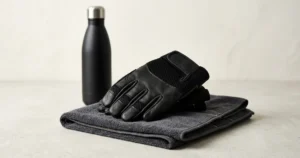
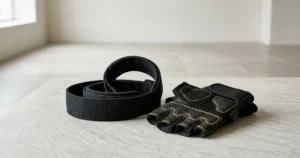
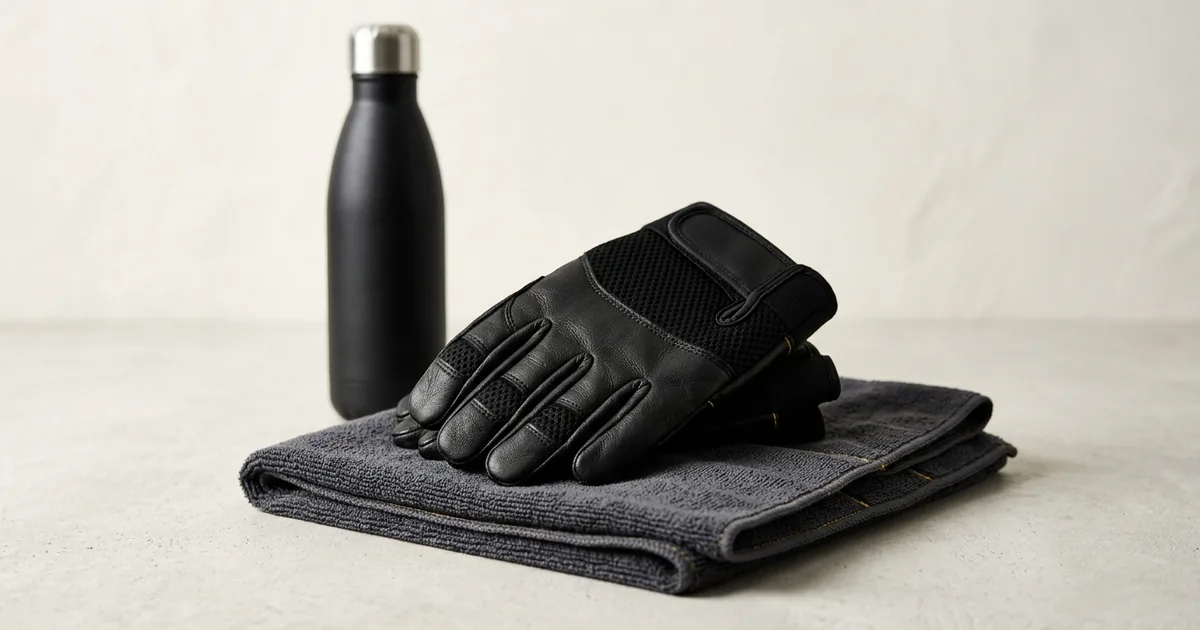
If your palms slip on the handles during higher-rep sets, a light pair from the gym gloves and straps range keeps grip secure without adding bulk, useful once you move into heavier band tension.
Legs and glutes respond extremely well to bands because constant tension forces the muscle to stay switched on through the whole rep, something a lot of beginners never feel with bodyweight squats alone.
Place a loop band just above your knees. Stand with feet shoulder-width apart, push knees outward against the band as you squat down, then drive back up. This teaches proper knee tracking, a common beginner error. 3 sets of 15 reps.
Loop the band above your knees, lie on your back with knees bent, feet flat. Press through your heels to lift your hips, pushing knees out against the band at the top. Squeeze glutes for a full second before lowering. 3 sets of 15 to 20 reps.
With the loop above your knees, hold a slight squat position and step sideways 10 steps in one direction, then 10 back. Keep tension on the band the entire time and avoid standing tall between steps. 3 sets of 10 steps per side.
Stand on the middle of a tube band, holding handles in front of your thighs. Hinge at the hips, pushing your glutes back while keeping a slight knee bend, lower until you feel a hamstring stretch, then drive hips forward to stand tall. 3 sets of 12 reps.
Anchor a loop band around your ankles or a low anchor point. Stand on one leg, hinge slightly forward, and kick the working leg straight back, squeezing the glute at the top. 3 sets of 12 to 15 reps per side.
On hands and knees with a loop band above your knees, lift one knee out to the side while keeping your hips level, then lower with control. This targets the outer hip, a weak point for most beginners who sit for long hours. 3 sets of 12 reps per side.
A strong core stabilizes every other lift you will eventually do. Bands add rotational and anti-rotational resistance that bodyweight core work alone cannot replicate.
Anchor the band at chest height to your side. Hold the handle at your chest with both hands, step away until there is tension, then press straight out and hold for two seconds before returning. This trains your core to resist rotation, a foundational skill for beginners. 3 sets of 10 per side.
Anchor the band low to one side. Pull the handle diagonally across your body from hip height to above your opposite shoulder, rotating through your torso. 3 sets of 12 per side.
Lie on your back holding the band handles with arms extended toward the ceiling, band anchored behind your head. Extend one leg out straight while keeping the band tension steady, then return and switch legs. 3 sets of 10 per side.
Sit with knees bent, feet off the floor, holding the band with both hands, tension anchored to one side. Rotate your torso side to side against the resistance. 3 sets of 12 per side.
Once you know the individual movements, combine them into a single circuit. This is ideal for a first session or for days you are short on time.
Rest 60 to 90 seconds between exercises. Complete 3 full rounds. This circuit takes roughly 25 to 30 minutes and hits every major muscle group, making it the perfect standalone session for beginners who cannot commit to daily training yet.
Consistency is what turns these exercises into results. Here is a simple 4-day structure that works well for beginners balancing training with a normal work schedule.
Banded Squat, Banded Glute Bridge, Lateral Band Walk, Banded Romanian Deadlift, Standing Band Kickback. 3 sets each.
Standing Band Row, Band Chest Press, Band Pull-Apart, Overhead Band Press, Band Bicep Curl, Band Tricep Pushdown. 3 sets each.
Light stretching, a short walk, or 10 to 15 minutes on the vibration plate to support recovery without adding training stress. Follow with a light band pull-apart set to keep the shoulders mobile.
Band Pallof Press, Banded Dead Bug, Standing Band Woodchop, followed by the full-body circuit above at a lighter tension level.
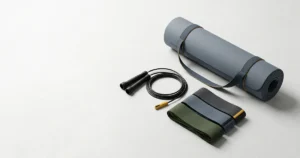
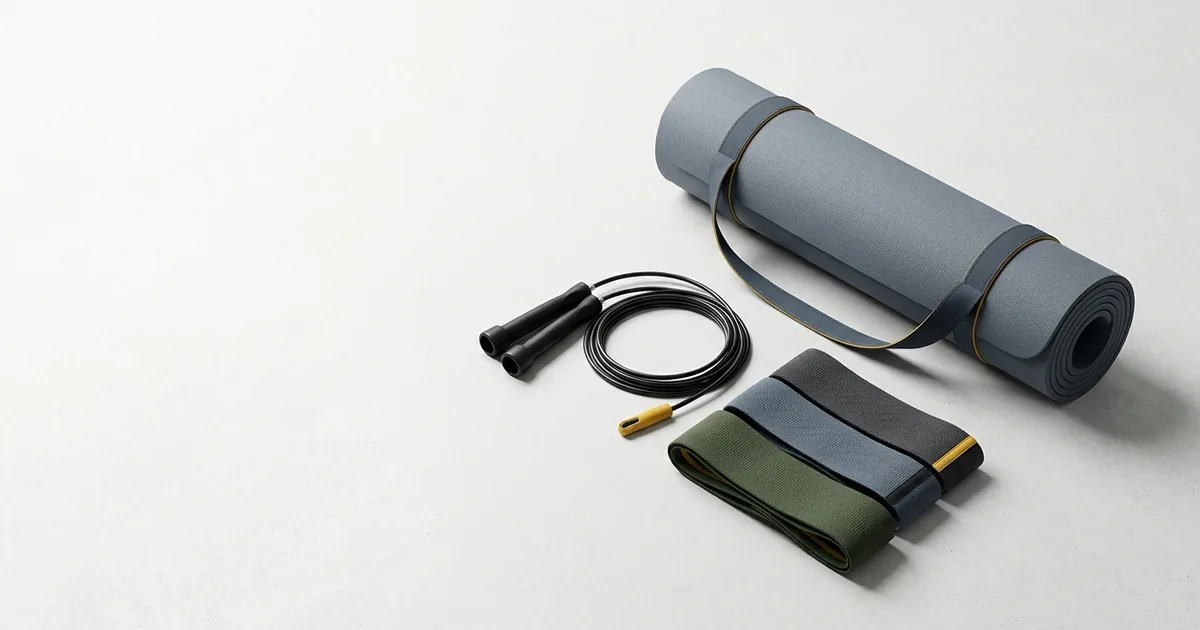
Add 10 to 15 minutes of skipping using an adjustable jump rope to build conditioning alongside your strength work. This pairs well with beginner band training since both are portable and require almost no space.
Days 6 and 7 are full rest or light walking. As a beginner, two full rest days per week protect your joints and connective tissue while your body adapts to new demands.
If you cannot control the return phase of a rep, the band is too strong for you right now. Snapping back into a joint under uncontrolled tension is the single biggest cause of band-related strain.
The lowering or releasing part of every band rep should take at least 2 seconds. Letting the band snap back does half the work for you and cuts your results in half.
Door hinges, thin railings, or unsecured furniture are not safe anchor points. Use a proper door anchor or a stable, fixed structure every time.
Bands move your joints through a full range fast. Cold muscles and stiff joints going straight into that range is how strains happen. Five minutes of warm-up is non-negotiable.
Check latex bands for small tears or thinning before every session, especially if stored in heat. A band that has degraded can snap without warning. Fabric loop bands last longer under this kind of daily wear.
Once the beginner exercises feel easy at your current tension, here is how to keep improving without needing new gear.
Move up one band level before adding more sets. More resistance builds strength faster than more reps at an easy tension.
Add a 3-second count on both the lifting and lowering phase of each rep. This alone can make a light band feel like a heavy one.
Stack a light and medium band together for exercises like squats or rows once single bands stop challenging you. This is a free way to increase load without buying heavier equipment.
Cut rest from 90 seconds to 45 seconds between sets once your form is solid. This builds conditioning alongside strength.
Switch two-arm or two-leg movements to single-arm or single-leg versions. This challenges balance and core stability far more than the two-limb version of the same exercise.
Bands work best as part of a small, portable gear kit rather than in isolation. A jump rope adds cardio conditioning between strength days, a vibration plate speeds up warm-up and recovery, and simple accessories keep training comfortable as intensity rises. After sweat-heavy circuits, wipe down and dry off with a microfiber workout towel that packs small enough to travel with the rest of your kit. Building this kind of compact system means you never need a commercial gym to stay consistent, whether you are training at home in Dubai, Riyadh, or on the road.
If everything above feels like a lot at once, here is the simplest possible starting point.
Warm-up, then Banded Squat, Standing Band Row, Banded Glute Bridge. 2 sets of 12 each.
Warm-up, then Band Chest Press, Lateral Band Walk, Band Pull-Apart. 2 sets of 12 each.
Warm-up, then the Full-Body Circuit above, 2 rounds instead of 3.
This gives your body three exposures to band training in the first week without overwhelming volume, and sets you up to move into the full weekly program in week two.
Resistance band exercises for beginners deliver real strength, better posture, and joint-friendly conditioning without requiring a gym membership or a spare room full of equipment. Start light, master the movement patterns from this guide, and progress tension and tempo as your control improves. Pair your bands with a few other portable essentials and you have a complete training system that travels anywhere your schedule takes you.
Three to four sessions per week is ideal for beginners, split between upper body, lower body, and full-body or core-focused days. This gives muscles enough recovery time while building consistency, which matters more than intensity in the first month.
Yes. Bands provide constant tension through the full range of motion, which is a strong stimulus for muscle growth and strength, especially for beginners. As you progress, combining higher band tension with slower tempo keeps challenging the muscle the same way added weight would.
Start with a light to medium band that allows 15 to 20 clean reps with full control on both the lift and the return. If you cannot control the release phase, the band is too strong and should be sized down.
Bands are generally considered joint-friendly because they avoid the sudden impact loading of free weights, but anyone with an existing injury should get clearance from a medical professional before starting a new program, and begin with the lightest tension available.
Most beginners notice improved posture, better movement control, and less joint discomfort within 2 to 3 weeks of consistent training. Visible strength and muscle tone gains typically build over 6 to 8 weeks with a structured 3 to 4 day per week plan.
Last updated: September 27, 2026 A resistance band costs less than a single personal training session and fits in a
آخر تحديث: 27 سبتمبر 2026 مساحة غرفة النوم الإضافية أو زاوية من الصالة كافية لبناء روتين تمرين حقيقي، بشرط اختيار
Last updated: September 27, 2026 Typing “best gym near me” into your phone gives you a list ranked by distance,