
Last updated: August 5, 2026
Your grip fails before your muscles do. Ask any lifter who has dropped a barbell mid-pull or watched a dumbbell slip during the last rep of a set – the hands give out first, and the set ends early. Fitness gloves for weight training exist to solve exactly this problem: they protect your palms, reinforce your grip, and let you push through the rep range your muscles are actually capable of, instead of stopping because your skin can’t take another second of friction.
This guide breaks down what fitness gloves actually do, the different types available, how to pick the right pair for your training style, and how to use them properly so they add to your performance instead of getting in the way.
Fitness gloves are not a fashion accessory bolted onto your workout outfit. They serve three specific mechanical functions during training.
Most fitness gloves have a textured or padded palm surface, often made from silicone, rubber, or reinforced synthetic leather. This texture increases the friction between your hand and the bar, handle, or grip surface, which means you can hold heavier loads for longer before your hand slips. This matters most during pulling movements – deadlifts, rows, pull-ups, farmer’s carries – where grip strength runs out long before your back or legs do.
Calluses form because skin is repeatedly compressed and dragged against a rough surface. Over time, that builds thick, hard skin. Left unmanaged, calluses crack, tear, and bleed mid-set, which is not just painful but can sideline an entire training week. A padded glove distributes pressure across the palm and reduces the direct friction that causes tearing, so your hands stay functional through heavy training blocks.
Many fitness gloves come with an integrated wrist wrap, usually a strip of elastic fabric secured with velcro. This wrap adds compression around the wrist joint during pressing movements like bench press, overhead press, and push-ups, reducing hyperextension and giving the joint a firmer, more stable base to push from.
Not everyone needs gloves for every workout. Here’s a realistic breakdown by training style.
If your program centers on deadlifts, rows, and heavy pulling variations, gloves with strong palm padding and grip texture help you hold onto the bar for the full set instead of grip failure cutting reps short. Wrist-wrap integrated gloves also support heavy bench and overhead pressing days.
Training at home usually means fewer opportunities to towel off chalk, wash your hands between sets, or step away from equipment shared with a household. Gloves keep grip consistent without chalk dust settling on your floor, bars, and furniture. They’re a practical, low-maintenance addition to a home setup, especially one built around versatile gear like a vibration plate or resistance-based training.
Hotel gym equipment gets used by hundreds of guests a week and is rarely cleaned as often as it should be. Fitness gloves add a hygiene barrier between your hands and shared bars, handles, and machine grips. They pack flat, weigh almost nothing, and take zero setup time, which fits the portable-gear mindset of training on the road.
Rope climbs, kettlebell swings, box jumps, and barbell cycling all put repeated stress on the palms in a single session. Fingerless gloves with reinforced palm padding are common in this training style because they protect skin without limiting the finger dexterity needed for Olympic lifts and rope work.
Rowing machines and cycling handles create the same friction problem as free weights. Lightweight, breathable gloves with light padding work well here, since the priority is comfort and moisture control rather than heavy-load grip reinforcement.
Fitness gloves are not one product. The category covers several distinct designs, each built for a different training priority.
Full-finger gloves cover the entire hand, including each finger. They offer the most complete protection and are common in general gym training, spin classes, and outdoor training where hands need protection from cold as well as friction. The downside is reduced tactile feedback, which some lifters dislike during barbell work where bar feel matters.
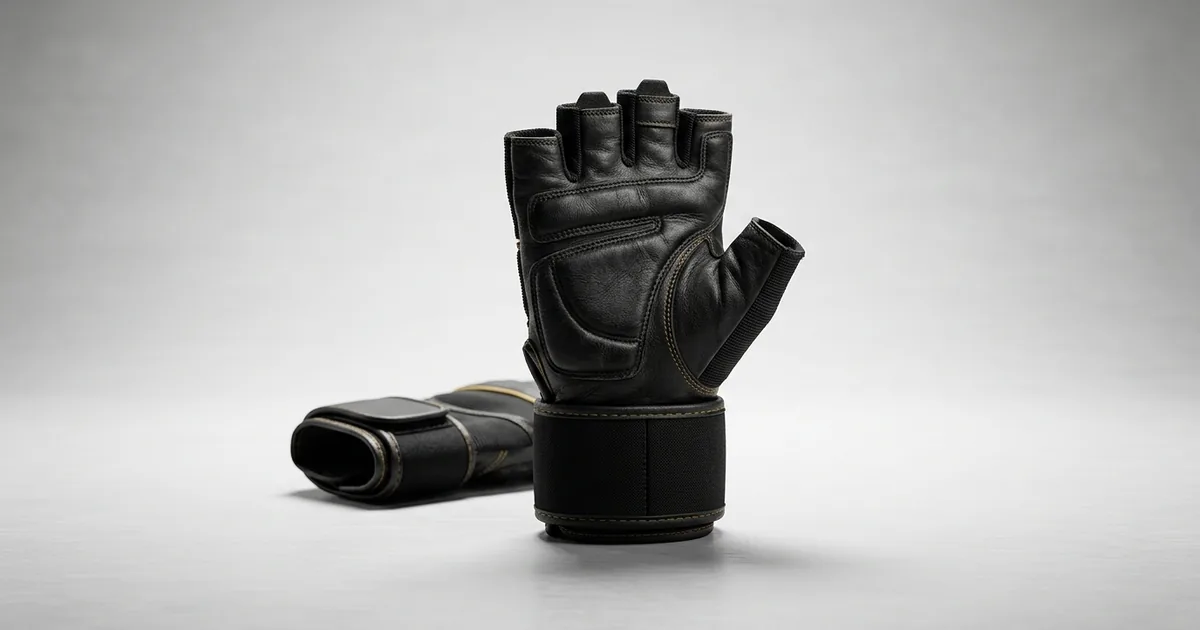
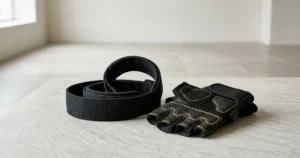
This is the most popular style for weight training. The glove covers the palm and lower fingers but leaves fingertips exposed, preserving grip feel and dexterity while still protecting the high-friction zones of the palm. Fingerless gloves are the default choice for deadlifts, rows, pull-ups, and general strength training.
These combine a fingerless or full-finger glove with a built-in wrist wrap, usually 6-12 inches of elastic fabric secured with a velcro closure. They’re built for lifters who press heavy and want wrist stability without buying a separate wrap. This style is popular with home gym users who want one product that covers grip, palm protection, and wrist support in a single piece of gear.
Grip pads are a minimal alternative – a padded strip that sits across the palm with finger loops, leaving the back of the hand and wrist completely open. They give palm protection with almost no bulk, which some lifters prefer for exercises like pull-ups and kettlebell work where a full glove feels restrictive.
Lifting straps wrap around the bar and your wrist, essentially locking your hand to the bar so grip strength becomes almost irrelevant. This lets you overload pulling muscles beyond what your grip could otherwise hold. Fitness gloves work differently – they improve grip and protect skin, but they don’t remove the grip-strength requirement. If your goal is protecting your hands while still training grip strength, gloves are the right tool. If your goal is bypassing grip limitations entirely to overload your back on heavy pulls, straps serve that purpose instead.
Picking the right pair comes down to five practical factors. Get these right and the gloves will disappear into your training – you won’t think about them mid-set, which is exactly the point.
Leather and synthetic leather palms offer strong durability and grip, standing up well to years of barbell and dumbbell training. Neoprene is lighter and more flexible, common in gloves built for cardio and general fitness rather than heavy strength work. Silicone-textured synthetic fabric has become the standard for modern training gloves, offering a strong grip-to-weight ratio without the break-in period leather requires.
Thicker padding protects better against heavy barbell and dumbbell friction but reduces bar feel and can bunch uncomfortably during pressing movements. Thinner padding preserves grip sensitivity, which matters for technical lifts, but offers less protection during long, high-volume pulling sessions. Match padding thickness to your primary training style – heavier pulling favors more padding, technical and Olympic-style lifting favors less.
If you regularly bench, press overhead, or do heavy push-up volume, a built-in wrist wrap is worth prioritizing. If your training is mostly pulling and general fitness work, a low-profile wrist band or no wrap at all keeps the glove lighter and more breathable.
Hands sweat heavily during training, and a glove that traps moisture becomes slippery and uncomfortable fast. Look for mesh panels on the back of the hand and between fingers. This is especially important for UAE and KSA climates where indoor gym temperatures combined with high-intensity training sessions generate significant hand sweat.
A glove that’s too loose bunches inside your palm during a grip, creating a fold that digs into your skin under load – often worse than wearing no glove at all. A glove that’s too tight restricts blood flow and limits finger movement. Measure your hand circumference around the knuckles (excluding the thumb) and check it against the brand’s size chart before buying, rather than guessing based on your regular clothing size.
Lifters debate this constantly, and the honest answer is that each option serves a different priority.
Training without gloves lets your hands build natural callus and grip strength over time, which many competitive lifters view as part of the sport. The tradeoff is slower callus buildup in the beginning, higher risk of skin tears during high-volume phases, and more friction discomfort on humid training days.
Chalk dries sweat and increases friction between skin and bar, which is why it’s a staple in powerlifting and Olympic lifting gyms. It doesn’t protect skin from tearing, though, and most commercial gyms and home spaces don’t want the mess and residue chalk leaves behind.
Gloves combine some of the friction benefit of chalk with direct skin protection, without the mess. They’re the practical middle ground for lifters training in shared gyms, home setups, or hotel rooms where chalk isn’t an option and bare-hand callus tears aren’t worth the downtime.
Buying the right pair is half the equation. Using them correctly is what actually makes the difference in a training session.
New gloves, especially leather ones, can feel stiff for the first few sessions. Wear them through a few lighter training days before relying on them for a max-effort lift, so the material has flexed and softened around your hand’s natural shape.
If your gloves include a wrist wrap, wrap it snug but not restrictive. It should feel like firm support, not a blood-pressure cuff. Wrap direction matters too – most wraps are designed to be pulled across the wrist joint at an angle, not straight around, for the best stability during pressing movements.
Wear thicker-padded gloves for deadlifts, barbell rows, and heavy pulling. Switch to thinner or fingerless options for pressing, Olympic lifts, or bodyweight work where finger dexterity and bar feel matter more than raw palm protection.
Many serious lifters keep two pairs in rotation – a heavier padded set for strength days and a lighter, breathable set for cardio or functional training days. This also gives each pair time to fully dry out between sessions, which extends their lifespan and keeps odor under control.
Gloves absorb sweat every session, and without proper care they degrade fast, both in smell and in material integrity.
Check the care label – most synthetic training gloves can be hand-washed in cool water with mild soap, then air-dried flat. Avoid direct heat or tumble drying, which breaks down padding foam and grip texture over time.
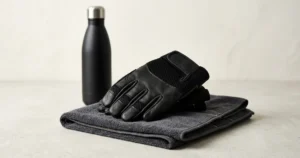
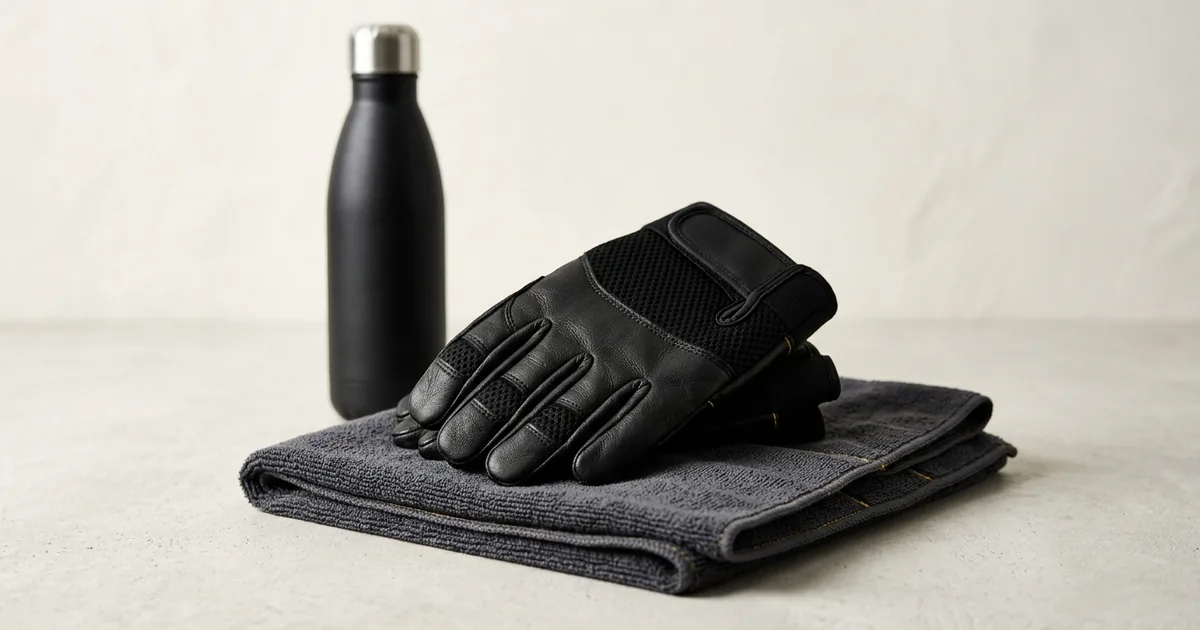
Never store gloves damp in a gym bag. Trapped moisture breeds bacteria and odor, and it also weakens stitching and velcro adhesion faster. Keeping a microfiber workout towel in your bag is a simple habit – wipe your hands and gloves down after a sweaty session before packing them away, and let them finish air-drying at home.
If you train five or six days a week, owning two pairs means each set gets a full day to dry out and recover its grip texture, rather than being used damp session after session.
Once palm padding compresses flat or the grip texture smooths out, the glove stops doing its job. Fitness gloves are a consumable, not a lifetime purchase – budget for a replacement every six to twelve months depending on training frequency.
Fitness gloves work best as part of a broader kit rather than a standalone item. A few pairings worth considering for a gym, home, or travel setup:
Rope-based conditioning work is another place where hand friction adds up fast. A beaded jump rope paired with fingerless gloves lets you run high-rep skipping intervals without the handle slipping out of a sweaty grip mid-set.
Grip strength and forearm fatigue benefit from proper warm-up and recovery work. Adding a vibration plate session before or after heavy pulling days can help loosen forearm tightness that builds up from repeated grip work.
Pair your gloves with a compact towel for wiping down shared equipment before and after use, particularly relevant for travel and hotel gym training where equipment hygiene standards vary.
If you’re assembling a full home or travel training setup, browse the fitness essentials range for the core pieces that pair well with gloves – from grip tools to recovery gear. For the latest additions to the lineup, check the new arrivals category before building out your next order.
A glove that looks aggressive or well-branded but doesn’t match your hand size will bunch, slip, or restrict movement regardless of how good the material is. Always check sizing before checking style.
Gloves add a layer between your hand and the bar, which slightly reduces tactile feedback. For technical lifts like the snatch or clean, where bar path feel matters, many lifters prefer bare hands or minimal grip pads over full gloves.
Wrapping a built-in wrist strap loosely or in the wrong direction gives a false sense of support. If your gloves include a wrap, learn the correct wrapping technique rather than just looping it once and calling it done.
Sweat-soaked gloves that never get washed break down faster and become a hygiene problem well before they wear out mechanically. Treat glove care the same way you’d treat training shoes or gym clothes.
Once the palm padding flattens, the grip texture smooths, or the material starts cracking, the glove is doing less work than your bare hand would. Replacing gloves on schedule keeps grip performance consistent instead of declining unnoticed.
Prioritize thicker palm padding, a durable synthetic or leather palm, and an integrated wrist wrap if your program includes heavy pressing days.
A lighter, breathable fingerless glove with moderate padding covers most bodyweight, dumbbell, and light resistance training without adding unnecessary bulk.
Look for reinforced padding at the base of the fingers to handle rope work and kettlebell ballistic movements, paired with a snug, low-profile fit that doesn’t interfere with grip changes mid-workout.
Compact, lightweight, quick-drying gloves that fold flat in a bag are the priority. Heavy leather gloves are overkill for a hotel gym session and take up unnecessary space in a travel bag.
Fitness gloves for weight training solve a specific, recurring problem – grip failure and skin damage that end sets before your muscles are actually done working. The right pair matches your training style, fits your hand precisely, and gets replaced once it stops doing its job. Whether you’re training in a full gym, a home setup, or out of a suitcase, a properly chosen pair of gloves is a small, low-cost addition that protects your hands and keeps your grip working as hard as the rest of your body.
Fitness gloves improve your ability to hold onto a bar or handle by adding friction and reducing slip, but they don’t build grip strength on their own. Grip strength still develops through training – gloves just help you complete more reps before friction or skin discomfort forces you to stop.
No. Gloves are most useful for pulling movements like deadlifts, rows, and pull-ups where friction and grip failure are common. For technical lifts like the snatch or clean, many lifters prefer bare hands or minimal grip pads to preserve bar feel.
Gloves protect your skin and improve grip friction while your hand still does the gripping work. Straps wrap around the bar and wrist, essentially removing grip strength as a limiting factor. Gloves suit lifters who want protection while still training grip; straps suit lifters overloading pulling muscles beyond grip capacity.
Measure your hand circumference around the knuckles, excluding the thumb, and compare it against the brand’s size chart. Avoid guessing based on regular clothing size, since glove sizing runs differently across brands and materials.
Most training gloves need replacing every six to twelve months depending on frequency of use. Once the palm padding flattens or the grip texture smooths out, the glove is no longer providing meaningful protection or grip support.
Last updated: September 27, 2026 A resistance band costs less than a single personal training session and fits in a
آخر تحديث: 27 سبتمبر 2026 مساحة غرفة النوم الإضافية أو زاوية من الصالة كافية لبناء روتين تمرين حقيقي، بشرط اختيار
Last updated: September 27, 2026 Typing “best gym near me” into your phone gives you a list ranked by distance,