
Last updated: August 5, 2026
A gym bottle is not an accessory you grab as an afterthought. It sits in your hand between sets, rides in your bag on the way to the gym, and sits on your kitchen counter during home sessions. If it leaks, it ruins your bag. If it’s too small, you’re stopping your workout to refill. If it’s the wrong material, it holds onto smells and slows you down. The right gym bottle disappears into your routine and just works, session after session, in Dubai heat or a Riyadh commute.
This guide breaks down exactly what separates a gym bottle from a regular water bottle, how to pick the right one for gym, home, or travel training, and how to build it into a hydration habit that actually supports your performance.
Hydration affects strength output, endurance, focus, and recovery. A drop of even 2% in body water can reduce your capacity to lift heavy, hold pace, or finish a HIIT circuit strong. Most people don’t under-hydrate on purpose, they under-hydrate because their bottle makes it inconvenient. Too small, too heavy, hard to open with sweaty hands, or leaking inside a gym bag are all reasons people put off drinking water until they’re already flagging.
A gym bottle designed for training removes the friction. One-handed opening, a grip that works when your palms are sweating from a set of deadlifts, and a capacity that matches your session length. That’s the whole job. Get that right and hydration becomes automatic instead of another thing to remember.
Not every bottle that holds water is a gym bottle. Training gear has to survive drops on gym floors, rattling around in a car boot on the way to a session, and daily washing. Here’s what to actually look at.
A 500ml bottle looks sleek but forces multiple refills during a one-hour session. A 1.5L jug is hydration overkill for most gym-goers and becomes dead weight in a bag. For most training blocks, 750ml to 1000ml covers a full session without needing a refill, while still fitting most bottle holders on cardio machines and vibration plates.
If you’re doing longer sessions, like circuit training with a vibration plate combined with resistance work, or back-to-back classes, size up to 1L or carry a second bottle rather than one oversized jug that’s awkward to grip mid-set.
Stainless steel keeps water cold for hours, resists odor buildup, and survives being dropped on a gym floor without cracking. It’s heavier, which matters if you’re already carrying a gym bag with a towel, shoes, and a jump rope.
Tritan plastic is lightweight, shatter-resistant, and BPA-free. It won’t insulate temperature like steel, but it’s easier to carry one-handed through a full workout and usually cheaper to replace.
Standard plastic is the budget option but tends to retain smell and stain faster, especially with protein shakes or flavored electrolytes. For daily gym use, this is the first thing that starts to feel low-quality after a few months.
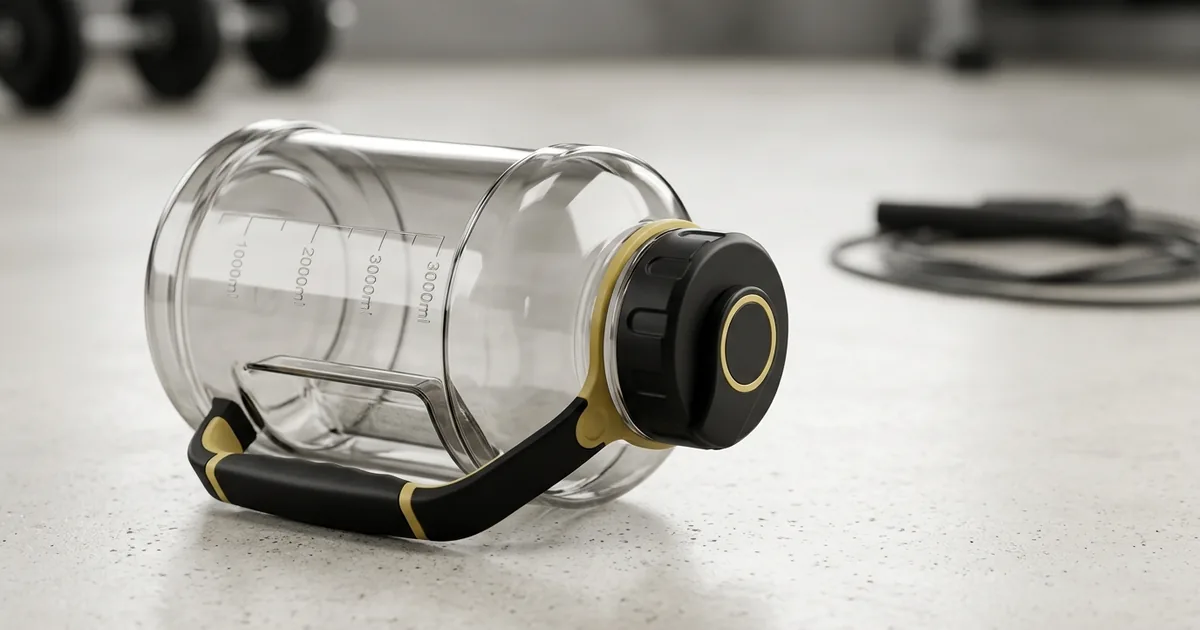
This is non-negotiable. A gym bottle lives inside a bag next to a phone, a towel, and sometimes gear you don’t want soaked. Look for a locking flip-cap or a screw-top with a rubber seal that’s been tested for actual gym movement, not just sitting upright on a desk. Shake it upside down before you buy into any brand’s leak-proof claim.
Between sets, you have seconds, not minutes. A bottle that needs two hands to open slows down your rest period and breaks focus. Flip-top spouts or push-button lids that open with a thumb while your other hand is still on a barbell or rope are what actually get used consistently.
Wide-mouth bottles are easier to add ice, electrolyte powder, or a supplement scoop to, and they’re easier to clean. Narrow-mouth bottles sip cleaner during a workout without spilling but are harder to clean at the bottom, which becomes a hygiene issue over weeks of daily use.
A regular water bottle is built for casual sipping, at a desk or in a car. A gym bottle is built to survive impact, be operated one-handed mid-set, and get washed daily without degrading. The lids are different, the materials are chosen for durability over aesthetics, and the capacity is calculated around training time, not convenience for a commute.
If you’ve ever had a regular bottle crack after one drop on a gym floor, or a lid that popped open in your bag and soaked your gym towel, that’s the gap between a bottle that happens to hold water and a bottle built for training.
If most of your training happens on a gym floor, prioritize a bottle that fits standard bottle holders on machines and racks, has a secure flip-top, and is easy to grip with chalk or sweat on your hands. Stainless steel earns its weight here because you’re not carrying it far, just from your bag to the rack and back.
Training at home means your bottle isn’t traveling anywhere, so you can go bigger without a portability penalty. A 1L or larger bottle sitting next to your setup, whether that’s a resistance band circuit or a session on a vibration plate, means fewer trips to the kitchen and more consistent hydration through the session.
If your training moves with you, hotel gyms, outdoor circuits, a jump rope session in a park, leak-proofing becomes the top priority. A bottle that’s rattling around in a suitcase or gym bag next to your jump rope and towel needs a lid that won’t fail under movement and pressure changes from travel.
In UAE and KSA summers, water left in a plastic bottle in a car or gym bag can go from cool to warm in under 30 minutes. An insulated stainless steel bottle keeps water drinkable through a full outdoor session or a hot car ride to the gym, where a standard plastic bottle leaves you drinking warm water by the second set.
Water regulates body temperature, lubricates joints, and transports nutrients to muscle tissue during and after training. When you’re even slightly dehydrated, your heart works harder to move the same amount of blood, your perceived effort goes up, and your strength output goes down. Studies on resistance training consistently show that dehydrated lifters fatigue faster and report higher exertion for the same weight compared to well-hydrated lifters.
For endurance work, cardio, jump rope conditioning, or vibration plate circuits, dehydration reduces plasma volume, which directly limits how much oxygen your muscles get. The practical takeaway: sipping consistently through a session, not just before or after, keeps your output closer to your actual capacity instead of your fatigued capacity.
A general guide for active training is 200-300ml every 15-20 minutes during moderate to intense exercise, adjusted upward in hot climates. This is exactly why capacity matters. A bottle that holds 750ml-1L lets you hit this target across a 45-60 minute session without stopping to refill mid-workout.
Standard hydration guidelines assume moderate climates. In Gulf heat, especially outdoor training or gym sessions without strong air conditioning, water needs go up significantly. Sweat rate increases, and so does the risk of underestimating fluid loss because sweat evaporates fast in dry heat and you don’t always feel visibly soaked.
A practical baseline for active adults training regularly in this climate is 3-4 liters of total daily water intake, more on heavy training or outdoor days. Splitting that across a bottle you refill 3-4 times a day, rather than relying on one big bottle you forget to top up, keeps intake steady instead of concentrated in a few large gulps that your body processes less efficiently.
A bottle that touches your mouth daily and sits in a warm gym bag is a breeding ground for bacteria if it’s not cleaned properly. Here’s the maintenance routine that actually keeps a gym bottle safe and smell-free long term.
Rinsing with water after each use removes visible residue but not bacterial buildup, especially around the lid threads and any silicone seals. Aim for a full wash with warm water and mild soap at least every 1-2 days if you’re using the bottle daily for training.
Once a week, use a bottle brush to scrub the interior, especially the base, and soak the lid components separately if they detach. A mix of warm water and a small amount of baking soda or diluted white vinegar left to sit for 15-20 minutes breaks down residue that regular washing misses.
Bacteria and mold thrive in damp, sealed environments. Leave the bottle open to air dry completely before closing the lid or packing it in your bag for the next day. A bottle sealed while still damp is the fastest way to develop a persistent smell that soap won’t fully remove.
A cloudy interior that doesn’t clear with washing, a smell that returns within hours of cleaning, or a lid seal that’s cracked or discolored all mean it’s time to replace the bottle rather than keep pushing through it.
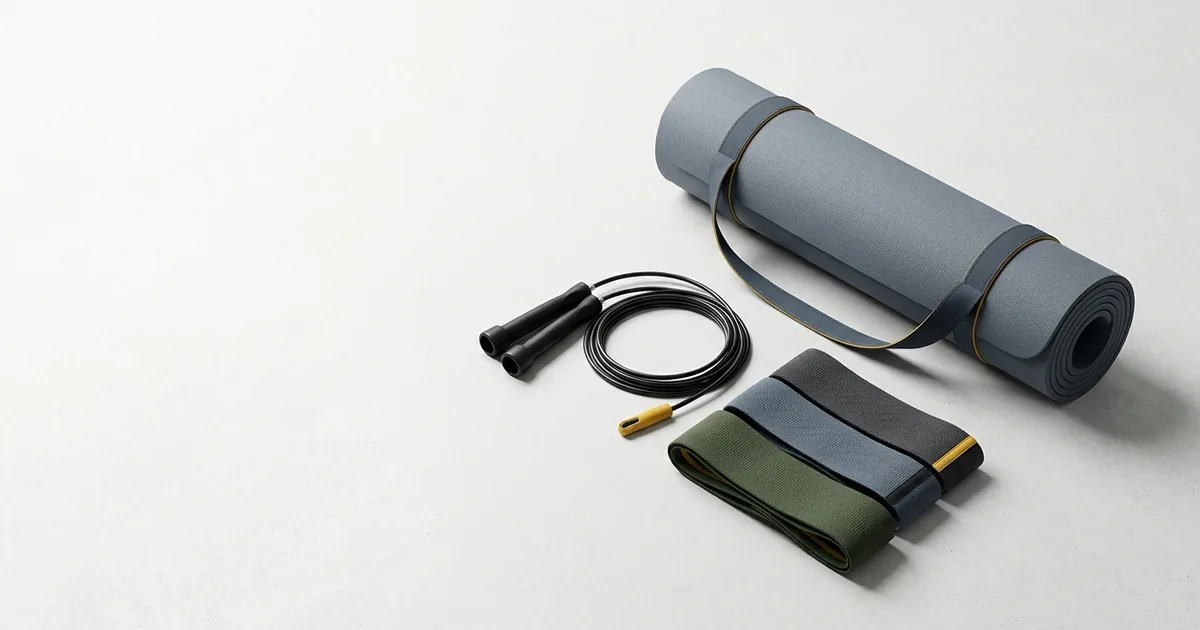
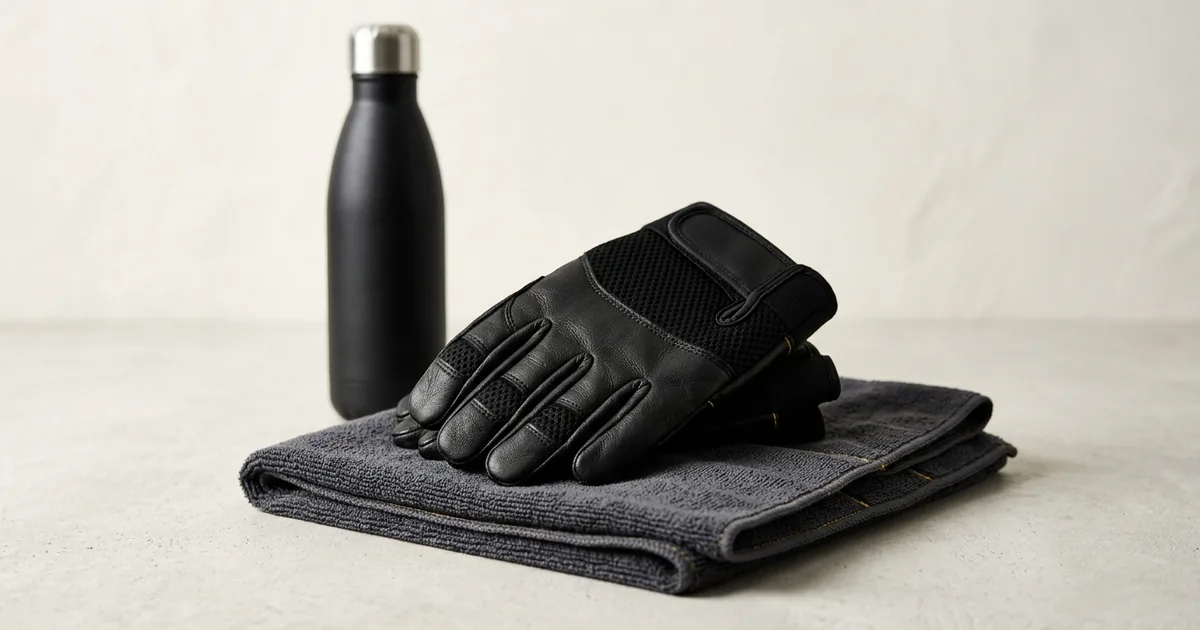
A gym bottle rarely operates alone. It’s part of a small set of gear that makes training frictionless, whether you’re at a gym, training at home, or on the road. Pairing it with a reliable microfiber workout towel for quick sweat management, a tangle-free jump rope for conditioning work, and a vibration plate for recovery or warm-up circuits covers most of what a serious home or gym session needs without cluttering your space with gear you won’t use.
If you’re building a kit from scratch, browse fitness essentials for the core pieces every training setup needs, or check what’s just landed in new arrivals if you want to see the latest additions to the lineup.
A matte finish or a trendy color doesn’t tell you anything about leak resistance or how the lid holds up after 100 opens and closes. Check the lid mechanism and material spec before the color.
A 1L stainless steel bottle can weigh close to 1.3kg when full. That’s fine sitting on a shelf but noticeable if you’re carrying it through a long outdoor circuit or a travel bag already loaded with other gear. Test the full weight, not just the empty bottle, against what you’re willing to carry.
A low-cost plastic bottle that needs replacing every two to three months due to cracking, staining, or lid failure often costs more over a year than one solid bottle built to last. Factor in replacement frequency, not just sticker price, in AED, when comparing options.
A bottle with a narrow neck and multiple small parts looks premium but becomes a hassle to clean thoroughly. If you know you won’t deep-clean a complicated bottle regularly, choose a simpler design you’ll actually maintain.
The best gym bottle for training isn’t the most expensive or the most stylish, it’s the one that matches your session length, survives your training environment, and stays clean enough to trust every day. Get the capacity right for your workouts, the material right for your climate and carrying habits, and the lid right for how you actually move mid-session. Once that’s dialed in, hydration stops being something you have to think about and becomes part of how you train, which is exactly how it should work.
For most one-hour sessions, a 750ml to 1L bottle covers your hydration needs without requiring a mid-workout refill. If you’re training outdoors in UAE or KSA heat, size up or carry a second bottle.
Stainless steel holds temperature longer and resists odor and staining, making it better for hot climates and daily use. Tritan plastic is lighter and easier to carry through active sessions but doesn’t insulate as well.
Wash with warm water and mild soap every 1-2 days if used daily, and do a deep clean with a bottle brush and a baking soda or vinegar soak once a week to prevent bacterial buildup and odor.
Yes, a bottle without a proper seal or locking cap can soak towels, phones, and other gear inside a bag. Always test a bottle’s leak-proof claim by shaking it upside down before relying on it daily.
Active adults training regularly in UAE or KSA climate should aim for roughly 3-4 liters of total daily water intake, spread across several refills rather than large infrequent gulps, with more on heavy training or outdoor days.
Last updated: September 27, 2026 A resistance band costs less than a single personal training session and fits in a
آخر تحديث: 27 سبتمبر 2026 مساحة غرفة النوم الإضافية أو زاوية من الصالة كافية لبناء روتين تمرين حقيقي، بشرط اختيار
Last updated: September 27, 2026 Typing “best gym near me” into your phone gives you a list ranked by distance,