

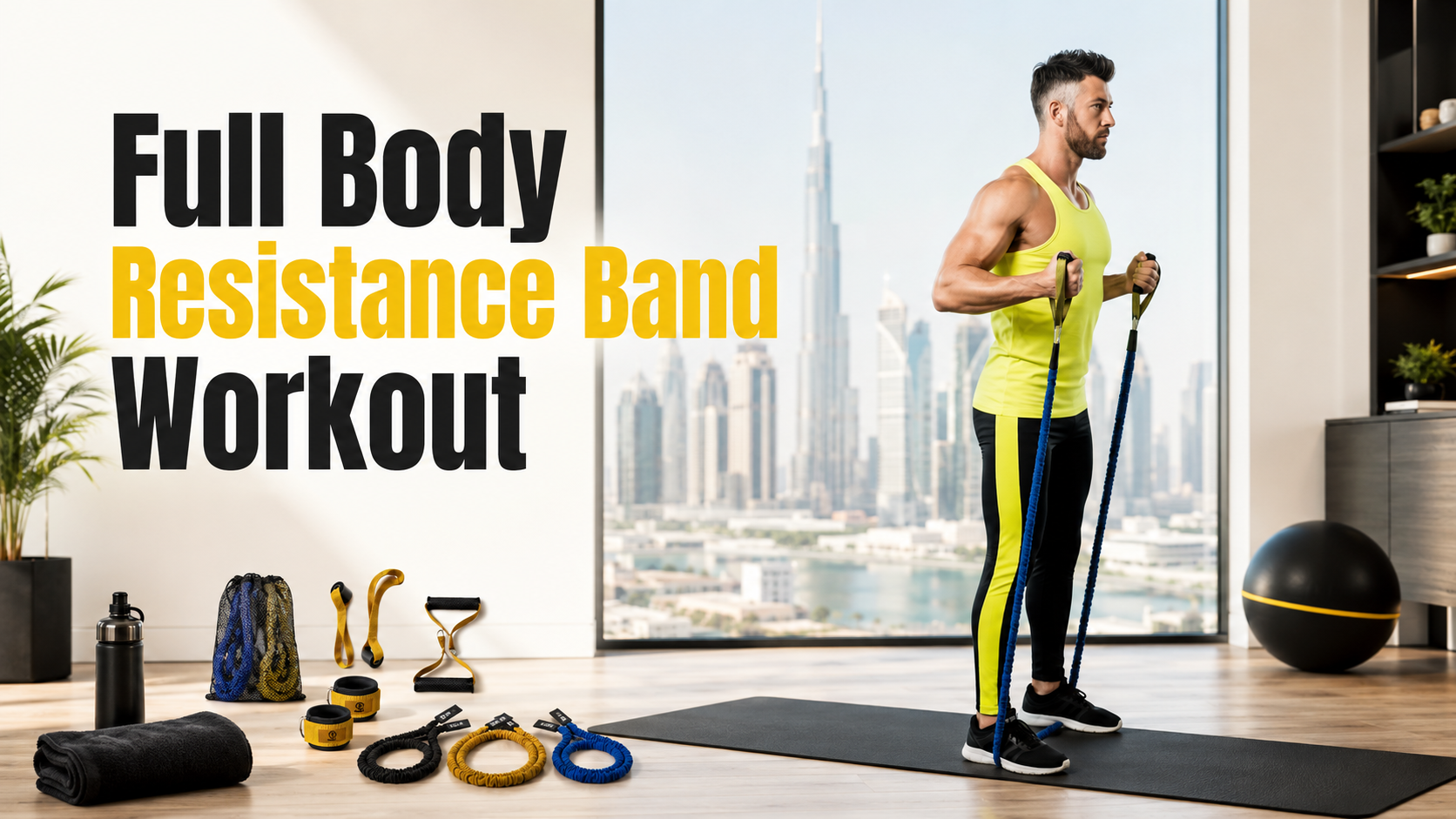
Full body resistance band workout routines are one of the easiest ways to build strength at home without bulky gym equipment. Whether you live in a small apartment, travel often, or simply want a quick workout you can do anytime, resistance bands give you a practical way to train your legs, glutes, back, chest, shoulders, arms, and core in one session.
A resistance band workout is especially useful for beginners and busy people because the equipment is compact, affordable, and easy to store. You do not need a full home gym to start. With one or two bands, an exercise mat, and 20 minutes, you can complete a simple strength session that challenges your whole body.
In this guide, you’ll learn how to do a full body resistance band workout at home, which exercises to include, how to make the workout easier or harder, and how to avoid common mistakes.
A full body resistance band workout is ideal for anyone who wants strength training without heavy weights or large machines. Resistance bands create tension that your muscles work against, which makes them useful for building strength, improving control, and adding challenge to bodyweight exercises.
Resistance bands can be used to train major muscle groups including the chest, back, shoulders, arms, glutes, legs, and core. ACE-certified fitness professionals commonly describe resistance band training as a form of strength training that can be adjusted by using different resistance levels.
For home fitness users in the UAE and KSA, resistance bands are especially practical because they are:
If you are building a compact home workout setup, resistance bands are one of the best pieces of equipment to start with. You can use resistance bands often, but full-body strength workouts should include rest days. For most beginners, 2–3 resistance band sessions per week is a good starting point.
You only need a few simple items for this workout:
Optional items include a mirror to check your form and a timer on your phone. If you are new to training, start with a lighter band. You should feel resistance, but you should still be able to move with control.
The goal is not to rush. Good form matters more than speed.
This full body resistance band workout is designed to target your lower body, upper body, and core in one short session. It is simple enough for beginners but can be made harder by increasing band resistance, slowing down each rep, or reducing rest time.
| Section | Time | Focus |
|---|---|---|
| Warm-up | 3 minutes | Mobility and activation |
| Circuit 1 | 7 minutes | Legs and glutes |
| Circuit 2 | 7 minutes | Back, chest, shoulders, and arms |
| Core finisher | 2 minutes | Abs and stability |
| Cool-down | 1 minute | Stretch and recovery |
Perform each exercise slowly and with control. Rest when needed, especially if you are new to resistance band training.
A warm-up prepares your muscles and joints for movement. Do not skip it, especially if you are training early in the morning or after sitting for a long time.
Do this warm-up for 3 minutes:
Your warm-up should feel easy. The goal is to increase blood flow and prepare your body for the workout.
Complete the exercises below as a circuit. Do each move for 40 seconds, then rest for 20 seconds. After finishing all exercises, repeat the circuit if time allows.
For beginners, one round is a good start. For intermediate users, aim for two rounds.
Resistance band squats target your legs and glutes. Stand on the band with your feet shoulder-width apart and hold the band handles or ends near your shoulders. Sit your hips back, bend your knees, and lower into a squat. Push through your heels to stand up.
Keep your chest lifted and your knees tracking in line with your toes. Do not let the band pull you forward.
Targets: Quads, glutes, hamstrings, and core.
Rows are excellent for your back and posture. Anchor the band around a stable point or step on the band and hinge slightly forward. Pull the band toward your body, squeeze your shoulder blades, then return slowly.
Avoid shrugging your shoulders. Keep your neck relaxed and your back straight.
Targets: Upper back, lats, rear shoulders, and biceps.
The chest press works your chest, shoulders, and triceps. Anchor the band behind you at chest height or wrap it around your upper back. Press your hands forward until your arms are extended, then return with control.
Keep your core tight and avoid arching your lower back.
Targets: Chest, shoulders, triceps, and core.
Lie on your back with your knees bent and place a loop band above your knees. Keep your feet flat on the floor. Push your knees slightly outward, lift your hips, squeeze your glutes, then lower slowly.
This is a great move for people who sit for long hours because it activates the glutes and hips.
Targets: Glutes, hamstrings, hips, and core.
Stand on the band and hold the ends near your shoulders. Press your hands upward until your arms are extended, then lower slowly.
Keep your ribs down and your core engaged. If this feels too hard, use a lighter band or press one arm at a time.
Targets: Shoulders, triceps, and core.
Stand on the band and hold the ends with your palms facing upward. Curl your hands toward your shoulders, then lower with control.
Keep your elbows close to your sides and avoid swinging your body.
Targets: Biceps and forearms.
Place a loop band above your knees or around your ankles. Bend your knees slightly and step side to side. Keep tension in the band the whole time.
This exercise is great for glute activation and hip strength.
Targets: Glutes, hips, thighs, and core.
Lie on your back and hold the band with both hands, or place it around your feet depending on your band type. Move slowly through a dead bug pattern, extending opposite arm and leg while keeping your lower back controlled.
If this feels too difficult, do a simple plank or knee plank instead.
Targets: Core, abs, hip flexors, and stability muscles.
One of the best things about resistance bands is that they are easy to adjust. You can change the difficulty without needing extra machines.
| Goal | Adjustment |
|---|---|
| Make it easier | Use a lighter band |
| Make it harder | Use a heavier band |
| Build more strength | Slow down each rep |
| Add cardio challenge | Reduce rest time |
| Improve form | Move slowly and use a mirror |
| Add glute focus | Add more lateral walks or glute bridges |
| Add upper-body focus | Add more rows and presses |
If you are new to resistance training, start with lighter resistance and controlled movement. A recent beginner-focused resistance band workout guide also recommends focusing on form and control before increasing intensity.
Resistance bands are simple to use, but form still matters. Avoid these common mistakes:
A heavy band can make your form worse. If you cannot control the movement, choose a lighter resistance level.
Fast reps reduce control and can make the exercise less effective. Move slowly, especially during the return phase.
Always control the band as it returns. Do not let it pull your arms or legs quickly.
Keep your shoulders down, chest open, and back straight. Do not round your shoulders forward.
A short warm-up helps your body move better and can make the workout feel smoother.
A full body resistance band workout should include lower body, upper body, and core exercises. Do not only train one area.
This workout is suitable for many fitness levels, especially if you adjust the resistance and pace.
It is great for:
If you have an injury, chronic pain, or a medical condition, speak with a healthcare professional before starting a new workout routine.
The best resistance band depends on your goal and experience level.
Loop bands are great for glute bridges, lateral walks, squats, hip activation, and lower-body exercises.
Long bands are useful for rows, presses, curls, deadlifts, and full-body movements.
Tube bands are comfortable for upper-body exercises like rows, chest presses, shoulder presses, and curls.
A set with different resistance levels is useful because you may need a lighter band for shoulders and a stronger band for legs.
When choosing resistance bands for your home gym, look for durability, comfortable grip, and resistance levels that match your current strength.
You can do this full body resistance band workout 2–3 times per week, depending on your fitness level and recovery. The CDC recommends adults include muscle-strengthening activities on 2 or more days per week that work all major muscle groups.
A simple weekly routine could look like this:
Give your muscles time to recover between strength sessions. Rest helps your body adapt and grow stronger.
To get the most from this workout:
You can make progress by using a stronger band, adding another round, increasing reps, or slowing down the lowering part of each exercise.
Yes. Resistance bands can train your legs, glutes, back, chest, shoulders, arms, and core. A well-planned full body resistance band workout can target all major muscle groups.
Yes, 20 minutes can be enough if the workout is structured well and performed with focus. A quick workout can be effective when it includes compound movements, controlled reps, and minimal wasted time.
Yes. Resistance bands are beginner-friendly because you can choose lighter resistance and progress gradually. They are also easy to use at home and do not take much space.
Resistance bands can help build muscle when you use enough tension, train consistently, and increase difficulty over time. Like other strength tools, they work best when you challenge your muscles progressively.
Start with a light or medium resistance band. You should feel tension, but you should still be able to complete each exercise with good form.
Yes. This workout is ideal for small apartments because it requires very little space. You only need enough room to stand, stretch your arms, and lie on a mat.
You can use resistance bands often, but full-body strength workouts should include rest days. For most beginners, 2–3 resistance band sessions per week is a good starting point.
A full body resistance band workout is a simple and effective way to train at home without heavy equipment. With just one band and 20 minutes, you can work your legs, glutes, back, chest, shoulders, arms, and core.
Start with lighter resistance, focus on controlled movement, and build gradually. Whether you live in a UAE apartment, travel often, or want a compact home fitness routine, resistance bands can help you stay consistent without needing a full gym setup.
If you want a quick, space-saving workout that fits your lifestyle, this 20-minute full body resistance band workout is a great place to start.
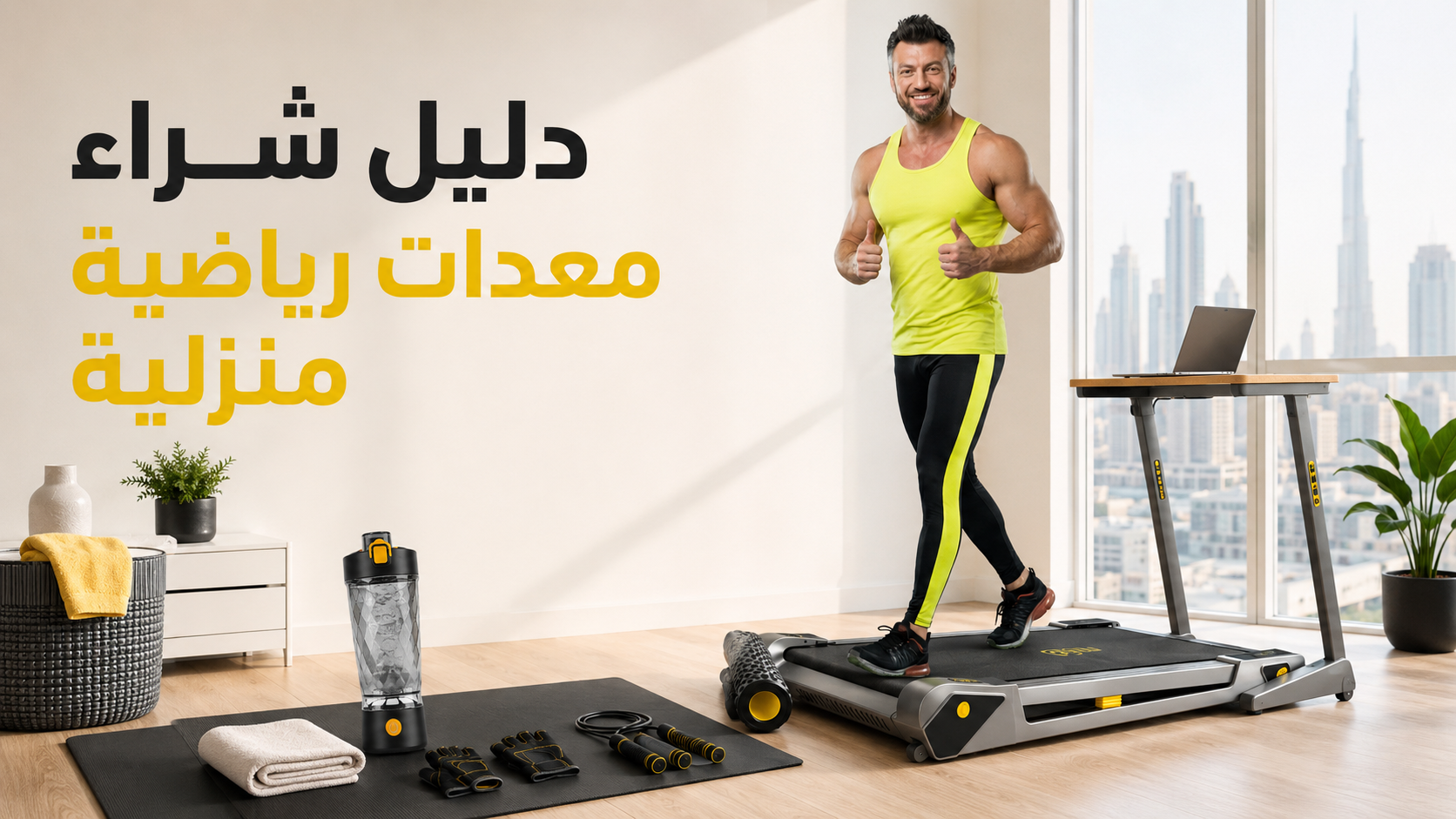
دليل شراء المعدات الرياضية المنزلية هو الخطوة الأولى لكل من يرغب في بدء التمرين في المنزل بطريقة صحيحة دون إهدار المال
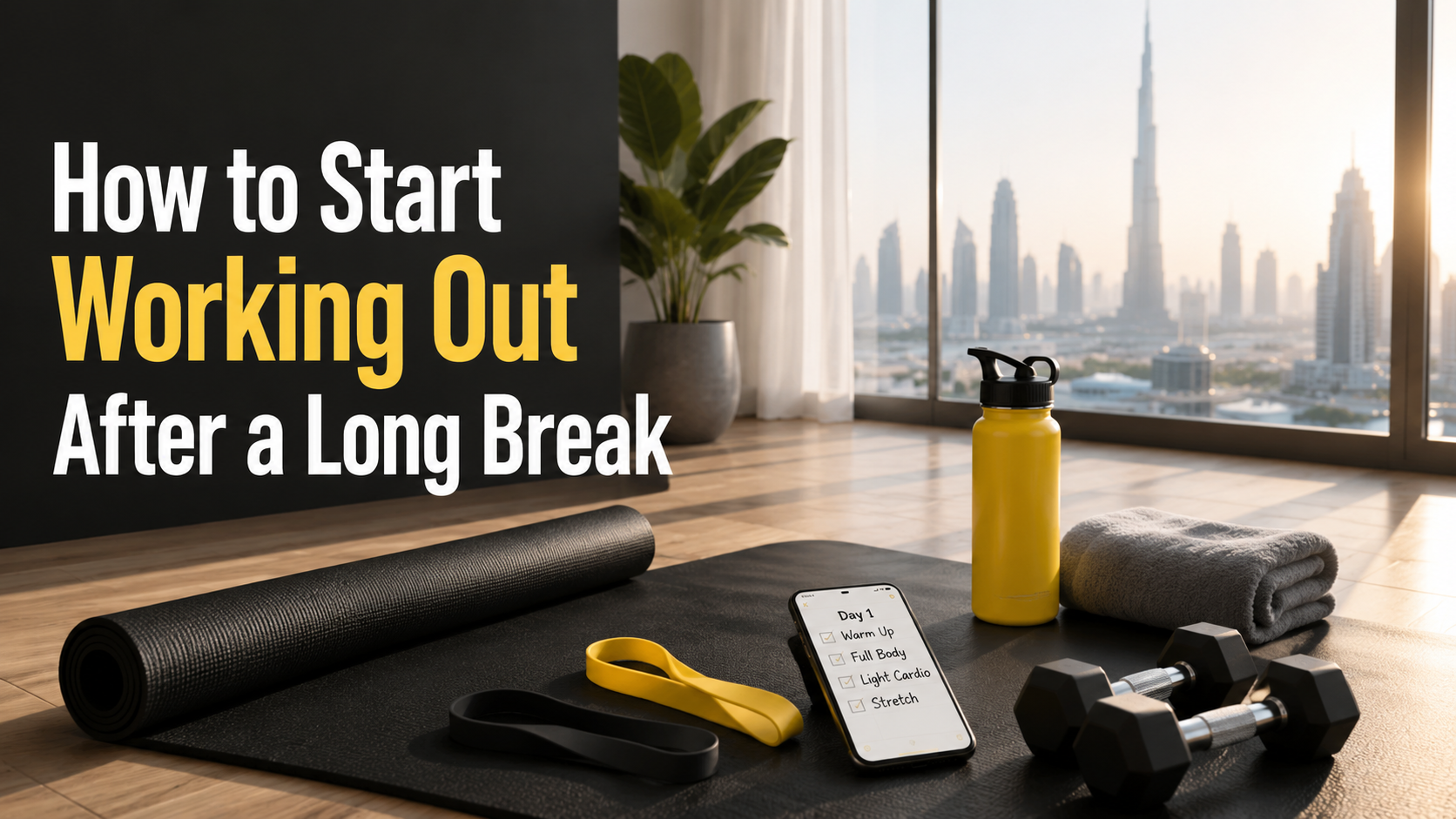
كيفية استئناف ممارسة التمارين بعد انقطاع طويل هي أحد الأسئلة الأكثر شيوعًا التي يطرحها الناس عندما
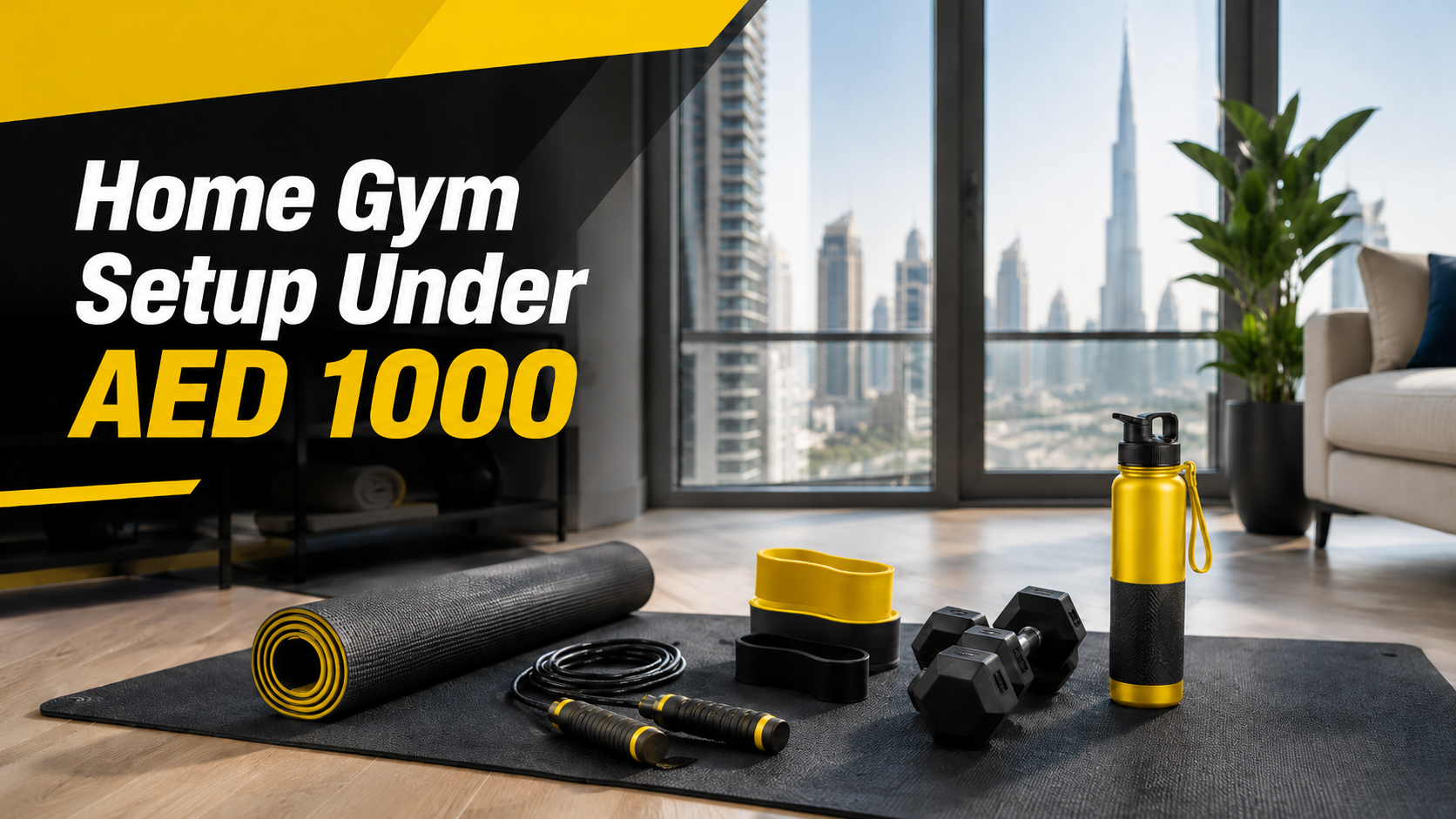
يمكنك تجهيز صالة رياضية منزلية بأقل من 1000 درهم إذا اخترت أجهزة لياقة بدنية ذكية وصغيرة الحجم ومتعددة الاستخدامات بدلاً من شراء