
Last updated: October 14, 2026
75lbs sits at a specific, meaningful point in strength training. It is heavy enough to challenge a true beginner on a deadlift, yet light enough to be a warm-up set for an intermediate lifter on a squat. It equals roughly 34 kilograms, a number that shows up constantly in gym plates, dumbbell pairs, kettlebells, and resistance stacks across the UAE and KSA. This guide breaks down exactly what 75lbs means across major lifts, who should be training with it, how to build a program around it, and the gear that makes the load safer and more productive whether you train in a gym, at home, or on the road.
75lbs converts to approximately 34.02 kilograms. In most Gulf gyms, plates and dumbbells are labeled in kilograms, so lifters coming from pound-based programs often round this to 34kg or 35kg depending on available plate increments. The conversion matters because training logs, phone apps, and coaching cues frequently mix units. A lifter who tracks progress in pounds but trains on kilogram plates needs a fast, reliable reference point, and 75lbs to 34kg is one of the most commonly searched conversions for exactly this reason.
Beyond the math, 75lbs is a psychological milestone. It is heavier than most adjustable dumbbell sets sold for home use, heavier than a loaded barbell with just two 10kg plates per side, and squarely in the range where grip, bracing, and technique start to matter more than raw effort. Hitting 75lbs cleanly on a lift is often the first sign that a program is working.
A flat number like 75lbs means something different depending on the exercise. Context is everything. Below is a breakdown of what this load typically represents across common strength movements, based on general strength standards used by coaches and training platforms.
For most untrained adults, 75lbs is a very manageable deadlift, often used as a warm-up or technique-focused working weight. For someone brand new to lifting, especially with limited posterior chain strength, 75lbs can still be a legitimate working set while hip hinge mechanics are being learned. Coaches frequently keep beginners at or near this load for several sessions before adding weight, prioritizing a flat back and controlled bar path over speed of progress.
On a back squat or goblet squat, 75lbs sits in beginner-to-early-intermediate territory. A goblet squat with a 75lbs dumbbell or kettlebell is a serious challenge for grip and core bracing, often more demanding than a barbell squat at the same total load because the weight is held in front of the body. Many lifters use 75lbs goblet squats as a bridge exercise before progressing to a barbell.
75lbs on a bench press is a common early milestone for new lifters, particularly those building pressing strength from a lower starting point. It typically represents the load where shoulder stability and bar path control become more important than raw pushing strength.
Single-arm dumbbell rows at 75lbs are advanced for most lifters, since this requires one arm to control the full load while the opposite side stabilizes the torso. This is more commonly approached as a total load split across two dumbbells for exercises like dumbbell deadlifts or farmer-style holds.
Carrying 75lbs in each hand, 150lbs total, is a serious grip and core test used in conditioning and functional strength programs. Farmer’s carries at this load build forearm endurance, trap strength, and bracing capacity that transfers directly to deadlifts and overhead work.
75lbs overhead is an intermediate benchmark for most lifters, requiring solid shoulder mobility, core stability, and triceps strength. Many lifting programs treat a strict overhead press at this load as a sign that general upper body strength has moved past the beginner stage.
There is no single answer, because body weight, training age, sex, and the specific lift all change what 75lbs represents. That said, general patterns show up across strength standards used by coaches and training apps.
For most beginners, regardless of gender, 75lbs is approachable on hip-dominant movements like deadlifts and hip thrusts, and moderately challenging on presses and squats. Beginners should treat 75lbs as a checkpoint for technique, not a number to rush past. Clean reps at this load with full range of motion matter more than adding weight prematurely.
Intermediate lifters typically move through 75lbs quickly on lower body lifts but may still find it meaningfully challenging on strict presses or single-arm work. At this stage, 75lbs often becomes a warm-up weight rather than a working set, which is a useful signal of real progress.
Anyone returning to training after an injury, pregnancy, or extended time off often finds 75lbs to be a smart re-entry load. It is heavy enough to stimulate strength adaptation but light enough to manage safely while rebuilding movement patterns and confidence.
For lifters training at home with limited plate inventory, 75lbs is frequently the practical ceiling of a compact adjustable dumbbell pair or a modest plate set. Building a program that peaks around this number makes sense for home training setups where space and budget are constraints.
Whether 75lbs is your current working weight or your next target, structure matters more than intensity. A scattered approach to loading wastes time and increases injury risk. Below is a framework for building toward or maintaining strength at this load.
Before programming around 75lbs, test where you actually stand. Perform a set of 5 reps on your main lift at a comfortable but challenging weight. If 75lbs allows for 8 to 10 clean reps, it is a warm-up weight. If it caps you at 3 to 5 reps with good form, it belongs in your working set range.
Strength-focused training at 75lbs typically falls into one of three rep ranges, depending on your goal:
Once 75lbs becomes comfortable across your target rep range, progress using one of these methods rather than jumping straight to a much heavier load:
This plan assumes 75lbs is your current challenging working weight on a primary lift, such as a deadlift, squat, or press.
This slow, structured approach prevents the common mistake of jumping from 75lbs straight to 95-100lbs, which often breaks form and stalls progress for weeks.
How you approach a 75lbs load changes depending on where you train. Rigid Fitness exists specifically because portable, space-efficient gear should not force a compromise on training quality, regardless of location.
Commercial gyms make 75lbs easy to load, with fixed plates, dumbbell racks, and machines calibrated in small increments. The main challenge in a gym setting is consistency, since busy hours mean shared equipment and limited rack time. Supersetting a 75lbs barbell lift with bodyweight or accessory work using your own gear keeps sessions efficient even when the gym is crowded.
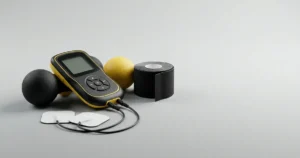
Home training around 75lbs usually means working with adjustable dumbbells, resistance bands, or a modest plate set. Space-conscious lifters often supplement heavier compound lifts with higher-rep accessory work using compact, portable gear that does not require a dedicated room. A vibration platform is a practical addition here, useful for pre-lift activation and post-session recovery without taking up the floor space a full rack would require.
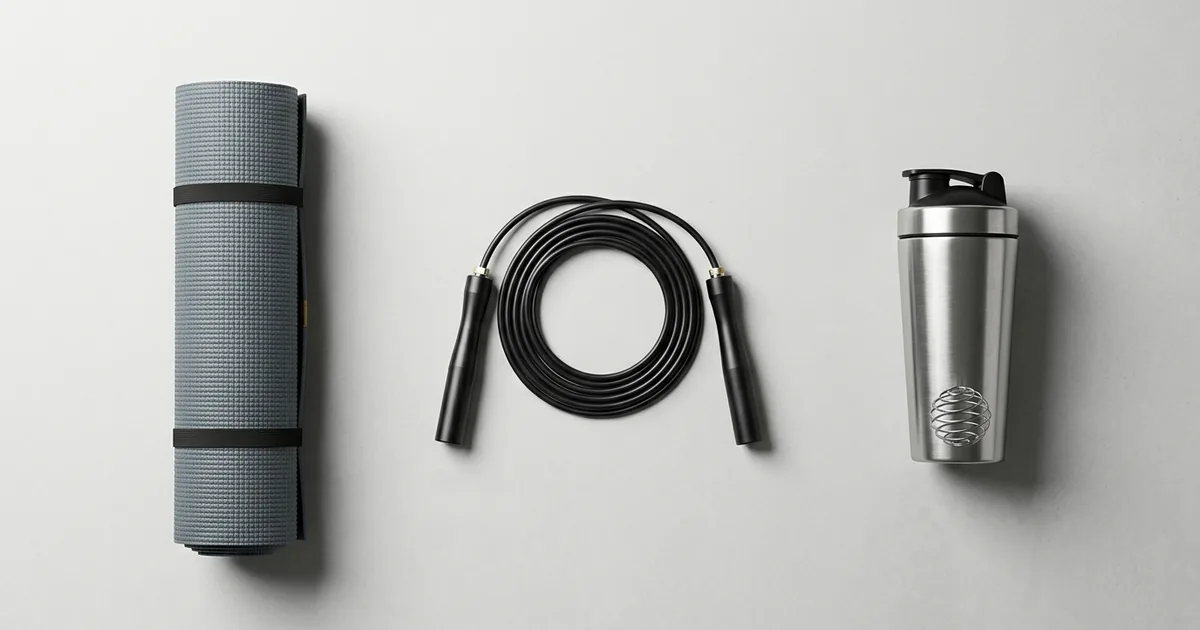
Maintaining strength around a 75lbs training zone while traveling is less about matching the exact load and more about preserving movement patterns and conditioning. A jump rope is one of the most efficient travel tools available, delivering a heart-rate response and lower-body endurance stimulus comparable to short loaded sets, all from a bag that fits in a suitcase. Pairing rope work with bodyweight strength circuits keeps strength qualities from eroding between gym sessions.
Lifting 75lbs repeatedly, across weeks of programming, puts real demand on grip, joints, and recovery systems. The right gear does not replace good programming, but it removes avoidable friction and risk.
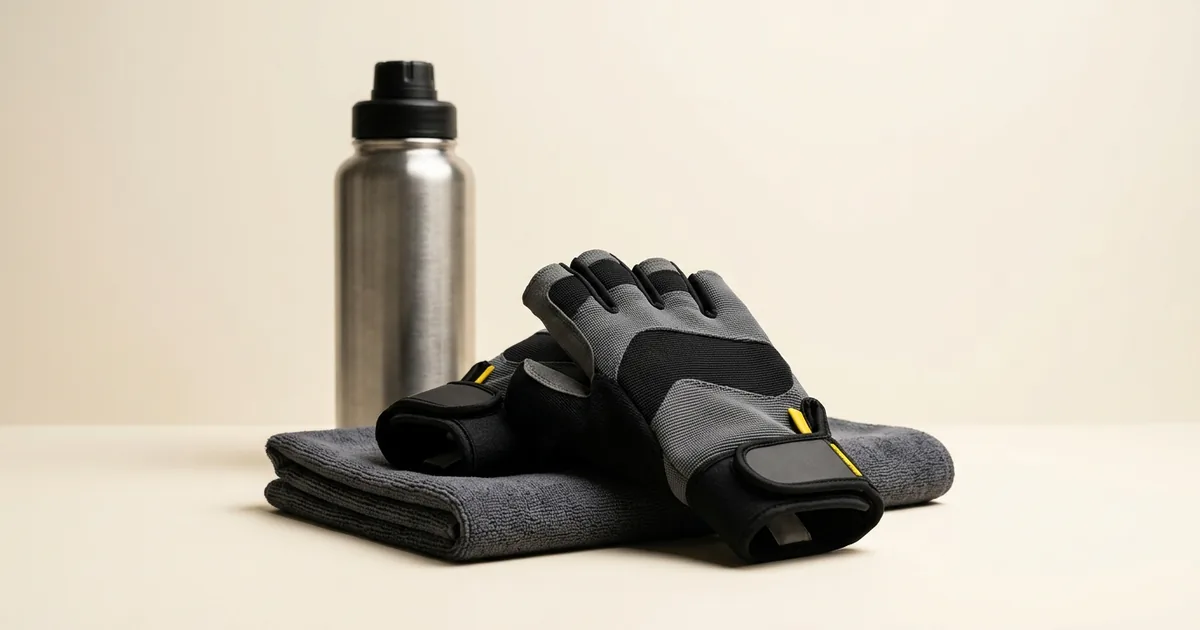
At 75lbs and above, grip often fails before the target muscle group does, particularly on deadlifts, rows, and farmer’s carries. Gym gloves and lifting straps reduce unnecessary grip fatigue so that posterior chain and back muscles reach true failure instead of being limited by hand strength. This matters most during higher-rep sets or longer carry distances, where grip failure can end a set early and cap progress on the muscles you are actually trying to train.
Loading 75lbs cold, without proper activation, increases strain on connective tissue. A short session on a vibration platform before heavier sets helps increase blood flow and joint readiness in a fraction of the time a traditional dynamic warm-up takes. Post-session, the same tool supports recovery by reducing muscular tightness, which matters when 75lbs sessions are repeated two to three times per week.
Strength and conditioning should not compete for the same recovery window. A adjustable jump rope is low-impact enough to use on non-lifting days without interfering with recovery from heavier 75lbs sessions, while still maintaining cardiovascular capacity and ankle stability that support better lifting mechanics.
Strength progress at any load, including 75lbs benchmarks, depends on consistent protein intake and hydration around training sessions. An electric protein shaker removes the friction of mixing supplements before or after a session, which matters most on busy training days when convenience determines whether a post-workout shake actually happens.
Rigid Fitness regularly updates its lineup of portable strength and conditioning gear. Browsing the latest arrivals is a practical way to find compact additions that support a 75lbs training block without adding bulk to a home setup or travel bag.
Working with a moderate-to-heavy load like 75lbs comes with predictable errors. Avoiding them saves months of stalled progress.
Moving from 75lbs to 95-100lbs in a single week, without a demonstrated ability to perform full reps with control at 75lbs, almost always breaks form. Technique erodes under load before strength does, and poor patterns learned under heavy weight are hard to unlearn.
Many lifters assume a stalled deadlift or row at 75lbs is a back or leg strength problem, when it is actually a grip problem. Testing this is simple: if straps or gloves allow several more reps at the same weight, grip was the limiting factor, not the target muscle group.
Loading 75lbs directly from a cold start increases injury risk, particularly for shoulders and the lower back. A proper warm-up should include at least two ramped-up sets at lighter loads before reaching a 75lbs working set.
Training only bilateral lifts at 75lbs, without single-arm or single-leg accessory work, can mask strength imbalances between sides. Over time, this increases injury risk and limits progress on the primary lift.
Staying at 75lbs for 3 sets of 8 reps for months without changing rep ranges, tempo, or rest periods leads to plateaus. The body adapts to repeated, unchanged stimulus. Rotating rep ranges every 4 to 6 weeks keeps 75lbs-based training productive.
Strength gains at any benchmark, including 75lbs, depend on recovery quality as much as training quality.
Consuming 20 to 40 grams of protein within two hours of a 75lbs training session supports muscle repair. Using a reliable, well-mixed shake removes the common excuse of inconvenience that causes many lifters to skip post-workout nutrition entirely.
Under-recovered lifters often find that a previously manageable 75lbs working set suddenly feels heavier and harder to control. This is frequently a sleep and recovery issue rather than a strength regression. Tracking sleep alongside training load helps distinguish between the two.
Every 4 to 6 weeks of progressive loading around 75lbs, a deload week at 50 to 60 percent of working weight allows connective tissue and the nervous system to recover before the next progression block. Skipping deloads is one of the most common reasons lifters stall or get injured just as they approach new personal records.
75lbs is useful as a reference point, but tracking progress solely by weight on the bar misses important signals. Rep quality, range of motion, bar speed, and recovery time between sets all indicate whether training is actually working. A lifter who adds 5lbs per week but sacrifices range of motion is not making real progress, even though the number on the plate says otherwise.
Keeping a simple training log, noting weight, reps, and a quick note on how the set felt, turns 75lbs from an isolated number into part of a clear progress trend. Over 8 to 12 weeks, this log becomes the most reliable tool for deciding when to add weight, change rep ranges, or take a deload.
75lbs is not just a number, it is a checkpoint that means different things depending on the lift, the lifter, and the training environment. Treat it as a technique benchmark when you are building a foundation, a working weight when you are pushing progress, and a maintenance load when travel or limited equipment changes what is practical. Pair the right rep ranges and progression plan with gear that supports grip, warm-up, recovery, and nutrition, and 75lbs becomes a clear, manageable step toward your next strength milestone, in the gym, at home, or anywhere training fits into your schedule.
75lbs equals approximately 34.02 kilograms, commonly rounded to 34kg or 35kg depending on available plate increments.
Yes. For most new lifters, 75lbs is a manageable deadlift weight that allows technique and hip hinge mechanics to be built safely before adding more load.
Since kettlebells are usually sized in kilograms, the closest common sizes to 75lbs (34kg) are 32kg or 36kg kettlebells, depending on what is available.
Grip strength often lags behind back and leg strength on pulling movements. Using gloves or lifting straps can remove grip as the limiting factor so the target muscles reach true fatigue.
Two to three sessions per week per movement pattern is typical, with a deload week every 4 to 6 weeks to allow recovery before increasing the load further.


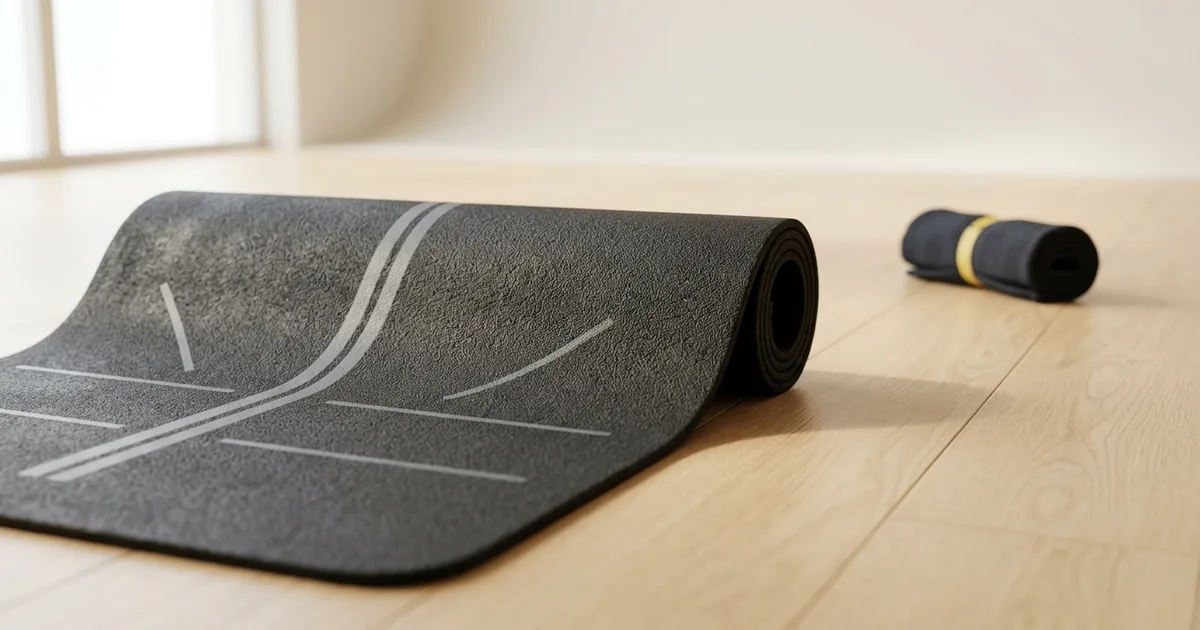
Last updated: October 14, 2026 A fitness mat for home workouts is the single piece of gear that separates a

Last updated: October 14, 2026 A dual protein shaker bottle solves one problem that a single-chamber shaker never could: carrying
Last updated: October 11, 2026 A rigid fitness centre is not a building. It is a personal performance system built