
Last updated: September 30, 2026
A resistance band workout builds muscle, protects joints, and travels in a gym bag, all without a single weight plate. Bands create tension throughout the entire range of motion, something a dumbbell cannot do once gravity stops pulling straight down. For lifters in Dubai, Riyadh, Abu Dhabi, or Jeddah who train across a gym, a home setup, and a hotel room, bands are the one tool that closes the gap between all three.
This guide covers the science behind band training, the different band types, a full workout program broken down by body part, progression strategies, and the mistakes that quietly stall results. By the end, you will have a complete resistance band workout system you can run for months without repeating a single session.
Bands get dismissed as “beginner gear” or a rehab tool. That reputation is outdated. Elite strength athletes use bands for accommodating resistance, physical therapists use them for controlled loading, and traveling professionals use them because a full gym does not fit in carry-on luggage.
A dumbbell curl gets hard at the midpoint and easy at the top and bottom, because gravity only pulls straight down. A band curl gets harder the further you stretch it, which means the muscle stays under load through the entire rep, including the lockout where free weights go slack. This is called accommodating resistance, and it forces muscles to work through ranges that weights often skip.
Bands load muscles without the shock of a heavy bar landing on a joint. For anyone training around a shoulder, knee, or lower back issue, band resistance ramps up smoothly instead of hitting a joint with sudden peak force. This makes a resistance band workout a realistic option even on days when heavier lifting is off the table.
The biggest reason home and travel workouts fail is not motivation, it is access to gear. A set of bands weighs under a kilogram and rolls into a pouch the size of a water bottle. That portability is why bands close the consistency gap between a fully equipped gym and a hotel room floor.
Not all bands do the same job. Building a complete resistance band workout means understanding which band fits which movement pattern.
These are large, continuous loops used for pull-ups assistance, deadlift patterns, squats, and full-body compound movements. They range from light to heavy resistance and are typically color-coded by tension level.
Small loops placed around the ankles, knees, or wrists. Built for glute activation, lateral walks, and hip stability work. These are the go-to for warm-ups and glute-focused training.
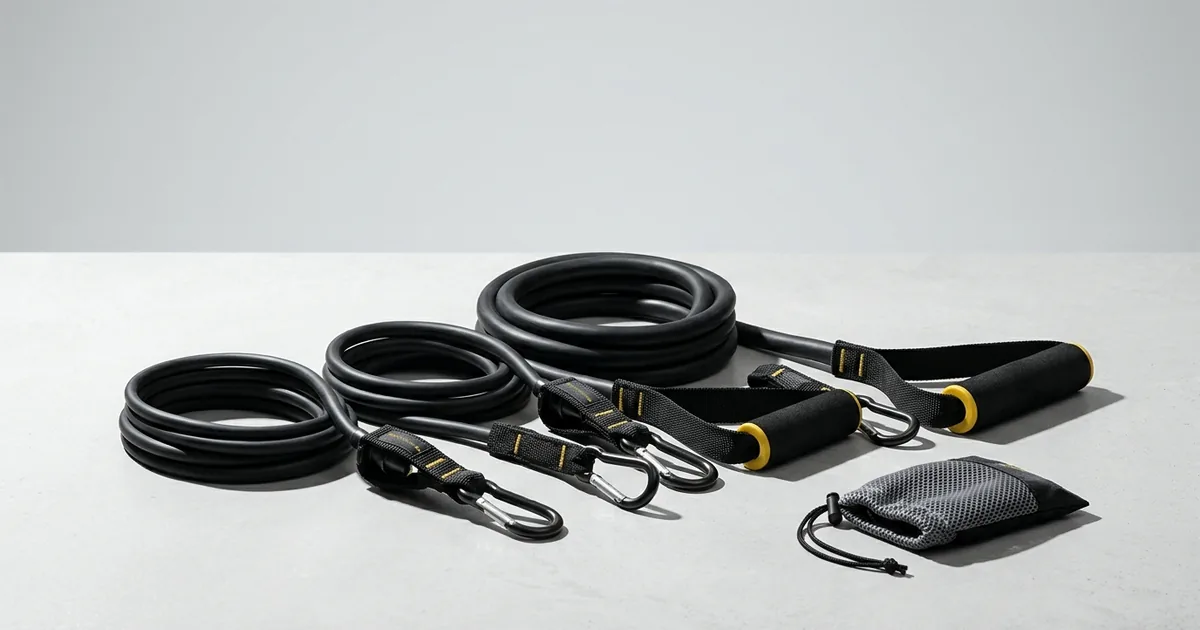
These mimic cable machine movements, rows, presses, curls, and pull-aparts. The handles make them the closest substitute to gym cable stations, which makes them ideal for a home resistance band workout that needs to replace a cable rack.
Short and compact, used mainly for upper body isolation work like bicep curls and shoulder presses. Good for travel because they take up almost no space.
Thicker, non-slip bands typically used for glute and hip work. They do not roll up on the skin the way rubber bands do, which makes them better for high-rep lower body circuits.
A band workout only works if it follows the same principles that make any resistance training effective: progressive overload, full range of motion, and controlled tempo. Bands make it easy to cheat these principles because momentum can replace tension. Fix that first.
The lowering phase is where bands lose their advantage if you let the band snap back. Take two to three seconds on the return phase of every rep. This keeps tension on the muscle instead of letting elastic recoil do the work.
Where you anchor a band changes the entire movement pattern. A band anchored low turns into a row or a deadlift pattern. A band anchored high turns into a lat pulldown or a chest press. Before starting a session, map out anchor points, a door anchor, a rack, or your own foot.
The instinct is to add reps when a movement gets easy. Instead, shorten the band, double it up, or move to the next resistance level. This keeps sessions efficient instead of turning every workout into a 30-minute high-rep grind.
Below is a complete program split across upper body, lower body, core, and full body conditioning. Each session takes 30 to 45 minutes and needs nothing beyond a set of bands and a stable anchor point.
If mobility is tight, five minutes on a vibration platform before the band warm-up increases blood flow and loosens the hips and ankles faster than static stretching alone.
Anchor the band behind you at chest height. Press forward until arms are extended, control the return. 4 sets of 12-15 reps.
Anchor at chest height in front of you, pull elbows back and squeeze the shoulder blades together. 4 sets of 12-15 reps.
Stand on the band with feet shoulder-width, press overhead. 3 sets of 12 reps.
Stand on the band, curl with elbows locked at the sides. 3 sets of 15 reps.
Anchor overhead, push down until arms are straight, control the return. 3 sets of 15 reps.
Anchor at head height, pull toward the face with elbows high. This single movement fixes more shoulder posture problems than almost anything else in a home program. 3 sets of 15 reps.
Stand on the band, hold handles at shoulder height, squat to depth. 4 sets of 15 reps.
Stand on the band, hinge at the hips, keep the back flat. 4 sets of 12 reps.
Band above the knees, sidestep 10 steps each direction, keep tension constant. 3 sets.
Mini band above the knees, drive hips up, squeeze glutes at the top. 3 sets of 15 reps.
Anchor low, kick one leg back while keeping the torso stable. 3 sets of 15 reps per leg.
Stand on the band, hold handles for balance, raise onto the toes. 3 sets of 20 reps.
Anchor at chest height from the side, press the band straight out and resist rotation. 3 sets of 12 reps per side.
Anchor high, pull the band diagonally across the body to the opposite hip. 3 sets of 12 reps per side.
Anchor at chest height, hold handles with both hands, rotate side to side while seated. 3 sets of 20 total reps.
Anchor overhead, hold band at the back of the neck, crunch forward against resistance. 3 sets of 15 reps.
For a shorter, high-intensity session, run this circuit three times through with 30 seconds rest between movements:
Finish the circuit with three minutes of jump rope for a fast cardio spike. A beaded jump rope holds a consistent rhythm better than a standard cable rope, which matters when heart rate is already elevated and coordination starts to slip.
| Day | Focus |
|---|---|
| Monday | Upper Body |
| Tuesday | Lower Body |
| Wednesday | Core + Light Cardio |
| Thursday | Full Body Circuit |
| Friday | Upper Body |
| Saturday | Lower Body |
| Sunday | Rest or Mobility |
This split works whether you are training in a fully equipped gym, a home setup, or a hotel room during travel. The exercises do not change, only the anchor point does.
Bands are typically graded by tension, light, medium, heavy, and extra heavy. Buying one band and expecting it to cover every exercise is the most common mistake in band training.
Larger muscle groups, quads, glutes, and back, need heavier bands. Smaller muscle groups, biceps, triceps, and shoulders, need lighter bands. Using one universal band means either under-loading the legs or over-loading the shoulders.
Instead of buying every resistance level upfront, start with a light, medium, and heavy set. As strength builds, layer two bands together for progressive overload instead of buying an entirely new set every few months.
Before locking in a resistance level for an exercise, test it through the full range of motion, not just the hardest point of the movement. A band that feels manageable at half stretch can become impossible to control at full stretch, which breaks form exactly where control matters most.
A resistance band workout gets stronger when paired with a few other pieces of portable gear that support the same gym, home, and travel positioning.
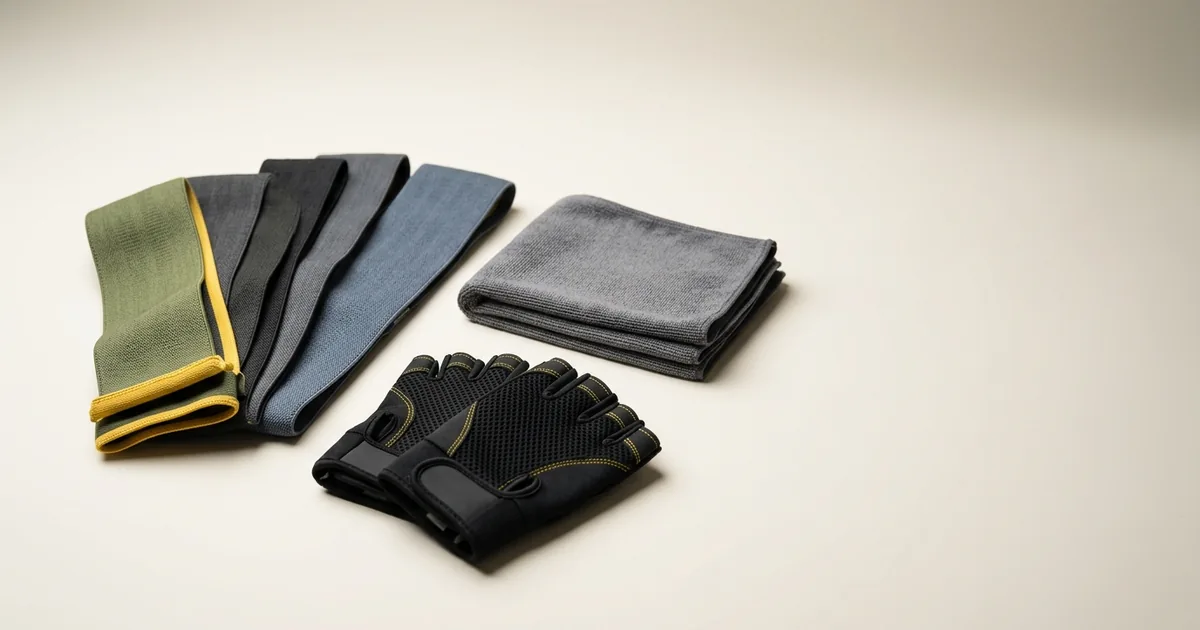
High-rep band rows and pulldowns put constant strain on the hands, especially with thicker handles. Gym gloves and straps reduce grip fatigue so the target muscle, not the forearm, is what gives out first.
Bands build strength, but a short cardio finisher keeps conditioning from falling behind. A few minutes with a jump rope after a lower body band session raises heart rate fast without needing any extra space.
Muscles under constant tension from bands recover differently than muscles under free weight load. A few minutes on a vibration platform after training increases circulation and can reduce next-day stiffness, especially after high-rep glute and leg sessions.
Band training is often higher rep and higher volume than free weight training, which increases the importance of getting protein in fast. An electric protein shaker mixes a clean shake in seconds, which matters after a hotel room or home session when there is no blender around.
For anyone building a full portable setup, check the new arrivals for the latest gear drops that pair well with a band-based training system.
Releasing tension on the return phase cuts the workout in half. Every rep has two working phases, not one.
A band that is perfect for rows is often too light for squats and too heavy for lateral raises. Match resistance to the muscle group being trained.
Door handles, light furniture, and loose railings are common anchor points that fail mid-rep. Use a rated door anchor, a squat rack, or a heavy, fixed structure.
Bands degrade with UV exposure, heat, and repeated stretching. Check for small tears or thinning before every session, especially bands stored in a hot car or direct sunlight.
Doing the same band, same reps, same anchor point for months stalls results. Progress by shortening the band, doubling it up, or moving to a heavier resistance level every few weeks.
No space for a rack, no room for plates. Bands deliver a full strength stimulus in the space of a yoga mat.
Hotel gyms are inconsistent, some have full racks, some have a single treadmill. A set of bands guarantees a complete workout regardless of what the hotel gym looks like.
Coming back from an injury often means avoiding sudden peak loads. Bands ramp resistance up gradually, which makes them a safer reintroduction to strength training.
Even with full access to a rack, bands add joint-friendly volume, activation work, and accessory training that heavy compound lifts do not fully cover.
A resistance band workout is not a compromise version of real training, it is a complete system that covers strength, mobility, and conditioning with gear that fits in a small bag. The program above works across a gym, a home setup, or a hotel room without changing a single exercise, only the anchor point moves. Start with light, medium, and heavy bands, run the weekly split, and progress tension instead of reps. Consistency across all three environments, gym, home, and travel, is what actually builds strength over time, and bands are the one tool that makes that consistency possible.
Bands build real muscle when the resistance is heavy enough to challenge the muscle within 8-15 reps and the eccentric phase is controlled. Constant tension through the full range of motion makes bands as effective as weights for hypertrophy when progression is applied.
Three bands cover most training needs, a light band for isolation work like curls and lateral raises, a medium band for pressing and rowing patterns, and a heavy band for squats and deadlifts. Mini bands are a useful fourth addition for glute and hip work.
Four to six sessions per week work well since bands are lower impact on joints than free weights. A typical split runs upper body, lower body, core, and a full body circuit across the week with one rest or mobility day.
Bands cover strength, mobility, and conditioning for most muscle groups and can fully replace a gym for home or travel training. For maximal strength goals beyond a certain point, heavy compound lifts with free weights still offer a ceiling bands cannot match.
Letting the band snap back on the return phase. This removes tension during half of every rep and cuts the effectiveness of the exercise significantly. Controlling both the stretch and the return is what makes band training work.

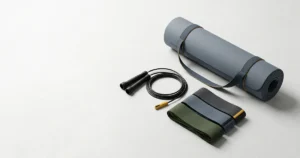

آخر تحديث: 30 سبتمبر 2026 البحث عن معدات تمارين منزلية لم يعد رفاهية بعد أن أصبح الوقت أغلى مورد لدى
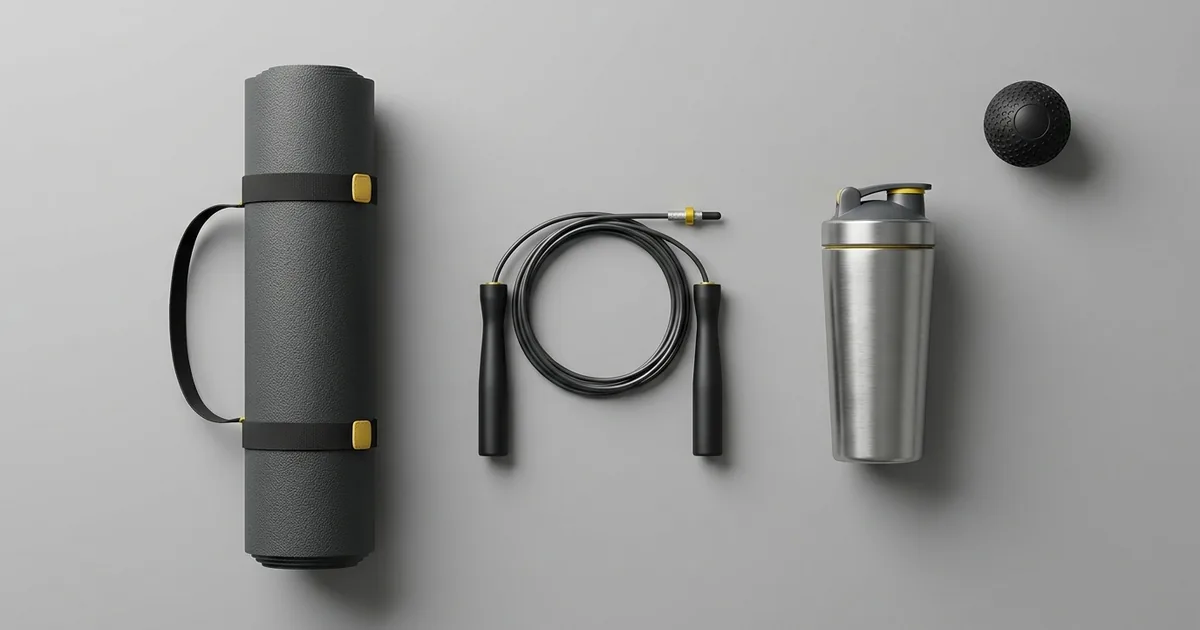
Last updated: September 30, 2026 Searching “fitness gyms near me” in Riyadh, Jeddah, or Dammam pulls up a dozen options
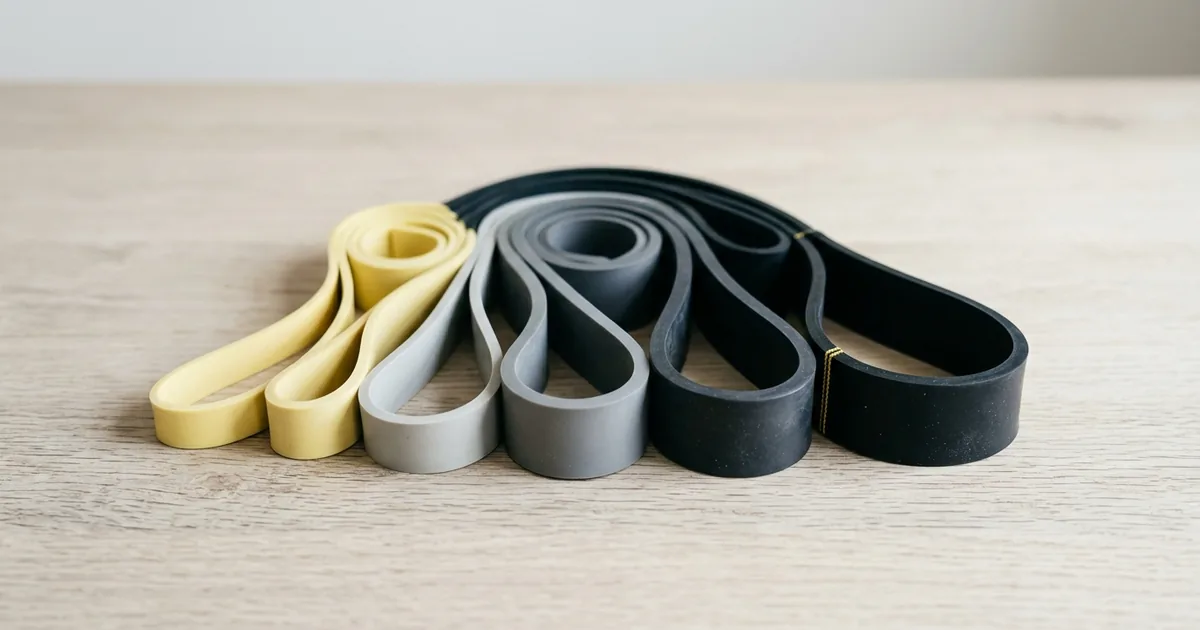
Last updated: September 27, 2026 A resistance band costs less than a single personal training session and fits in a