
Last updated: August 19, 2026
A walking pad for home fitness UAE apartments is one of the few pieces of gear that actually gets used every single day. It slides under a bed, fits in a hallway cupboard, and lets you hit your step count while you’re on a call, watching a match, or just avoiding the Dubai or Riyadh heat outside. This guide breaks down what actually matters when you’re choosing one, how to set it up safely in a UAE or KSA home, and how to build a routine that gets you real results without turning your living room into a gym floor.
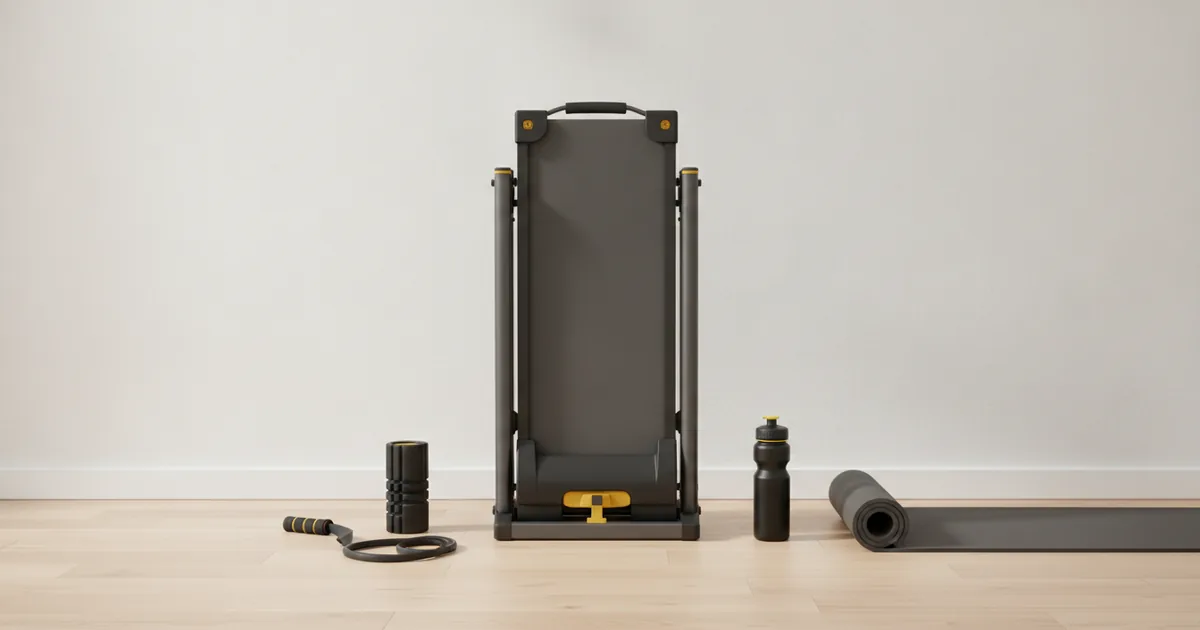
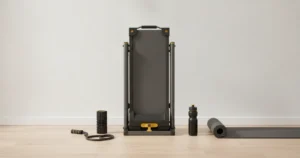
A walking pad is a slim, motorised platform built for walking, not running. Unlike a full treadmill, it skips the tall console, the safety rails, and the bulky frame. What’s left is a low-profile deck, a compact motor housing, and a control panel you can usually reach with your foot or a remote. Most fold flat or fold in half, and many roll on built-in wheels so you can tuck them behind a sofa or under a bed frame.
This matters more in the Gulf than almost anywhere else. Villas in Riyadh and Jeddah often have generous floor space but no dedicated gym room. Apartments in Dubai, Abu Dhabi, and Sharjah are usually the opposite: efficient layouts where every square metre of living space counts. A walking pad respects both situations. It gives you a real cardio option without demanding a room of its own, and it matches the portable, no-excuses approach that Rigid Fitness builds its whole gear range around, whether that’s gym, home, or travel.
There’s also a practical climate angle. Outdoor walking in the UAE and Saudi Arabia is only comfortable for a few months of the year. From roughly May through September, daytime temperatures make an outdoor walk unappealing, if not risky, during peak hours. A walking pad removes that seasonal gap entirely. You get the same 8,000 to 10,000 daily steps in an air-conditioned room, at 6am or 11pm, regardless of what the thermometer says outside.
This is the comparison most UAE and KSA buyers actually care about, because space is the real constraint, not fitness knowledge. A standard folding treadmill typically needs a footprint of around 1.5m by 0.8m even when folded upright, plus clearance behind it for the incline motor and safety key. Ceiling height matters too. Many treadmills, once folded vertically, are too tall for a low false ceiling or a mezzanine bedroom.
A walking pad flips that equation. Most models measure between 130cm and 155cm long and 55cm to 70cm wide when in use, and drop to a slab roughly 15-18cm thick when folded. There’s no upright folding position to worry about, no tall console blocking a window or TV, and no need for a permanent workout corner. You can genuinely use the space for something else the moment you’re done, which is the entire point of choosing portable gear over a dedicated setup.
The trade-off is top speed and incline range. Most walking pads cap out around 6 to 10 km/h, which is a brisk walk to a light jog, not a sprint. If your goal is running intervals, a treadmill still wins. But if your goal is consistent daily movement, standing less, and stacking steps around a desk or a TV session, a walking pad wins on every practical measure that matters for a small UAE flat: footprint, noise, weight, and how easily you can put it away when guests are coming over.
If you’re training for a specific run, need speeds above 10-12 km/h regularly, or want a proper incline for hill simulation, a treadmill remains the better tool. Walking pads are built for walking, not for marathon training. Be honest about your goal before you buy either one.
Not all walking pads are built the same, and the spec sheet tells you more than the marketing photos do. Here’s what to actually check.
Look for a continuous duty motor rating, not just a peak horsepower number. A continuous rating of 1.5HP to 2.25HP is enough for walking and light jogging. Anything lower tends to strain and overheat with daily use, especially in warmer indoor temperatures during summer months when air conditioning is working hard and ambient heat in the room can still be higher than ideal for a motor.
A belt at least 40cm wide and 110cm long gives you enough room for a natural walking stride without feeling like you’re balancing on a plank. Check the maximum user weight too. Most quality pads support 100-120kg, but if more than one person in the household will use it, buy toward the higher end of that range rather than the minimum.
This is the single most underrated spec for UAE apartment buyers, because thin walls and shared floors mean your 6am walk shouldn’t wake the neighbour below. Quality walking pads run at 40-50 decibels, roughly the volume of a quiet conversation. Cheaper motors run louder and get noticeably louder as they age. If you can, test one in a showroom before committing, or check verified reviews specifically mentioning noise at higher speeds.
Some walking pads now offer a manual or motorised incline, typically 0-5%, which increases the calorie burn and works the glutes and calves harder without needing extra speed. This is a genuinely useful upgrade if your flat has the budget, but it’s not essential if your main goal is simply hitting a daily step count.
Check the folded height and whether it’s genuinely a two-person lift or something you can manage solo. Built-in wheels make a real difference here, especially if you’re storing it in a cupboard or sliding it under a bed frame between sessions.
A basic LED display showing speed, time, distance, and calories is enough for most users. Bluetooth-connected models sync to a phone app for tracking history, which is a nice-to-have if you like data, but don’t pay a premium for connectivity over motor quality and build.
Getting the setup right avoids two common problems: tripped breakers and a wobbly, unstable walk.
The UAE and Saudi Arabia both run on 220-240V standard household power, which most walking pads are built for out of the box. Still, plug the unit directly into a wall socket rather than a multi-socket extension board shared with other appliances. Walking pads draw a steady current while running, and sharing a circuit with a kettle, AC unit, or washing machine is the most common reason a breaker trips mid-walk. If your flat’s circuit for that room is older or shared with heavy appliances, ask an electrician to confirm the dedicated load before you start using it daily.
Place the pad on a hard, flat, level surface. Marble and tiled floors, common across UAE villas and apartments, work fine but can transmit vibration and sound to the floor below. A thin rubber mat under the unit reduces both noise and floor scuffing, and it protects the underside of the pad from dust intake, which matters given how much fine dust circulates indoors during sandstorm season.
Leave at least 60cm of clear space behind the pad and 100cm above it, even if you’re not tall. This gives you room to step off safely if you lose balance, and enough headroom if you’re pairing the walk with an incline setting. Position it near a wall you can glance at, or facing a TV, rather than in the centre of a room where it becomes a walking hazard for the rest of the household.
Owning the gear is step one. Using it consistently is where the results actually come from. Here’s how to structure it depending on your goal.
Start with 20-30 minutes at 3-4 km/h, five days a week. Don’t chase speed early. The goal in week one and two is simply making the walking pad part of your routine, whether that’s first thing in the morning or during an evening wind-down. Once 30 minutes feels easy, increase speed before you increase duration.
Once you’re comfortable at a steady pace, add interval blocks: 3 minutes at 5-6 km/h, then 1 minute at 3 km/h, repeated for 30-40 minutes. If your pad has incline, alternate flat and inclined segments instead of changing speed, since incline walking raises heart rate without the impact of a faster pace. A 45-minute incline walk at 5% and 5 km/h burns noticeably more calories than the same time at flat 6 km/h, and it’s far easier on the knees.
This is where a walking pad earns its keep for remote and hybrid workers. Set the pad at 2-3 km/h under a standing desk and walk during calls, emails, or reading. You won’t hit a sweat, but over an 8-hour workday you can rack up 6,000-8,000 extra steps without setting aside separate workout time. Keep a small towel nearby for a quick wipe-down, since even slow walking builds up sweat over a long session.
A walking pad works best as part of a small, functional home setup rather than as an isolated purchase. A few additions make the daily habit easier to sustain.
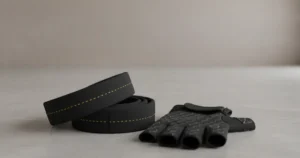
Keep a microfiber workout towel within reach for quick wipe-downs after longer or inclined sessions, since sweat on the belt surface reduces grip over time. If your walking days include upper-body or resistance work on the same day, a set of gym gloves and straps protects your grip for the strength portion without adding bulk to your home setup. For hydration during longer walks or combined sessions, a portable blender bottle lets you mix a shake or electrolyte drink without needing a separate blender in the kitchen.
If you want to combine walking with recovery work, a vibration platform pairs well on rest days for circulation and light activation, using the same small footprint approach as the walking pad itself. And if you’re still comparing options across categories, our new arrivals section is a fast way to see what’s recently landed across the portable gear range for gym, home, and travel.
Pricing for walking pads across the UAE and Saudi Arabia generally falls into three tiers, and knowing which tier matches your use case saves you from over- or under-buying.
Basic walking pads with a single speed range, no incline, and a simple LED display typically sit in the AED 600-900 (roughly SAR 600-900) range. These suit light, occasional use, such as a few sessions a week or desk walking at low speed. Motor life and noise control are usually the first things sacrificed at this price point.
Most serious daily users land here, typically AED 1,000-1,800 (SAR 1,000-1,800). At this level you get a stronger continuous-duty motor, a wider belt, quieter operation, and often a basic incline function. This is the sweet spot for anyone planning to use the pad most days of the week for months or years, not just a few weeks after a New Year resolution.
Above AED 2,000 (SAR 2,000+), you’re paying for motorised incline, app connectivity, higher weight capacity, and quieter, more durable motors built for years of daily use. Worth it if you want the incline training benefits or if multiple household members will share the unit regularly.
Whichever tier fits your budget, prioritise motor quality and noise level over display features and app extras. A quiet, reliable motor is what determines whether you’re still using the pad in year two, not how many stats the screen shows you.
A little upkeep keeps a walking pad running quietly for years instead of degrading within months, which matters more in the UAE and KSA than in cooler climates because dust and heat both accelerate wear.
These few habits add years to the motor’s life and keep noise levels low, which matters most if you’re walking early morning or late evening in a shared apartment building.
The best walking pad for home fitness UAE living isn’t the one with the most features. It’s the one with a strong, quiet motor, a belt sized for your stride, and a footprint that actually disappears into your home when you’re done. Get the electrical setup right, build a routine that starts small and adds intensity gradually, and pair it with a few practical extras like a towel, gloves, or a bottle to keep the whole habit frictionless. Whether you’re in a Dubai apartment, a Riyadh villa, or moving between the two, a walking pad remains one of the simplest ways to keep daily movement non-negotiable, regardless of the season outside.
First, unplug the pad and check it isn’t sharing a socket or extension board with high-draw appliances like a kettle, AC unit, or washing machine, since that’s the most common cause. Plug it directly into a dedicated wall socket instead. If it still trips the breaker on its own circuit, the issue is usually the motor drawing more current than the circuit is rated for, or a fault in the unit’s power cable. Stop using it and have an electrician check the circuit load before plugging it back in, and contact the seller if the fault appears to be with the unit itself rather than the household wiring.
Most foldable walking pads measure around 130-155cm long and 55-70cm wide when in use, folding down to a slab roughly 15-18cm thick for storage. You’ll want an additional 60cm of clear space behind the unit and about 100cm of headroom above it for safe use. Folded and stored, it typically slides under a bed, into a cupboard, or stands upright against a wall, taking up far less permanent floor space than a folded treadmill.
For most small UAE and KSA apartments, yes. A walking pad has a smaller footprint, no tall folded profile to clear a low ceiling, lower noise output, and it’s easier to store away entirely between uses. A treadmill still wins if you need higher speeds for running or a deeper incline range for hill training, but for daily walking, desk walking, and general step count goals in a compact home, a walking pad is the more practical choice.
Yes. Adding even a 3-5% incline increases the effort your legs and glutes exert per step, raising heart rate and calorie burn compared to the same speed on a flat setting, without the extra joint impact of walking or jogging faster. A 30-40 minute walk at a moderate incline typically burns noticeably more calories than the same duration flat, making incline a useful lever to add intensity without needing to increase speed.
Last updated: August 19, 2026 Most people pick a yoga mat based on color or price and regret it within
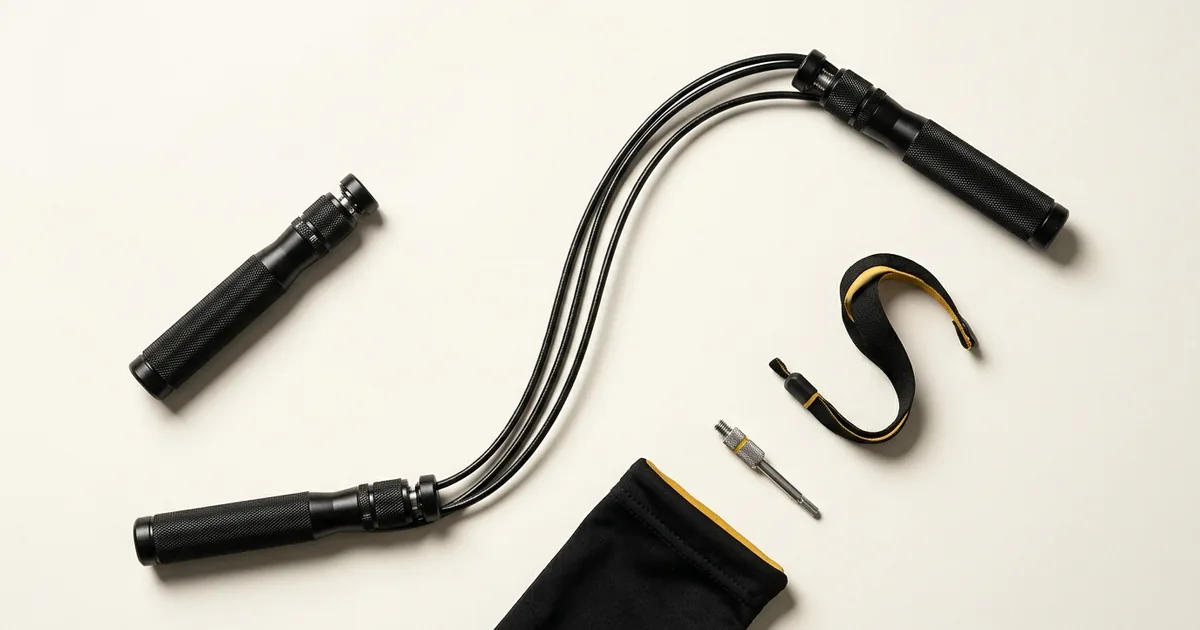
آخر تحديث: 19 أغسطس 2026 حبل القفز أداة صغيرة الحجم لكنها من أقوى وسائل حرق الدهون التي يمكن استخدامها في
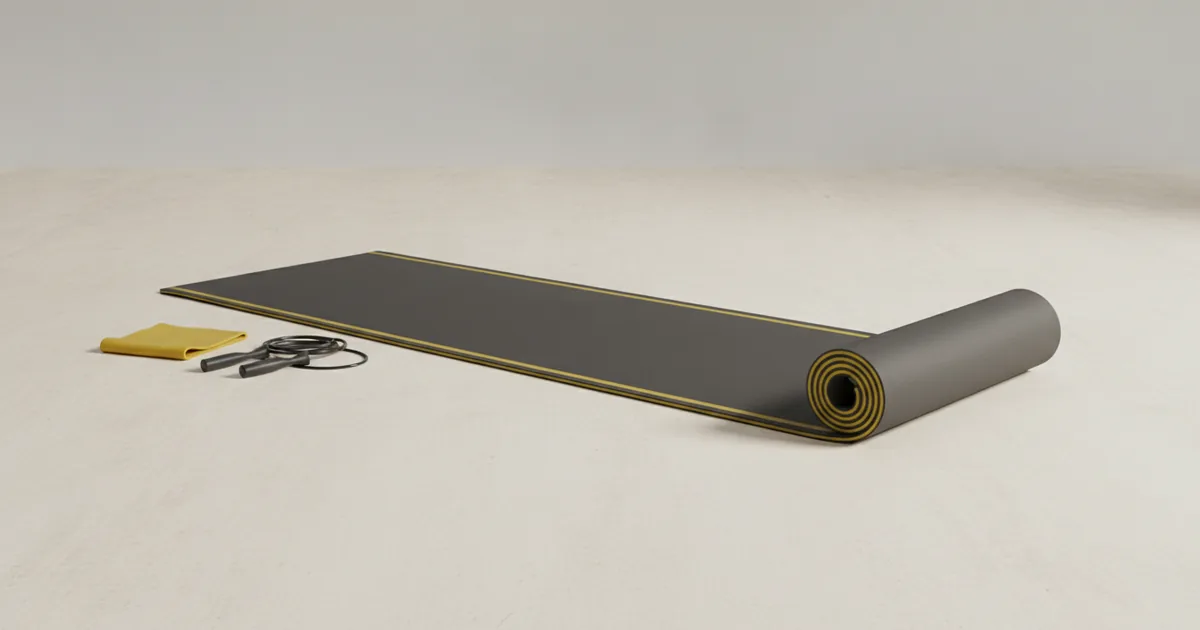
Last updated: August 19, 2026 The wrong yoga mat will not ruin your practice overnight, but it will quietly sabotage