
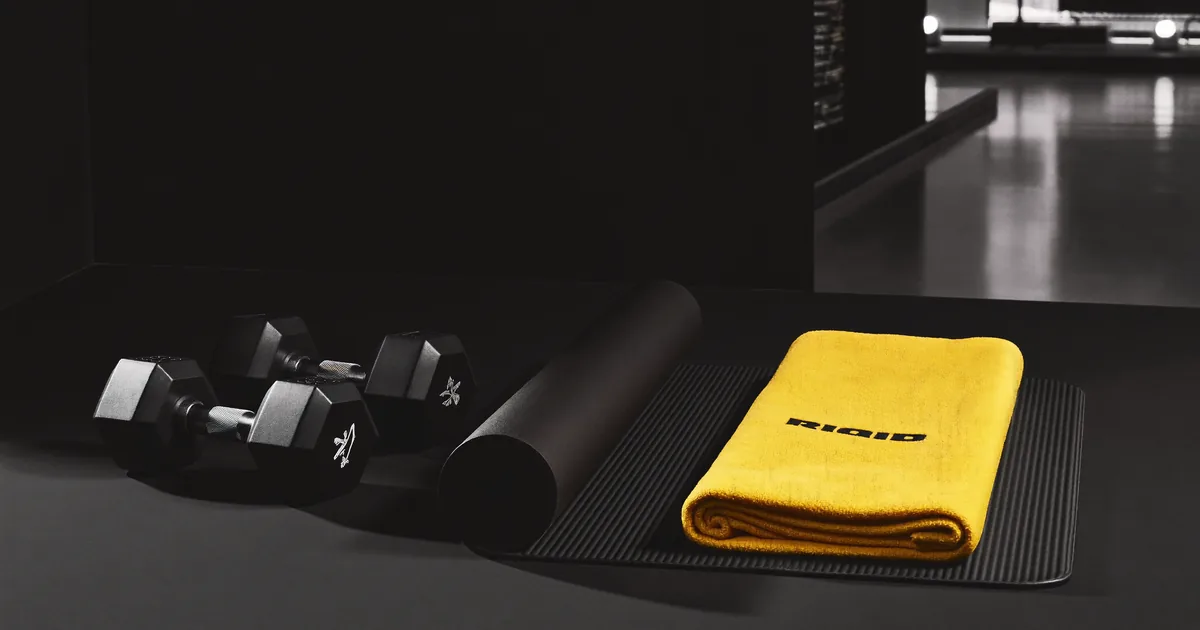
A workout towel that stays damp for hours is dead weight in your gym bag. In the heat and humidity of the UAE and KSA, sweat output is higher, gym sessions run longer, and a slow-drying towel turns into a breeding ground for bacteria before you even get home. The best gym towel quick dry option solves three problems at once: it absorbs fast, it dries between sets, and it packs down small enough to travel with you from the gym floor to a hotel room to your living room. This guide breaks down exactly what separates a genuinely quick-dry towel from a marketing label, and how to pick one that works for gym, home, and travel training.
Most people treat a gym towel as an afterthought, something to wipe a bench or blot a forehead. But the towel you carry does more work than that. It manages sweat during high-intensity sets, protects shared gym surfaces, and doubles as a cooling tool between rounds of conditioning work. If it cannot dry fast, it cannot do any of that well for more than one session.
A slow-drying towel stays wet in your bag after a single use. That moisture becomes the perfect environment for bacteria and odor-causing microbes, especially in warm climates where ambient humidity already slows evaporation. By your next session, you are either using a towel that smells or you are washing one after every single workout, which shortens its lifespan and adds laundry load you do not need.
A true quick-dry towel, by contrast, releases moisture back into the air within minutes rather than hours. That means less bacterial growth, less odor, and a towel you can actually reuse across two or three sessions before it needs a wash, which matters if you train daily or travel frequently.
Gym-goers in Dubai, Abu Dhabi, Riyadh, and Jeddah are not dealing with mild sweat output. Indoor gyms run air conditioning hard, but outdoor training, padel courts, and home workouts without AC push sweat rates far higher than in temperate climates. A towel rated as “quick dry” in a cooler market may still underperform here simply because the baseline humidity and sweat volume are higher. This is why fabric choice and weave density matter more in this region than almost anywhere else. What passes as fast-drying in Europe might feel like a soaked rag by the end of a Middle East leg day.
“Quick dry” is not a vague claim, it is a function of three measurable things: fiber type, weave structure, and thickness (measured in GSM, grams per square meter). Understanding these lets you judge a towel on more than packaging copy.
Traditional cotton towels absorb well initially because cotton fibers are hollow and soak up liquid readily. The problem is release. Cotton holds onto moisture inside those fibers and releases it slowly, which is why a cotton gym towel can take half a day or longer to fully dry, especially folded inside a gym bag with no airflow.
Microfiber is built differently. It is typically a blend of ultra-fine polyester and polyamide (nylon) strands, each far thinner than a human hair. This structure creates enormous surface area relative to weight, which means microfiber pulls moisture away from skin fast through capillary action, then releases it just as fast because the fibers do not trap water the way cotton’s hollow structure does. This is the core reason microfiber workout towels consistently outperform cotton for gym use, they absorb up to seven times their weight in moisture and dry in a fraction of the time.
Side by side, a cotton towel might take four to six hours to air dry after a heavy sweat session. A quality microfiber towel of the same size can be dry to the touch in 30 to 60 minutes under normal room conditions, faster with any airflow.
Beyond fiber type, the way the fabric is woven changes drying speed. Waffle-weave microfiber has a textured, grid-like surface that increases surface area and speeds up evaporation, making it a strong pick for hot climates. Terry-style microfiber has small raised loops similar to a traditional towel look, offering strong absorption with slightly slower dry time than waffle weave. Suede-style microfiber is smooth and flat, drying the fastest of the three but with slightly less bulk absorption per swipe, which makes it a good choice for quick face and neck wipes rather than full-body use after an intense session.
GSM stands for grams per square meter and it is the standard way to measure towel density. Lower GSM (200 to 300) means a thinner, lighter towel that dries extremely fast but holds less water per wipe. Mid-range GSM (300 to 400) balances absorption and dry speed, making it the sweet spot for most gym towels. Higher GSM (400 plus) feels plush and absorbs a lot per swipe but takes longer to dry fully, which works better for bath towels than gym towels.
For a genuinely fast-drying gym towel, look for something in the 300 to 350 GSM range in microfiber. This gives you enough density to actually mop sweat off skin without needing five swipes, while still drying within an hour of use.
Once you understand fiber and weave, narrowing down the best gym towel quick dry option comes down to a short checklist. Run any towel you are considering through these points.
Some towels absorb a large volume of liquid but do so slowly, which is useless mid-set when you need a fast wipe and back to the bar. Test absorption by pressing the towel against a damp surface and timing how fast it pulls moisture in. A good microfiber towel should feel dry to the touch again within seconds of a single wipe, not minutes.
A towel that dries fast but takes up half your gym bag defeats the point of portability. Microfiber compresses far more than cotton, which is one more reason it fits the portable-gear mindset. Look for a towel that folds down to roughly the size of a folded t-shirt or smaller, so it slides into a gym bag alongside a shaker bottle, resistance bands, or a jump rope without adding bulk.
Many quality microfiber towels come with an antimicrobial finish that slows bacterial growth between washes. This matters even more with quick-dry fabric because you are more likely to reuse it across multiple sessions before laundering. Check whether the product description mentions odor control or antimicrobial treatment, it is a strong signal of a towel built for repeated gym use rather than one-time bath use repurposed as a gym towel.
Cheap microfiber towels fray at the edges after a handful of washes, which shortens their working life and eventually reduces absorption as fibers loosen. Look for reinforced or bound edges, which hold up to repeated washing and the friction of being stuffed into gym bags.
Towel size should match what you actually do with it. A small 30x50cm towel is enough for face and neck wipes during weight training. A mid-size 40x80cm towel works well for general gym use, covering benches and mats as well as wiping down. A larger 70x140cm towel functions more like a light bath or beach towel, useful after a swim session or a sauna round, but overkill to carry to a weights session.
This sounds minor but matters in practice. A neutral or darker towel hides sweat stains and shows less visible wear over time, which keeps your gear looking sharp longer, a small but real factor if you are training in a commercial gym multiple times a week.
Not every session calls for the same towel. Matching size, weave, and material to your actual training style gets you more value from a single purchase.
For heavy lifting sessions, a mid-size microfiber towel in the 300 to 350 GSM range is ideal. You need enough absorption to wipe down a bench between sets and enough surface area to cover shared equipment, but you do not need bulk. A compact towel that dries fast between sets means you are not carrying a soaked rag by the end of an hour-long session.
High-intensity interval work produces heavy, continuous sweat output in short bursts. A waffle-weave microfiber towel performs best here because the textured surface increases evaporation speed during the brief rest periods between rounds. If you are training in a home circuit alongside gear like a vibration plate for recovery or activation work, having a towel that can be wiped down and reused within the same session, without staying damp, keeps your setup clean and efficient.
Skipping rope sessions and cardio intervals generate steady sweat over longer durations. A slightly larger towel, still in microfiber, gives you more surface to wipe hands and face without needing to flip the towel constantly. If you train with a beaded jump rope, grip sweat becomes a real factor, a quick-dry towel kept nearby lets you dry hands mid-set without breaking rhythm, which matters for maintaining rope speed and rhythm across rounds.
This is where quick dry stops being a nice-to-have and becomes essential. A hotel gym towel supply is often limited or nonexistent, and packing a bulky cotton towel eats into luggage space fast. A compact microfiber towel that dries within an hour means you can use it, rinse it in a sink, hang it, and have it ready again before your next session, without ever needing a washing machine. This single feature is why frequent travelers standardize on microfiber over cotton for any trip involving workouts.
Home training removes the shared-equipment hygiene concern but keeps the sweat management need. A quick-dry towel at home means less laundry frequency and no lingering damp smell in a gym corner or spare room. Pairing a good towel with other portable home essentials, resistance bands, a mat, a rope, keeps a home training corner functional without turning into a laundry pile.
It helps to see the two materials side by side rather than in the abstract.
Absorption speed: Microfiber pulls moisture off skin almost instantly due to fiber structure. Cotton absorbs well but more slowly, requiring more wipes to achieve the same dryness.
Drying time: Microfiber typically dries within 30 to 90 minutes depending on GSM and airflow. Cotton can take four hours or more, sometimes overnight in humid conditions.
Weight and pack size: Microfiber is significantly lighter and compresses smaller, a clear win for gym bags and carry-on luggage. Cotton is bulkier and heavier for the same surface area.
Odor resistance: Because microfiber dries faster, bacteria has less time to establish itself, resulting in less odor buildup between washes. Cotton, staying damp longer, tends to develop a musty smell faster if not washed after every use.
Durability: Quality microfiber with reinforced edges can outlast cotton across repeated wash cycles, since it does not fray or thin out the way cotton terry does over time.
Feel: Cotton has a plush, familiar feel that some people prefer for a final post-workout wipe down. Microfiber feels different, smoother and less plush, though higher-GSM microfiber closes this gap considerably.
For anyone prioritizing performance and practicality over the traditional feel of a bath towel, microfiber is the clear choice for gym, home, and travel use, which is exactly why it is the standard fabric behind the best gym towel quick dry recommendations across the fitness industry today.
Even the best towel underperforms if used incorrectly. A few practical habits extend its usefulness within a single session and across its lifespan.
Blotting or wiping motions lift sweat off skin efficiently. Excessive rubbing, especially with microfiber, can push moisture around rather than absorb it, and over time can cause pilling on the fabric surface. Quick, direct wipes get the job done faster and preserve the towel’s texture.
Draping the towel over a bench edge, gym bag handle, or rack between sets, rather than balling it up, speeds up drying even further and prevents it from feeling saturated by the end of a session. This small habit is the difference between a towel that is merely damp at the end of a workout and one that is fully wet through.
This is the single most common mistake. A quick-dry towel loses its advantage entirely if it is balled up and zipped into an airtight gym bag pocket right after use. Without airflow, even the fastest-drying microfiber stays damp for hours and starts to smell. If possible, hang it to dry before repacking it, or use a breathable mesh pouch designed for damp gear.
For anyone training once or twice a day, keeping two towels in rotation means one is always fully dry and ready while the other airs out or goes through a wash cycle. This is a low-cost way to always have a fresh, fully dry towel on hand without relying on laundry timing.
Quick-dry properties degrade over time if a towel is washed incorrectly, regardless of how good the fabric was on day one.
Fabric softener coats microfiber strands with a waxy residue that clogs the microscopic gaps responsible for fast absorption. Over a few washes, a towel treated with fabric softener will absorb and dry noticeably slower than one washed without it. Skip softener entirely for any microfiber gym towel.
High heat can damage the fine synthetic fibers in microfiber, reducing their surface area over time and along with it, absorption capacity. Cool or warm water cycles preserve the fiber structure far longer than hot washes.
Dryer sheets carry the same residue issue as fabric softener. If you must use a dryer, a low-heat setting without sheets is safest. Air drying, given microfiber’s naturally fast evaporation, is usually just as quick and better for long-term fabric performance.
Cotton and fleece items shed lint that clings to microfiber’s fine fibers, reducing its effectiveness and leaving visible fuzz on the towel surface. Washing microfiber towels in their own load, or with other synthetic items only, keeps them performing at full capacity.
A few recurring errors lead people away from the best gym towel quick dry option even when they think they are choosing well.
A thick, cushiony towel feels premium in the store but often means higher GSM cotton or cotton-blend fabric that will dry slowly in practice. Plush is not the same as performance for gym use specifically.
A single large bath-sized towel might seem efficient, but it is overkill for the gym, slow to dry given its mass, and awkward to pack for travel. A dedicated smaller gym towel alongside a separate bath towel at home serves each purpose better.
Unfinished or unbound edges fray quickly under repeated washing, and loose threads reduce a towel’s working lifespan well before the fabric itself wears out. This is an easy detail to check before buying and an easy one to overlook.
If your gym bag is already packed with shoes, a shaker, and accessories, a bulky towel becomes the item you leave behind. Choosing a compact microfiber option solves this before it becomes a recurring problem.
A quick-dry towel works best as part of a broader kit built around portability, since the entire point of gear built for gym, home, and travel is that none of it should be a burden to carry or store. A well-rounded kit might include a compact microfiber towel for sweat and hygiene, a jump rope for fast, floor-space-free cardio, and light accessories like resistance bands or a vibration plate for recovery and mobility work at home. Browsing a full range of fitness essentials is a practical way to build this kind of kit in one pass rather than piecing it together from multiple sources, and checking what is currently in the new arrivals section keeps your setup current with better materials and designs as they become available.
When you are ready to buy, run through this quick list rather than getting lost in marketing claims.
Material: Microfiber blend, not cotton, for genuine quick-dry performance.
GSM: 300 to 350 for the best balance of absorption and dry speed.
Weave: Waffle for maximum dry speed, terry for balanced absorption and feel.
Size: 40x80cm for general gym use, smaller for pure face and neck wipes, larger only if doubling as a light bath towel.
Edges: Bound or reinforced stitching to prevent fraying.
Treatment: Antimicrobial or odor-resistant finish if available.
Pack size: Folds compact enough to fit alongside other gym bag items without adding noticeable bulk.
The best gym towel quick dry choice comes down to fabric science, not marketing language. Microfiber outperforms cotton on absorption speed, dry time, pack size, and odor resistance, all of which matter more in the heat and pace of UAE and KSA training conditions. Match the GSM and weave to your actual training style, care for it without fabric softener or high heat, and keep it as one piece of a broader portable kit built for gym, home, and travel. Get the towel right and it stops being an afterthought, becoming one more piece of gear that actually earns its place in your bag.
300 to 350 GSM is the sweet spot for gym use. It is dense enough to absorb sweat effectively in one or two wipes but light enough to dry within an hour, unlike higher GSM towels built for plush bath use.
Yes. Microfiber’s ultra-fine synthetic fibers create more surface area and do not trap water the way cotton’s hollow fibers do, so it typically dries in 30 to 90 minutes compared to several hours for cotton under the same conditions.
No. Fabric softener leaves a residue that coats the fibers and blocks the microscopic gaps responsible for fast absorption, slowing both absorption and dry time over repeated washes.
A compact microfiber towel around 40x80cm or smaller works best for travel. It folds down small enough for a carry-on or gym bag, dries fast enough to reuse without a washing machine, and covers most gym and hotel workout needs.
A quick-dry microfiber towel can typically be reused two to three times before washing, provided it is fully air dried between sessions rather than left damp in a closed bag. Fully cotton towels should be washed after every single use since they retain moisture and bacteria longer.

Last updated: October 21, 2026 Sore legs the day before a big lift. Tight shoulders after three straight gym sessions.
Last updated: October 21, 2026 Most home gyms fail for the same reason: the gear doesn’t match the space, the
Last updated: October 18, 2026 Most people buy a gym towel the way they buy a phone charger, fast, cheap,