

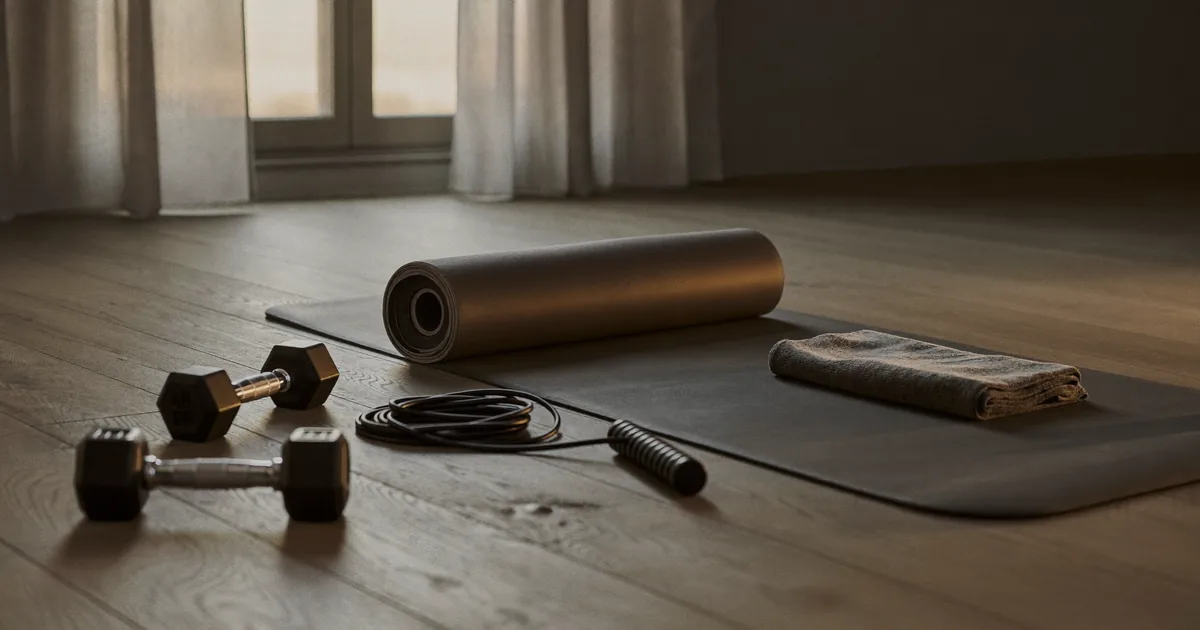
A gym membership does not build muscle. Consistency does. If you have been putting off training because the nearest gym is crowded, overpriced, or simply inconvenient, a structured home workout routine for beginners removes every excuse. All you need is floor space, a plan, and the discipline to show up. This guide breaks down exactly how to train at home, what minimal equipment is worth buying, and how to progress week after week without stalling.
Home training is not a compromise. It is a legitimate, science-backed method to build strength, burn fat, and improve conditioning. Bodyweight resistance, when programmed correctly, creates enough mechanical tension to trigger muscle growth, especially for beginners and intermediate lifters.
The myth that you need a fully loaded gym to get in shape has been disproven repeatedly. What actually determines results is progressive overload, movement quality, and recovery, all of which you can control at home.
Before touching a single exercise, define the framework. A routine without structure turns into random exercise, and random exercise produces random results.
Every routine should serve one primary goal, even if secondary benefits follow.
Beginners often try to chase all three at once. Pick one as the priority for the first 8 to 12 weeks, then adjust.
Three to five sessions per week is the sweet spot for beginners. Less than three slows progress, more than five without proper recovery leads to burnout or injury. A practical starting frequency:
Cold muscles perform worse and injure easier. A 5 to 8 minute warm-up should include:
You do not need a home gym. You need a handful of tools that multiply what bodyweight training alone can achieve. Every item below is optional but significantly increases results and variety.
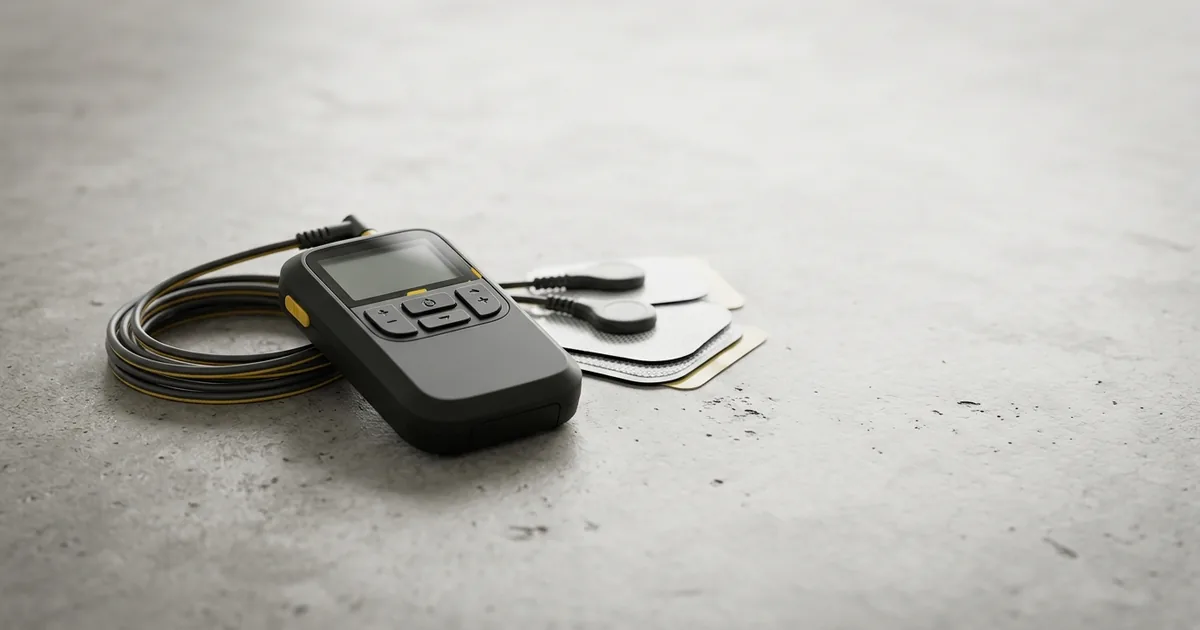
A vibration plate is one of the most underrated home training tools. It increases muscle activation during static holds like squats and planks, improves circulation, and speeds up warm-up and recovery. Ten minutes on a vibration plate before or after a session noticeably reduces stiffness the next day.
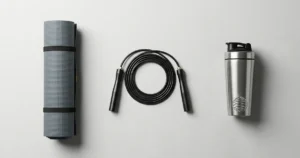
Cardio at home does not require a treadmill. A beaded, tangle-free adjustable jump rope delivers a brutal conditioning workout in a fraction of the space and time. Ten minutes of rope work burns more calories than most people expect, and it sharpens coordination and calf endurance at the same time.
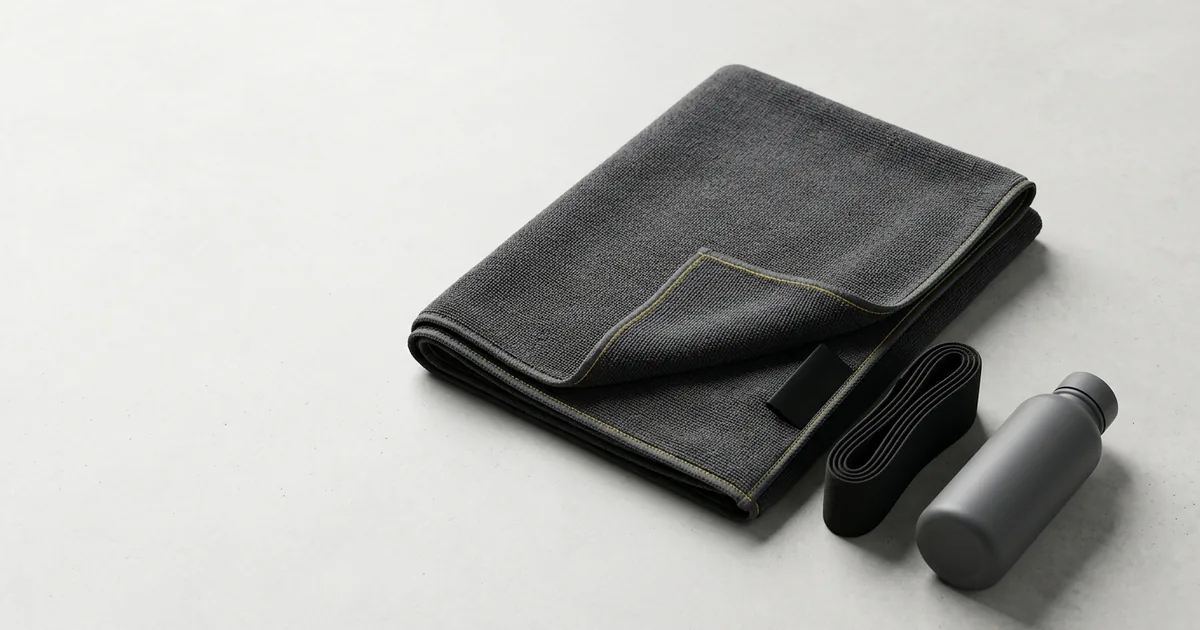
Small detail, real impact. Home workouts get intense fast, especially with HIIT circuits or vibration plate sessions. Microfiber workout towels dry quickly, take up minimal space, and prevent your grip and flooring from turning into a slip hazard mid-set.
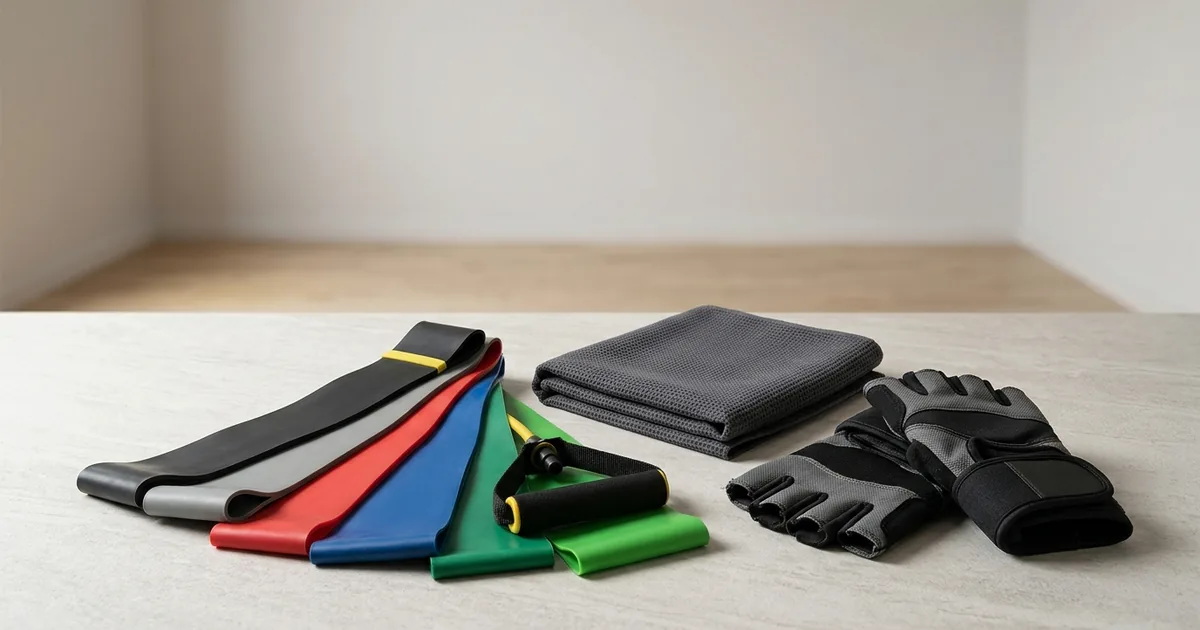
Beyond the three above, a small collection of resistance bands, a yoga mat, and adjustable dumbbells covers almost every training need. Browse the full fitness essentials range to build a setup that matches your goals and budget in AED, and check the new arrivals section regularly, as compact home gym gear gets added often.
A complete home routine needs coverage across all major muscle groups. Below is a practical breakdown you can mix and match into any split.
Pulling is the hardest movement pattern to train without equipment, but not impossible.
Below are three structured plans depending on your current level. Follow one consistently for at least 6 weeks before switching.
Day A (Monday):
Day B (Wednesday):
Day C (Friday):
Upper Body (Monday and Thursday):
Lower Body (Tuesday and Friday):
Combine strength circuits with metabolic conditioning for maximum efficiency in minimal time.
Cardiovascular training does not require a machine. Jump rope work alone can replace 20-30 minutes of steady-state running while taking up a fraction of the space and time.
An adjustable, tangle-free jump rope makes a real difference here. Beaded ropes maintain consistent momentum and rarely snag mid-set, which keeps your heart rate elevated instead of stopping to untangle cord every 20 seconds.
A vibration plate is not just for warm-ups. Standing squats, calf raises, and plank holds directly on the plate increase muscular engagement per minute, making short sessions more effective for people short on time.
Home training intensity rivals gym training when programmed properly, which means recovery deserves the same attention.
Sweat on hardwood or tile floors is a real injury risk during planks, push-ups, and jump rope sessions. Keep a set of microfiber workout towels nearby to wipe down your hands, mat, or floor between sets. It sounds minor until a slipped hand mid-push-up costs you a wrist.
No home routine works without recovery basics. Aim for 7-9 hours of sleep and adequate protein intake, roughly 1.6 to 2.2 grams per kilogram of bodyweight, to support the muscle repair your training demands.
Use light vibration plate sessions, walking, or mobility flows on rest days instead of doing nothing. Active recovery speeds up soreness reduction without adding training stress.
Doing the same 3 sets of 10 push-ups for months produces zero adaptation after the first few weeks. Increase reps, slow the tempo, elevate your feet, or reduce rest between sets to keep forcing progress.
Most home routines are push-heavy because push-ups are easy to do without equipment. This creates muscular imbalance. Prioritize rows, supermans, and pull-up variations if you have any anchor point available.
Randomly picking exercises each session feels productive but rarely builds strength efficiently. Follow a written plan, track it, and adjust every 4-6 weeks based on actual performance.
Fatigue causes form breakdown, especially in squats and push-ups. Quality reps beat quantity every time. Stop a set once form degrades rather than grinding out sloppy extra reps.
Jumping straight into max-effort burpees with cold muscles is how strains happen. Five minutes of preparation and five minutes of cool-down protect your long-term consistency.
Without machines showing weight stacks, progress tracking requires more intention at home.
A home workout routine for beginners works when it is structured, progressive, and consistent. Bodyweight training builds real strength, jump rope intervals deliver real conditioning, and a vibration plate adds real muscular activation to short sessions. Pair the right minimal equipment with a written plan, track your numbers, and adjust every few weeks. The results will match, and often exceed, what a crowded gym floor can offer.

Last updated: October 21, 2026 Sore legs the day before a big lift. Tight shoulders after three straight gym sessions.
Last updated: October 21, 2026 Most home gyms fail for the same reason: the gear doesn’t match the space, the
Last updated: October 18, 2026 Most people buy a gym towel the way they buy a phone charger, fast, cheap,