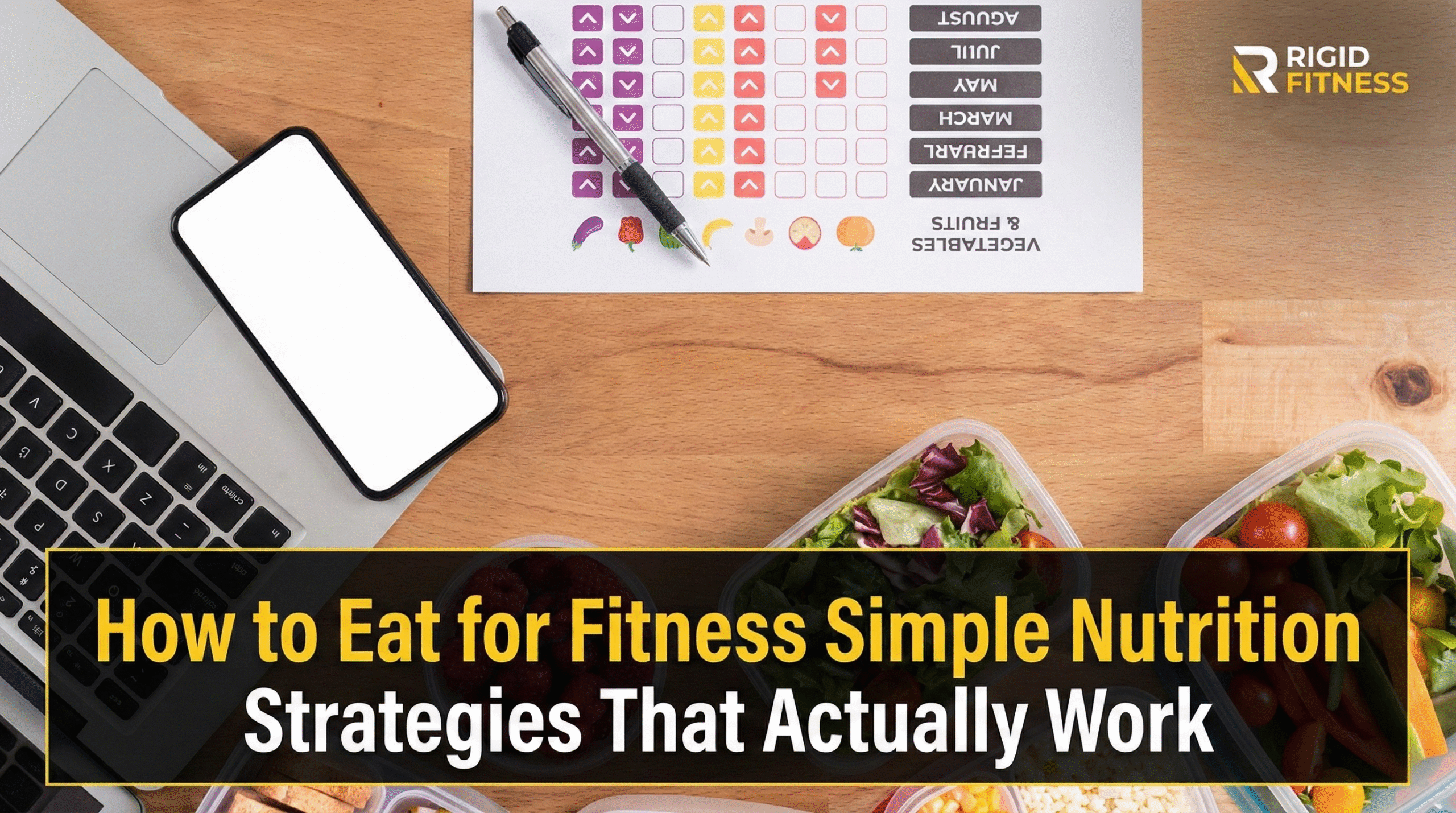
Eating for fitness is one of the most confusing parts of any health journey. One day you’re told carbs are the enemy, the next day someone says you need more of them. Some swear by high-protein diets, while others claim plant-based routines are the real secret. With so many rules, “must-do” diets, and quick-fix trends floating around, it’s easy to feel overwhelmed and unsure of what actually works.
But in reality, proper nutrition strategies don’t have to be complicated. You don’t need extreme diets, celebrity-approved meal plans, or unrealistic routines. What your body truly needs is a practical, simple approach you can maintain every day. In this guide, based on the long-term approach we follow at Rigidfitness, you’ll learn realistic, effective nutrition strategies that make eating for fitness feel natural and manageable.
Why Eating for Fitness Matters More Than the Workout Itself
What you eat affects everything: your energy levels, muscle strength, metabolism, and even your mood. You can train for hours, but without the right fuel, your body simply can’t perform at its best.
Eating with a fitness mindset helps you:
- Build lean muscle
- Improve workout performance
- Speed up recovery
- Maintain energy throughout the day
- Support fat loss or muscle gain
- Strengthen your immune system
Think of nutrition as the foundation of all your results. Training shapes your body, but eating right fuels the transformation.
1. Prioritize Whole, Real Foods
Your body thrives on real ingredients, not highly processed snacks. Whole foods keep you full longer, provide essential vitamins, and stabilize energy.
Focus on:
- Lean proteins
- Fresh fruits and vegetables
- Whole grains
- Nuts and seeds
- Healthy fats
You don’t have to eliminate anything; just shift toward foods that nourish you naturally.
2. Eat Enough Protein for Muscle and Recovery
Protein is essential for building and repairing muscles. If you train regularly, you need consistent protein intake to support your goals.
Good protein sources include:
- Chicken, fish, turkey
- Greek yogurt and cottage cheese
- Eggs
- Lentils, chickpeas, beans
- Whey or plant-based protein powders
You can easily find protein supplements from trusted stores such as Amazon or Noon, depending on your preference.
3. Don’t Fear Carbs, Choose the Right Ones
Carbs often get a bad reputation, but they’re your body’s main source of workout energy. The key is choosing smart, slow-digesting carbs.
Best fitness-friendly carbs:
- Oats
- Sweet potatoes
- Brown rice
- Quinoa
- Whole-grain bread
These carbs keep your energy steady and prevent mid-workout fatigue.
4. Eat Healthy Fats for Hormones and Strength
Healthy fats support hormone function, joint health, and brain focus, everything you need for stronger, more effective workouts.
Include foods like:
- Avocado
- Olive oil
- Salmon
- Walnuts
- Almonds
Healthy fats also help you feel full longer, reducing unnecessary snacking.
5. Hydration, The Most Ignored Fitness Rule
Most people think they’re drinking enough water until fatigue hits during workouts. Hydration affects your strength, performance, and recovery more than you realize. Try to drink water consistently throughout the day, not just before workouts.
6. Pre-Workout Nutrition: Fuel Your Energy
A good pre-workout meal boosts energy, prevents dizziness, and helps you train harder.
Ideal pre-workout foods:
- A banana with peanut butter
- Oatmeal with berries
- Greek yogurt and honey
- A small chicken-and-rice bowl
Eat your pre-workout meal 45–60 minutes before training for best results.
7. Post-Workout Nutrition: Recover, Don’t Crash
After training, your muscles need nutrients to repair and grow. Skipping post-workout nutrition slows down recovery and reduces performance.
Try a mix of protein + carbs like:
- Protein shake and fruit
- Grilled chicken with sweet potatoes
- Tuna sandwich
- Eggs with whole-grain toast
Recovery is just as important as training; fuel it properly.
8. Create a Balanced Plate (The 40/30/30 Rule)
For most fitness goals, a simple plate balance works great:
- 40% carbs
- 30% protein
- 30% healthy fats
This keeps your meals satisfying, energizing, and nutrient-dense.
9. Avoid Extremes and Restrictive Diets
Fast results may tempt you, but extreme diets are not sustainable. They slow metabolism, increase cravings, and damage your relationship with food. Healthy eating is about balance, not punishment.
10. Make It a Lifestyle, Not a Temporary Fix
Fitness nutrition only works if you can stick to it long-term. Focus on habits you can maintain, not trends that disappear in a month. Small, consistent choices lead to big changes.
Simple Meal Ideas to Support Your Fitness Routine
Breakfast Ideas That Set the Tone
A balanced breakfast helps kickstart your metabolism and keeps you energized during the first half of your day. Meals like oats with fruit, eggs with vegetables, or yogurt with seeds not only taste great but also provide long-lasting energy for morning workouts or busy schedules.
Lunch That Keeps Your Energy Steady
Lunch should be satisfying and nourishing enough to carry you through the afternoon. A rice-and-chicken bowl, a tuna salad with avocado, or a whole-grain wrap filled with lean protein can keep your energy stable and prevent unnecessary snacking.
Dinner That Supports Recovery
Dinner is your chance to help your body wind down and repair. Lean proteins, fiber-rich vegetables, and slow-digesting carbs make the perfect recovery-friendly evening meal. Think of dishes like grilled salmon with vegetables, lentil soup, or stir-fried chicken with quinoa.
Snacks That Nourish, Not Overwhelm
Snacks should help support your goals, not distract you from them. Fresh fruit, Greek yogurt, nuts, or a protein shake from Amazon or Noon are great choices when you need something quick but healthy.
FAQs About Nutrition Strategies
What are the easiest nutrition strategies to start with?
Begin with whole foods, regular hydration, and adding more protein to your meals. These simple steps immediately improve energy and workout performance.
Do I need supplements?
Supplements are optional. They help fill nutritional gaps but don’t replace real food. If you choose to use them, look for reputable brands available on Noon and Amazon.
How important is meal timing?
Meal timing matters for workouts, but you don’t need to obsess over the clock. Focus on balanced meals and eating consistently throughout the day.
Can I still enjoy cheat meals?
Yes, cheat meals are fine in moderation. Fitness is about balance, not deprivation.
How long does it take to see results from nutrition changes?
Most people notice better energy within a week. Visible physical changes usually appear within 4–8 weeks of consistent habits.
Conclusion
Eating for fitness isn’t about perfection or strict rules; it’s about building sustainable habits that support your goals. These simple nutrition strategies help fuel your workouts, improve recovery, and keep your energy high throughout the day. By focusing on whole foods, balanced meals, hydration, and consistency, you build a strong foundation for long-term success. At Rigidfitness, we believe in making nutrition practical and achievable, not overwhelming. Start with small changes, stay consistent, and your body will respond with strength, energy, and noticeable transformation.