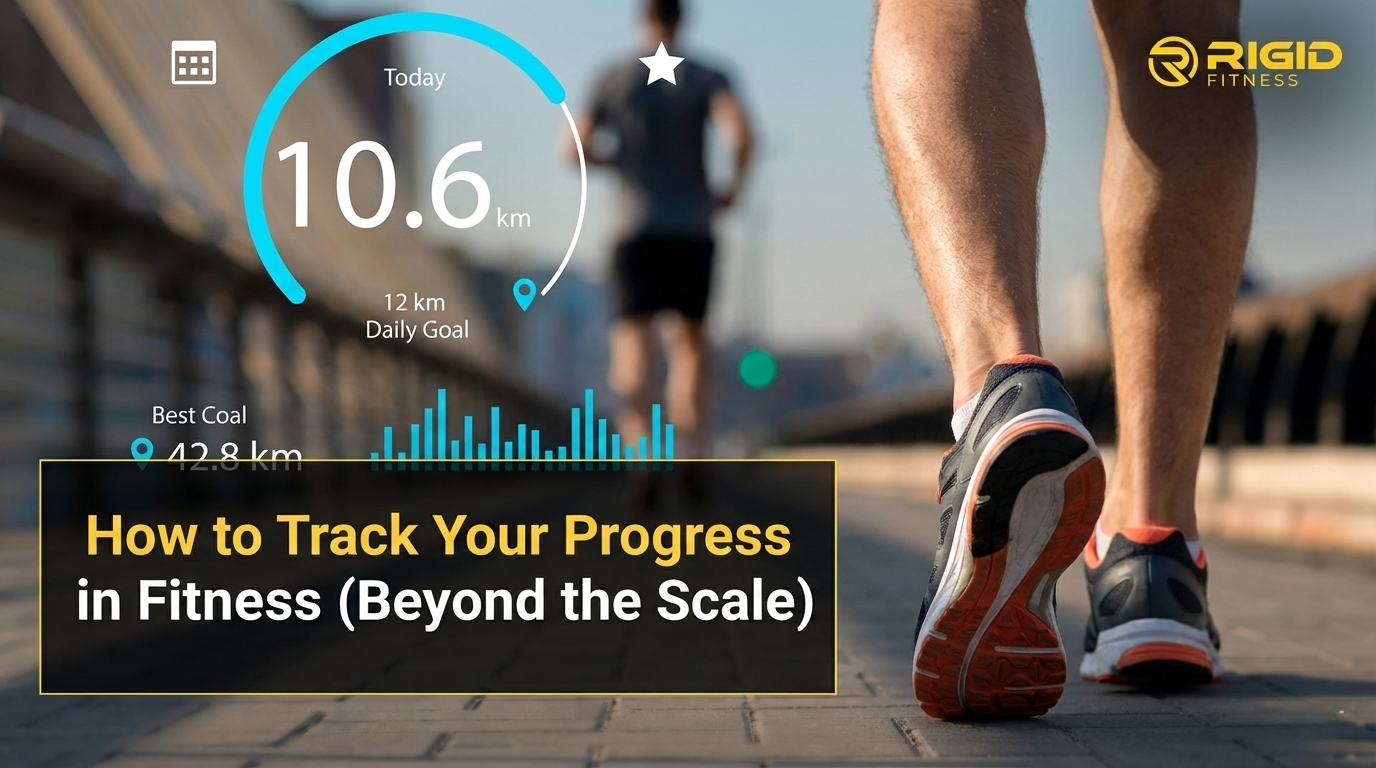
Tracking your fitness journey is more than logging workouts; it’s about understanding how your body responds over time. Many people rely solely on the scale, but this provides a narrow view. By focusing on various metrics, from endurance to flexibility, you’ll get a complete picture when you track progress effectively.
At RIGID FITNESS, we emphasize a holistic approach. Tracking progress helps identify patterns, understand what’s working, and adapt strategies before plateaus occur. This isn’t just theory; research shows that those who actively track their fitness goals achieve faster and more sustainable results.
Why Tracking Progress Matters
Track progress isn’t about obsessing over numbers. It’s about staying informed, motivated, and on the right path. When done correctly, it helps you:
- Stay consistent: Seeing improvements, even small ones, keeps you motivated.
- Adjust strategies: Know when to increase intensity or change routines.
- Celebrate achievements: Every milestone, strength gains, endurance, and better sleep are worth acknowledging.
- Avoid plateaus: Early detection of slow progress allows timely intervention.
Tracking progress helps you see results you might otherwise overlook.
Setting Clear and Realistic Fitness Goals
Short-term vs Long-term Goals
Short-term goals provide immediate motivation, while long-term goals guide your overarching strategy. For example, aiming to complete a 5k run in three months is a short-term goal, while achieving optimal body composition over a year is long-term.
SMART Goal Framework for Fitness
Using SMART (Specific, Measurable, Achievable, Relevant, Time-bound) goals ensures clarity. Instead of saying “I want to lose weight,” say, “I aim to reduce body fat by 5% in 12 weeks using strength training and cardio.”
Methods to Track Progress Beyond the Scale
1. Body Measurements and Circumferences
Using a tape measure, track changes in key areas:
- Waist, hips, thighs, arms, chest
- Compare measurements every 2–4 weeks
- Small changes reveal fat loss or muscle gain that scales may not show
Tip: Keep a notebook or a digital log for consistency.
2. Strength and Performance Metrics
Tracking strength gains is crucial. Improvements in exercises like squats, push-ups, or lifting weights show progress even if your weight stays the same.
- Record your max reps or weight lifted
- Track improvements weekly or biweekly
- Include cardio performance: time to run 1 km, cycling distance, or rowing speed
3. Fitness Photos
Visual progress is powerful. Taking photos helps you see body composition changes over time.
- Take pictures in the same lighting and pose every 2–4 weeks
- Front, side, and back views
- Compare over months, not days
Many RIGID FITNESS clients report that progress photos keep them motivated more than numbers ever could.
4. Clothing Fit
Your clothes often tell the story your scale doesn’t. Notice:
- Jeans or shirts feel looser/tighter
- Comfort in workout clothes is improving
- This method is simple and free
5. Energy and Mood Tracking
Fitness isn’t just physical. Track how you feel:
- Daily energy levels
- Mood and stress management
- Sleep quality and recovery
- Mental clarity and motivation
These indicators often improve before visible changes occur.
6. Habit and Consistency Logs
Tracking daily habits reinforces consistency:
- Log workouts and duration
- Track nutrition adherence (like protein intake)
- Use apps or simple journals
Consistency is one of the strongest predictors of long-term success.
Tools and Apps to Track Progress
1. Fitness Apps
Apps help track steps, calories, workouts, and body stats. Popular options include MyFitnessPal, Strava, and Strong.
2. Wearables
Smartwatches and fitness trackers monitor:
- Heart rate
- Sleep
- Steps and activity levels
They provide data-driven insights into your overall fitness.
3. Smart Scales and Devices
Smart scales show body fat percentage, muscle mass, and hydration. These can complement other tracking methods. Many devices are available on Noon for easy home use.
Understanding Non-Scale Victories
Increased Energy Levels
Feeling more energetic during daily activities is a clear sign of progress. Tracking energy levels in your journal provides qualitative data alongside quantitative metrics.
Improved Mood and Mental Health
Regular exercise improves mood and reduces stress. Noting these improvements highlights the emotional benefits of staying consistent with fitness routines.
Nutrition Tracking for Progress
- Calorie and Macronutrient Tracking: Use apps to log protein, carbs, and fats. Consistency is key, and tracking ensures you’re fueling your body properly.
- Meal Prep and Consistency: Regular meal prep reduces reliance on processed foods, supporting better results. Tools and containers from Amazon or Noon can streamline this process.
How to Analyze and Adjust Your Progress
- Review weekly/monthly data – Don’t obsess over daily fluctuations.
- Look for trends, not single numbers – Improvements take time.
- Adjust workouts accordingly – Increase intensity, switch exercises, or add recovery days.
- Celebrate small wins – Motivation improves when progress is acknowledged.
Tracking progress is meaningful only if it informs action.
Common Mistakes When Tracking Fitness Progress
1. Focusing Only on the Scale: Ignoring other indicators can mislead you. Muscle gain may hide fat loss.
2. Comparing Yourself to Others: Everyone’s journey is unique. Focus on your metrics.
3. Tracking Too Infrequently: Checking every 2–4 weeks is better than a daily obsession.
4. Ignoring Non-Physical Progress: Energy, mood, and mental health improvements matter as much as physical changes.
FAQs About Tracking Fitness Progress
Q1. How often should I track progress?
Ans: Every 2–4 weeks is ideal for measurements, photos, and strength tracking. Daily habit logs are useful for consistency.
Q2. What if the scale isn’t moving?
Ans: Don’t panic. Focus on strength gains, clothing fit, energy levels, and other non-scale indicators.
Q3. Can I track progress without apps or devices?
Ans: Absolutely! Journals, photos, tape measures, and simple notes work perfectly.
Q4. What’s the best way to measure body fat?
Ans: Skinfold calipers, bioelectrical impedance scales, or professional assessments provide estimates. Consistency in method matters more than absolute numbers.
Q5. Should I track fitness goals or habits?
Ans: Both. Tracking goals shows results; tracking habits builds long-term consistency.
Conclusion
Tracking progress goes far beyond the scale. By using a mix of body measurements, strength metrics, fitness photos, energy levels, and habit tracking, you gain a complete view of your fitness journey. Consistency, observation, and small adjustments are key.
At RIGID FITNESS, we encourage members to celebrate all victories, not just weight loss. With the right tracking methods, you’ll stay motivated, adjust intelligently, and continue progressing over the long term. Remember, tools like apps, smart devices, or accessories available on Noon can support your tracking, but the real progress comes from awareness and consistent effort.