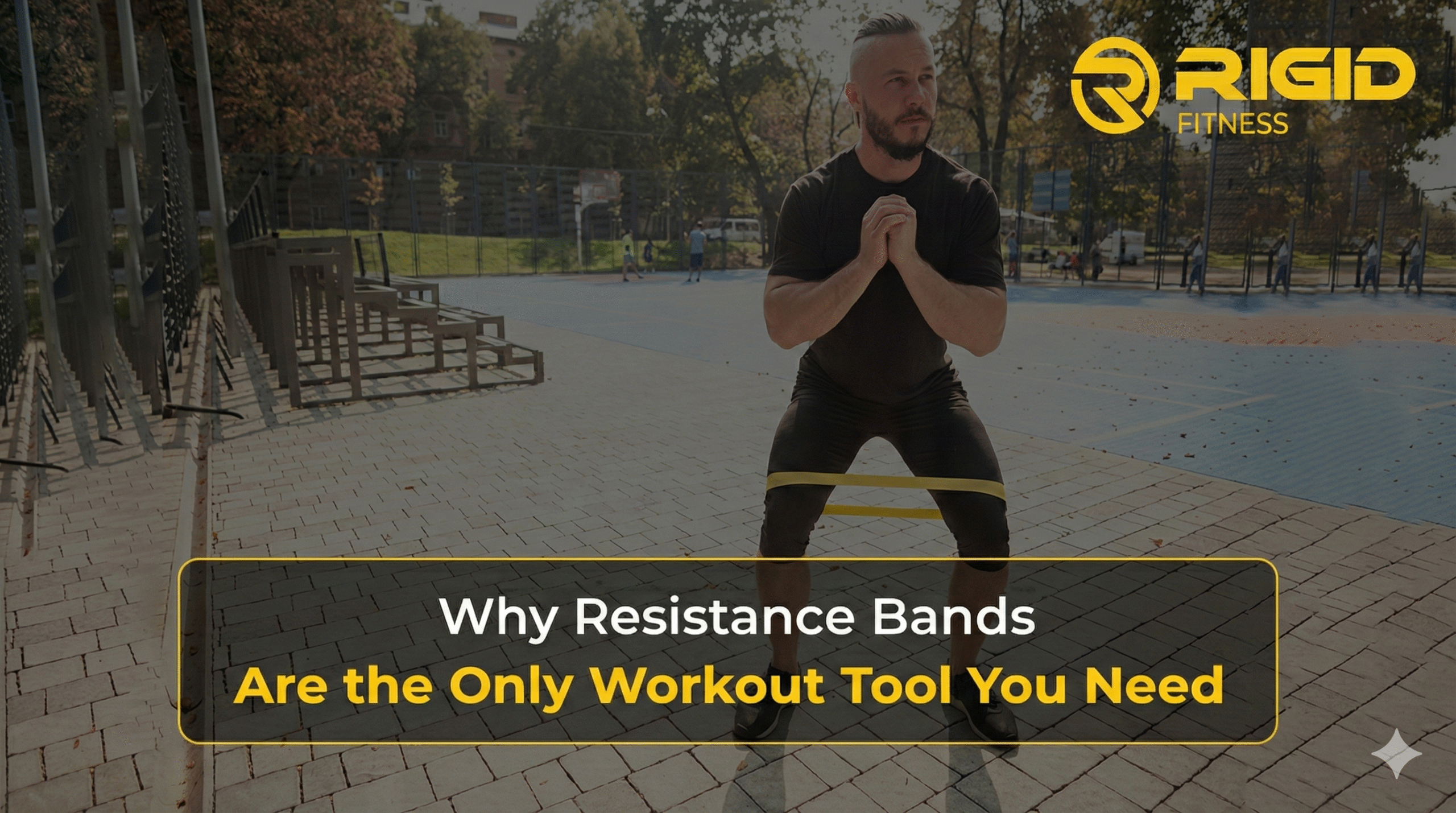
If you think you need heavy weights or expensive gym equipment to get a full-body workout, think again. Resistance bands are small, portable, and incredibly versatile tools that can provide strength training, flexibility improvement, and muscle toning, all from the comfort of your home. Whether you’re a beginner or a seasoned athlete, resistance bands can replace bulky gym machines and free weights.
At RIGID FITNESS, we’ve seen clients achieve impressive results using just resistance bands. From upper body toning to lower body sculpting, these bands allow you to target multiple muscle groups with variable resistance. Plus, they’re ideal for home workouts or on-the-go fitness routines
Why Resistance Bands Are So Effective
Resistance bands are more than simple elastic loops. Their design offers unique advantages:
1. Variable Resistance for Every Level: Unlike free weights, resistance bands provide increasing tension as you stretch them. This allows for smooth, controlled movements and progressive overload, key factors for muscle growth. 2. Full-Body Versatility: Resistance bands can target every muscle group: arms, shoulders, chest, back, glutes, and legs. With simple adjustments, you can perform hundreds of different exercises.
3. Low-Impact Strength Training: For those with joint issues, bands offer a safe alternative to heavy weights. They allow you to strengthen muscles without overloading joints.
4. Portability and Convenience: Bands are lightweight and compact, making them perfect for home workouts, travel, or outdoor training sessions. No bulky gym equipment is required.
Essential Resistance Band Exercises for Beginners
1. Bicep Curls
- Step on the band with both feet.
- Hold the handles and curl upward, keeping elbows close to your torso.
- Slowly lower back down and repeat for 12-15 reps.
2. Squats with Resistance Bands
- Step on the band with feet shoulder-width apart.
- Hold handles at your shoulders and perform squats.
- Bands increase tension at the top for maximum glute and quad engagement.
3. Lateral Band Walks
- Place the band around your thighs.
- Step side-to-side while keeping tension.
- Great for glutes and hip stabilizers.
4. Shoulder Press
- Step on the band and hold handles at shoulder height.
- Press overhead slowly and lower back down.
- Strengthens shoulders, triceps, and core.
Advanced Resistance Band Workouts for Pros
1. Chest Press with Anchor
- Anchor the band to a door or sturdy object.
- Press forward as you would with a dumbbell bench press.
- Increases chest strength and stability.
2. Deadlifts with Bands
- Step on the band, hold handles, and hinge at the hips.
- Engage glutes and hamstrings while lifting.
- Provides variable resistance throughout the motion.
3. Band-Assisted Pull-Ups
- Loop the band around a pull-up bar.
- Place your feet or knees in the band for assistance.
- Builds upper body strength progressively.
4. Glute Kickbacks
- Anchor the band low or wrap aroit und a sturdy object.
- Push the leg backward against resistance.
- Targets glutes and hamstrings effectively.
Tips for Maximizing Results with Resistance Bands
- Focus on Controlled Movements: Avoid fast, jerky motions; control both stretch and release.
- Increase Tension Gradually: Move to thicker bands or double up as strength improves.
- Combine with Bodyweight Exercises: Squats, push-ups, or lunges paired with bands enhance effectiveness.
- Track Progress: Note reps, sets, and band resistance levels to ensure continuous improvement.
- Use Proper Form: Prevent injuries and engage muscles correctly.
Sample Weekly Plan with Resistance Bands
A well-structured weekly plan ensures that all major muscle groups are targeted while giving your body adequate time to recover. Here’s a detailed guide:
Day 1: Upper Body
Focus on strengthening and toning the upper body using resistance bands. Include exercises such as bicep curls, shoulder presses, chest presses, and lateral raises. Perform 3-4 sets of 12-15 reps for each exercise. This session helps improve posture, build upper body strength, and sculpt toned arms and shoulders.
Day 2: Lower Body (Quads, Glutes, Hamstrings)
Target the lower body with squats, lunges, glute bridges, and lateral band walks. Aim for 3-4 sets of 15-20 reps. This day enhances leg strength, improves stability, and shapes glutes and thighs effectively. Resistance bands add progressive tension, making every rep more challenging and efficient.
Day 3: Core and Stability
Strengthen your midsection with exercises like banded Russian twists, standing rotations, plank rows with bands, and seated band crunches. Perform 3 sets of 12-20 reps. Core stability improves posture, supports daily movements, and enhances performance in other resistance band exercises.
Day 4: Active Rest or Light Cardio
Take a break from intense resistance work, but keep moving. Light cardio activities like walking, jogging, or cycling help improve blood circulation, promote recovery, and prevent stiffness while keeping your metabolism active.
Day 5: Full-Body Circuit Using All Band Exercises
Combine upper body, lower body, and core exercises into one circuit for 30-45 minutes. Alternate between exercises with minimal rest to maintain an elevated heart rate. This day boosts endurance, builds strength, and provides a complete, efficient full-body workout.
Day 6: HIIT with Resistance Bands
High-Intensity Interval Training (HIIT) with bands incorporates short bursts of intense exercises like squat jumps, banded mountain climbers, or resistance band sprints followed by recovery periods. Perform 20–30 minutes. This approach maximizes calorie burn, builds power, and improves cardiovascular fitness.
Day 7: Stretching and Mobility
Finish the week with stretching and mobility work. Use bands to assist in hamstring stretches, shoulder stretches, and hip openers. This day reduces muscle soreness, improves flexibility, and prepares your body for the next week of training.
This balanced weekly plan ensures every muscle group is trained effectively, recovery is optimized, and your fitness improves consistently while keeping workouts varied and engaging.
Benefits of Resistance Bands Over Traditional Equipment
- Cost-Effective: Bands are inexpensive compared to machines or free weights.
- Space-Saving: Ideal for small apartments or home gyms.
- Customizable Resistance: Multiple levels of bands allow gradual strength progression.
- Joint-Friendly: Safer for knees, shoulders, and elbows.
Conclusion
Resistance bands are the ultimate workout tool for strength, flexibility, and full-body conditioning. Whether you’re a beginner or a seasoned pro, incorporating bands into your routine allows for versatile, joint-friendly, and effective workouts. At RIGID FITNESS, we encourage using resistance bands consistently to achieve strength, toning, and fat-burning goals.
FAQs
Q1. Can resistance bands replace free weights?
Ans: Yes, for most exercises. They provide variable resistance, engage stabilizing muscles, and are excellent for strength training.
Q2. How often should I use resistance bands?
Ans: 3–5 times per week, depending on intensity and recovery.
Q3. Are resistance bands suitable for beginners?
Ans: Absolutely. Bands come in various resistances, making them beginner-friendly.
Q4. Can resistance bands help with fat loss?
Ans: Yes. High-rep band exercises combined with cardio can improve muscle tone and accelerate fat burn.
Q5. How do I maintain resistance bands?
Ans: Store away from sunlight, avoid overstretching, and check for wear to ensure durability.